Cybersecurity Expert Backed Elizabeth Warren’s Anti-Crypto Legislation Proposal
It has been revealed the fact that a cybersecurity expert has backed Elizabeth Warren’s anti-crypto legislation proposal. Check out the latest reports about this below. Anti-crypto legislation proposal During a special S...
Archive context
Older archive item. Useful for background and entity history, but not a fresh market-moving signal.

It has been revealed the fact that a cybersecurity expert has backed Elizabeth Warren’s anti-crypto legislation proposal. Check out the latest reports about this below.
Anti-crypto legislation proposalDuring a special Senate hearing on Aging, Senator Elizabeth Warren, a Democrat from Massachusetts, asked cybersecurity expert Steve Weisman if her proposed anti-crypto legislation would help reduce crypto scams. Weisman responded with a resounding “yes”.
The cybersecurity expert endorsed Senator Warren’s proposal, stating that it would be effective in cutting down on such scams. These comments were made in a recent press release.
“Yes, absolutely. I love it. Here’s the thing. My students at Bentley University were recently studying money laundering. We were talking about this very thing. The law is always behind technology. The banks have the know your customer rule, which helps. You need to have the private sector and government working together. Your legislation is long overdue.”
Weisman, the editor of Scamicide.com, made sure to address the dangers of crypto mixers, or tools that help crypto investors remain anonymous.
“The anonymity is terrific. You have people looking for privacy and of course that is something with crypto mixers where your account gets mixed in with others and becomes very difficult to trace. One of the things the government did a great job was after the ransomware attack with Colonial Pipeline.
They were able to trace those accounts and get it back, but once he goes into the mixers then you have problems. There is a legitimate privacy concern that people may have, but it does not come anywhere near to the scammers.”
In April, Jake Chervinsky, who serves as the chief policy officer of The Blockchain Association, stated that Senator Elizabeth Warren’s bill is essentially a ban on crypto assets in the United States.
The bill, which was initially introduced in December 2022, would prohibit normal activities related to crypto assets, such as staking and mining. By doing so, it would effectively ban digital assets altogether.
According to Chervinsky, the bill poses a threat to the crypto industry as it restricts the use of digital assets in the US.
Why this matters
This cryptocurrency story adds another data point to the current market tape and is useful when read alongside nearby source coverage.
Original source
Read on CryptoGazetteRelated market context

The SEC’s Buyback Guidance Is Narrower Than It Looks. Does Yours Pass the Test?
Crypto projects that buy back their own tokens have operated under a dour legal cloud within the US for nearly a decade. A buyback...

Brazilian Depository With $4.2 Trillion in Assets Taps XRP Ledger to Mirror Fund Shares
CSD BR, a Brazilian central securities depository with more than 22 trillion reais (about $4.2 trillion) in registered assets, wil...

Bill Miller IV critiques MSCI’s proposal to exclude Bitcoin treasury firms
Miller's critique highlights the risk of rigid index rules potentially excluding diverse companies, impacting market dynamics and...

Senate Republicans introduce crypto tax bill targeting digital assets
The bill's focus on crypto taxation may signal a shift towards detailed regulatory frameworks, influencing market sentiment and fu...
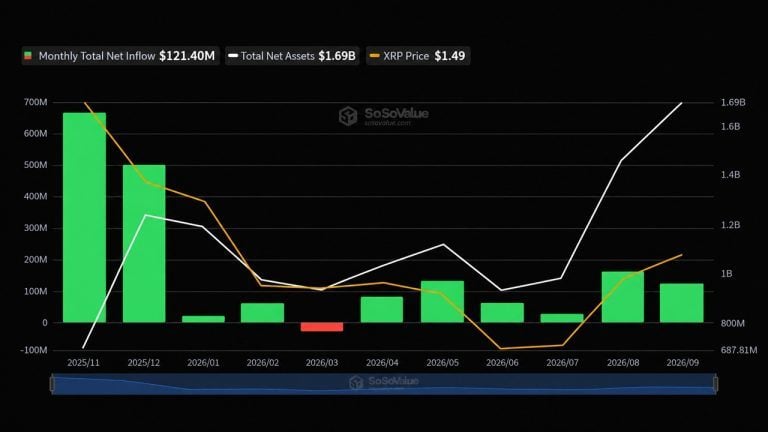
XRP ETFs Pull in $121M This Month but Their Assets Keep Shrinking
U.S. spot XRP exchange-traded funds (ETFs) have taken in $121.4 million in September on a five-session inflow streak, even as thei...
US Senator Blumenthal Calls Tether's USDT a 'Superhighway' for Iranian Sanctions Evasion
The Connecticut Senator's subcommittee released its report on Monday and referred the findings to Treasury and the Justice Departm...