De-Dollarization: China, Brazil Can Be Instrumental in Building Less Centralized World With No Hegemony, Says Lula’s Adviser
Brazil’s President Luiz Inacio Lula da Silva’s chief adviser on foreign policy, Celso Amorim, says China and Brazil “are coming closer together” and they could play important roles in building a less centralized world wi...
Archive context
Older archive item. Useful for background and entity history, but not a fresh market-moving signal.
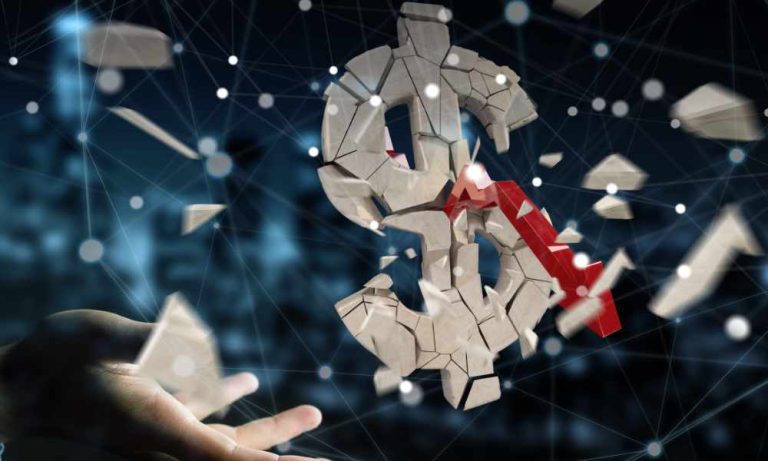
Brazil’s President Luiz Inacio Lula da Silva’s chief adviser on foreign policy, Celso Amorim, says China and Brazil “are coming closer together” and they could play important roles in building a less centralized world with no hegemony. Commenting on de-dollarization, he stressed: “I think it’s very important that we are free from the dominance of one single currency because sometimes it is used politically.”
Brazil, China ‘Coming Closer Together’Brazilian President Luiz Inacio Lula da Silva’s senior foreign policy adviser, Celso Amorim, discussed de-dollarization on Friday in an interview with the Chinese government-owned Global Times. Amorim previously served as Brazil’s Minister of Foreign Affairs, Minister of Defence, and ambassador to the United Kingdom. He was appointed as Chief Advisor to the president of Brazil by Lula in January.
Amorim explained the importance of Lula’s visit to China where the Brazilian president met with Chinese President Xi Jinping. It was the first visit Lula made outside the American continent after assuming office on Jan. 1. The former Minister of Foreign Affairs said:
Brazil and China are coming closer together.
China and Brazil have agreed to conduct trade in their respective currencies, rather than using the U.S. dollar. Additionally, both countries are part of the BRICS group that is reportedly working to create a new form of currency that will further shift them away from USD reliance. The BRICS countries consist of Brazil, Russia, India, China, and South Africa.
De-DollarizationRegarding de-dollarization, Amorim opined: “I think it’s natural that we can do our own trade in our own currencies … It’s only natural because the dollar has become dominant after WWII; before it was the English pound … So now, if we can work with a basket of currencies and use our own currencies to a large extent, that’s the best thing.”
While admitting that it is “not yet totally clear” whether the BRICS nations will adopt a common currency or maintain their respective national currencies, the Brazilian president’s adviser stressed:
But I think it’s very important that we are free from the dominance of one single currency, because sometimes it is used politically.
A number of people have warned that the U.S. dollar may lose its status as the world’s reserve currency due to the government weaponizing it. Economist Jim Rickards, for example, said the Treasury Department is the USD’s biggest threat because it has “weaponized the dollar” and “frozen the reserves of the Central Bank of Russia.” Investment manager Larry Lepard predicted that the USD could lose most of its value in five years. Economist Nouriel Roubini said the global reserve currency system is shifting from unipolar to bipolar with the Chinese yuan as an alternative to the U.S. dollar.
Creating Multipolar World With Less Centralized Power, No HegemonyThe foreign policy adviser to Lula also told the Chinese news outlet that the Brazilian president’s visit to China is an expansion of an already existing strategic partnership between the two countries. “China is our most important trading partner by far. Brazil is becoming one of the places in which China invests more,” he said, emphasizing:
But not only that, I think the two countries can also have an important role in building a more multipolar world, in which power is less centralized and there is no hegemony. I think this is a very important aspect in which China and Brazil can play important roles.
Amorim further stressed that Brazil is eager to enhance its strategic cooperation with China, noting that he believes Lula’s visit will elevate the relations between Brazil and China to a new level. The Brazilian president’s adviser also urged developing countries to cooperate more closely. President Lula recently called on developing nations to dump the U.S. dollar as the world’s reserve currency.
Do you think the U.S. dollar is at risk of losing its status as the world’s reserve currency? Let us know in the comments section below.
Why this matters
This cryptocurrency story adds another data point to the current market tape and is useful when read alongside nearby source coverage.
Original source
Read on Bitcoin NewsRelated market context
US Hoovers up Bitcoin While the World Runs on Its Digital Dollars: Report
Bitcoin Magazine US Hoovers up Bitcoin While the World Runs on Its Digital Dollars: Report America is accumulating bitcoin while e...
Circle Says 59 Cents of Each Revenue Dollar Went to USDC Partners and Transaction Costs
Circle said it paid about $819 million of its roughly $1.4 billion in first-half 2026 revenue to USDC distribution partners and tr...

Solana Breaches China’s Crypto Wall With New Shanghai Office
The establishment of a new Solana Foundation office in one of Shanghai’s highest commercial buildings has drawn out criticism from...
Binance Eyes Hong Kong, South Korea, Taiwan, Brazil Stocks in Global Push
Binance is exploring ways to give users exposure to leading stocks in markets including Hong Kong, South Korea, Taiwan, and Brazil...
Circle defends USDC model, reveals just 7 cents profit per dollar
Circle's low profit margin highlights the tension between maintaining robust compliance infrastructure and competing with rivals o...

ChatGPT AI Predicts Million-Dollar Bitcoin by 2027
ChatGPT AI predicts Bitcoin will hit $1M+, which isn’t a crazy call, since many analysts share the same view. What makes this pred...