Demand for Censorship-Resistant ‘Dark Stablecoins’ May Rise Amid Regulatory Crackdown
As governments worldwide increase their efforts to regulate stablecoins, a new class of decentralized digital assets, dubbed “dark stablecoins,” could emerge as a response to the increasing scrutiny. Ki Young Ju, CEO of...
Archive context
Older archive item. Useful for background and entity history, but not a fresh market-moving signal.

As governments worldwide increase their efforts to regulate stablecoins, a new class of decentralized digital assets, dubbed “dark stablecoins,” could emerge as a response to the increasing scrutiny.
Ki Young Ju, CEO of blockchain analytics firm CryptoQuant, sounded the alarm in a May 11 post on X, warning that privacy-focused stablecoins may become more attractive to users seeking censorship resistance and financial privacy.
Dark stablecoins are likely to emerge in the future.#Bitcoin was created by the cypherpunk community to be censorship-resistant and belongs to no one, making it impossible to control.
Stablecoins, however, act as a bridge between the internet and the real world, so they need…
Ju’s comments come amid a broader global trend toward stablecoin regulation, as traditional finance principles seep into the digital asset world.
From Banking Tools to Surveillance Risk: Stablecoins Under the MicroscopeStablecoins have long served as a bridge between traditional and digital finance, offering users the stability of fiat currencies without the need for banks.
However, regulators concerned about money laundering, illicit transfers, and financial instability are re-evaluating this utility.
“Soon, any stablecoin issued by a country could face strict government regulation, similar to traditional banks,” Ju warned.
“Transfers might automatically trigger tax collection through smart contracts, and wallets could be frozen or require paperwork based on government rules.”
These developments threaten the promise of stablecoins being borderless, permissionless value transfer.
Ju predicts that this could drive users, especially those who conduct large cross-border transactions, toward alternative assets designed to resist oversight. These “dark stablecoins” would prioritize decentralization, privacy, and freedom from state control.
While President Donald Trump’s return to office has ushered in more crypto-friendly rhetoric, U.S. lawmakers are actively considering stablecoin legislation to ensure such assets are used primarily for legal, regulated payments.
Also, the European Union has already taken a step forward with implementing the Markets in Crypto-Assets (MiCA) regulation, mandating complete transparency and strict compliance for stablecoin issuers operating in the bloc.
The Rise of Algorithmic and Jurisdictional AlternativesJu speculates that developers may lean on algorithmic mechanisms to circumvent tightening regulations to create censorship-resistant stablecoins.
Unlike fiat-backed assets like USDC or USDT, algorithmic stablecoins maintain their peg without holding reserves, relying instead on supply-and-demand balancing techniques.
“One possible example could be a decentralized stablecoin that follows the price of regulated coins like USDC using data oracles like Chainlink,” Ju suggested.
Such coins would not be backed by fiat, gold, or any centralized authority, potentially placing them outside the reach of traditional financial enforcement.
Another potential route is for stablecoin issuers to operate from jurisdictions with minimal financial censorship. Ju also pointed to Tether (USDT), which has historically marketed itself as a censorship-resistant asset.
He speculated that if Tether were to reject compliance with U.S. government mandates in the future, particularly under a deregulation-leaning administration, it could once again be viewed as a “dark stablecoin” in an increasingly monitored internet economy.
“USDT itself used to be considered a censorship-resistant stablecoin,” Ju noted.
“If Tether chooses not to comply with US government regulations under a future Trump administration, it could become a dark stablecoin in an increasingly censored internet economy.”
Privacy Tools Already Embedded in Crypto and Drawing Government AttentionThe growing demand for censorship-resistant “dark stablecoins” builds on an active ecosystem of privacy technologies within the crypto space.
Privacy coins like Monero (XMR) and Zcash (ZEC) and mixers such as Tornado Cash have long provided users with ways to obscure their transactions.
Once niche, these tools are increasingly viewed as essential by those wary of surveillance, tax enforcement, or state interference.
Blockchain mixers have become particularly controversial, breaking the traceable link between wallet addresses. In 2022, the U.S. Treasury sanctioned Tornado Cash, citing its alleged use in laundering over $1 billion in illicit funds.
More recently, eXch, a long-running crypto-swapping service linked to money laundering operations, was taken down.
Germany seizes €34M from eXch linked to the $1.4B Bybit hack and illicit crypto flows. #Bybit #Lazarus #eXchhttps://t.co/Ih2CekO6XM
— Cryptonews.com (@cryptonews) May 9, 2025On May 8, German authorities seized €34 million ($38 million) in crypto assets from eXch, which was allegedly used to launder funds from Bybit’s record-setting $1.4 billion hack in February 2025.
eXch had been operating since 2014, branding itself as a privacy-first exchange without AML or KYC checks. That reputation made it a hub for criminals employing sophisticated obfuscation techniques like token hopping, cross-chain transfers, and wallet daisy-chaining.
The post Demand for Censorship-Resistant ‘Dark Stablecoins’ May Rise Amid Regulatory Crackdown appeared first on Cryptonews.
Why this matters
This cryptocurrency story adds another data point to the current market tape and is useful when read alongside nearby source coverage.
Original source
Read on CryptonewsRelated market context

TOKEN2049 Takeaways: Stablecoins, Asset Tokenization, and AI Payments
Every crypto conference brings a wave of new partnerships, products, and concepts. After scrolling through the latest updates, you...
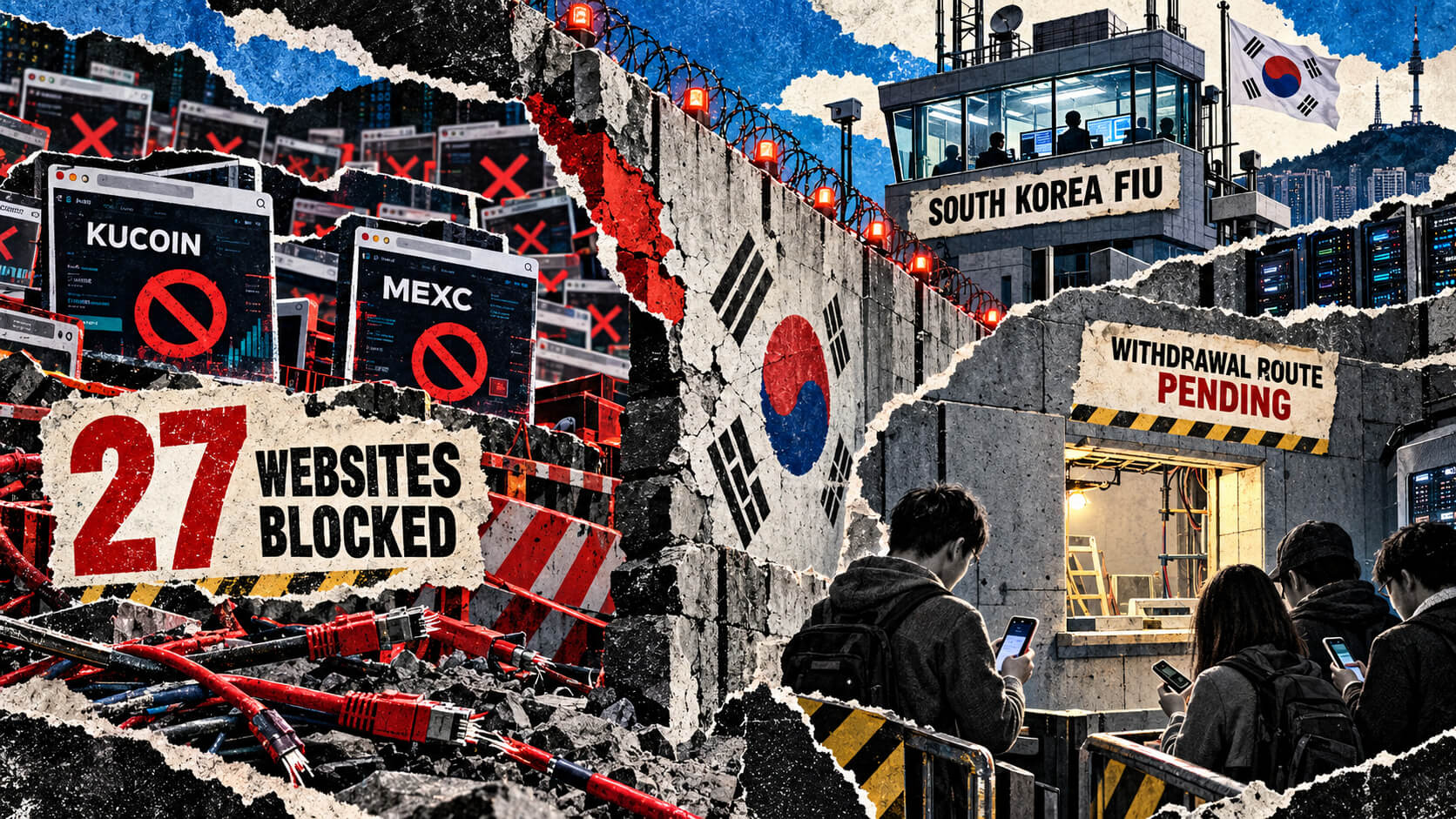
South Korea locks out crypto users as 27 exchange sites go dark
FIU plans withdrawal guidance through DAXA with operators’ cooperation as website restrictions raise access concerns for existing...

Bitso lists Western Union’s USDPT stablecoin for users in Mexico
The integration of USDPT in Mexico could reshape remittance dynamics, offering new financial options but also posing risks due to...

EU Banking Regulator Takes Over Key Oversight of Circle’s USDC Stablecoin
The European Banking Authority (EBA) classified Circle's USDC as a significant e-money token under the Markets in Crypto-Assets Re...
TRON settles $2.2 trillion in stablecoins in Q3 as onchain payments grow
TRON settled $2.2126 trillion in stablecoins in Q3 2026, with supply hitting $93.88 billion and a 23.2% share of stablecoin card s...
Bybit Expands Beyond Crypto as CEO Outlines Next Phase of Financial Platform
Dubai, United Arab Emirates, October 13th, 2026, Chainwire. Bybit Co-founder and CEO Ben Zhou has outlined the latest stage of the...