Dollar to Play Lesser Role Due to Its Weaponization, Digital Currencies, Economist Jeffrey Sachs Says
Within the next decade, the U.S. dollar will play a much less dominant role than it is today, according to Jeffrey Sachs. The renowned economist listed a few factors for the diminishing status of the greenback such as it...
Archive context
Older archive item. Useful for background and entity history, but not a fresh market-moving signal.
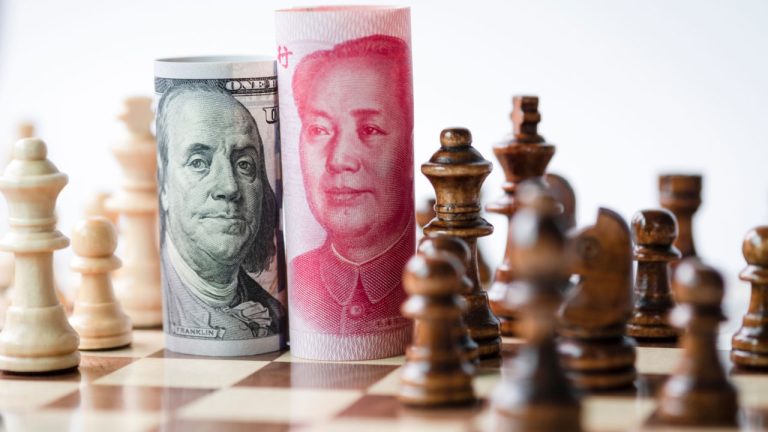
Within the next decade, the U.S. dollar will play a much less dominant role than it is today, according to Jeffrey Sachs. The renowned economist listed a few factors for the diminishing status of the greenback such as its use as a political weapon by Washington, the introduction of currencies like the digital yuan, and America’s shrinking share of the global economy.
United States’ Smaller Share in World Economy to Affect the DollarThe role of the U.S. dollar will naturally decrease as the share of the United States in the planet’s economy becomes smaller and settlements in other currencies take hold, economics professor and Director of the Center for Sustainable Development at Columbia University Jeffrey Sachs predicted.
Speaking at an online session of the latest Annual Columbia China Summit on Friday, Sachs noted that the international payment system is currently based on the dollar, with up to 60% of foreign trade settlements conducted or denominated in the U.S. fiat, and around half of currency reserves based on it.
At the same time, the U.S. share of the global economy is around 15%, in purchasing terms. So the role of the dollar is far larger than the role of the U.S. economy, Sachs explained. He described the role of the greenback as “kind of historical” and reflecting the power of the United States in the 20th century.
Quoted by the Chinese Xinhua news agency, Jeffrey Sachs also pointed out that with the U.S. turning its currency into a political weapon, by confiscating foreign exchange reserves of Russia, Venezuela, and Iran, many countries don’t want to keep their money in dollars anymore. He elaborated:
They don’t trust the United States and they think the U.S. is going to confiscate their currency, especially if they get in some kind of foreign policy disagreement with the United States.
Role of Currencies Like Renminbi, Rupee, Ruble to Rise in FutureThe economist further remarked that the current role of the U.S. currency is largely due to the dollar-based commercial banking system as the payments are usually settled through commercial banks. However, Sachs is convinced that in the future, payments are going to be settled through central bank digital currencies (CBDCs).
The digital yuan (e-CNY), the digital version of the renminbi issued by the People’s Bank of China, is now undergoing trials at the retail level within the country, but Sachs believes that it will eventually become an international payment system for cross-border settlements.
Russia, China, Saudi Arabia, India, and South Africa have been looking for alternative payments as they don’t want to use the U.S. dollar-based banking system and, according to Sachs, that’s understandable. The role of the U.S. dollar will diminish and the role of the renminbi, the rupee, the ruble, and other currencies will increase in the future, he concluded.
Jeffrey Sachs is known for his work as an economic adviser to governments from Latin America to Eastern Europe, where he supported the transition to market economies. Two years ago, Sachs criticized bitcoin for offering “nothing of social value” but acknowledged some of the benefits of using digital currencies, including more efficient transactions.
Do you agree with the predictions made by U.S. economist Jeffrey Sachs? Share your thoughts on the subject in the comments section below.
Why this matters
This cryptocurrency story adds another data point to the current market tape and is useful when read alongside nearby source coverage.
Original source
Read on Bitcoin NewsRelated market context
Hot Inflation Data Puts Bitcoin Under Pressure, but ‘Difficult’ Isn’t ‘Bearish’: CoinShares
Bitcoin Magazine Hot Inflation Data Puts Bitcoin Under Pressure, but ‘Difficult’ Isn’t ‘Bearish’: CoinShares Bitcoin’s price has d...

Circle Says 59 Cents of Each Revenue Dollar Went to USDC Partners and Transaction Costs
Circle said it paid about $819 million of its roughly $1.4 billion in first-half 2026 revenue to USDC distribution partners and tr...

ChatGPT AI Predicts Million-Dollar Bitcoin by 2027
ChatGPT AI predicts Bitcoin will hit $1M+, which isn’t a crazy call, since many analysts share the same view. What makes this pred...

Ripple Brings RLUSD to Cross River Bank as Garlinghouse Backs Evernorth’s XRP Strategy
Announced on October 15, the Cross River partnership integrates Ripple USD (RLUSD) into the bank’s proprietary Core Operating Syst...

Morgan Stanley’s Amy Oldenburg: The Digital Gold Investment Case for Bitcoin
Bitcoin Magazine Morgan Stanley’s Amy Oldenburg: The Digital Gold Investment Case for Bitcoin Bitcoin’s digital gold case is “a pr...

Nine companies, including Broadcom and UnitedHealth, block tokenized stock trading on OKXICE
The objections highlight potential challenges in tokenized stock adoption, impacting market dynamics and issuer control over digit...