Dutch Crypto Companies Secure Partial Legal Victory against Regulators' Fees
Several Dutch cryptocurrency companies, including Bitvavo and Coinmerce (the successor to Binance in the Netherlands), have won a partial victory in their ongoing battle against approximately $2.3 million in fees imposed...
Archive context
Older archive item. Useful for background and entity history, but not a fresh market-moving signal.

Several Dutch cryptocurrency companies, including Bitvavo and Coinmerce (the successor to Binance in the Netherlands), have won a partial victory in their ongoing battle against approximately $2.3 million in fees imposed by Dutch regulators.
Legal Victory for Dutch Crypto Firms in Landmark Ruling
A Rotterdam court has ruled that the Dutch central bank (DNB) overstepped its legal authority when it levied charges on these crypto firms for registration related to anti-money laundering compliance. The court issued two judgments on Wednesday. It might have broader implications for the regulation of cryptocurrencies in the Netherlands.
According to the court, the DNB's assessment of registration requests from these crypto service providers went beyond the scope of what was legally permissible under European Union anti-money laundering laws. Specifically, the court found that "the way in which DNB assesses registration requests is contrary to the scope of the registration obligation for crypto service providers." As a result, the court determined that it was unlawful to charge supervisory costs to these companies for the year 2021.
However, the judges clarified that the ruling did not impact the fees imposed for the year 2020. A separate legal case is still pending regarding the 2022 fees.
Debate over Operational Costs and Supervisory Fees for Crypto Firms
The Netherlands has taken a strict stance on regulating cryptocurrency firms, leading to substantial fines imposed on major exchanges like Coinbase and Binance for their failure to register with Dutch authorities. These rigid regulations have driven some players, such as the Gemini exchange, to exit the Dutch market. Binance transferred its Dutch customer base to Coinmerce as part of its compliance efforts.
Patrick van der Meijde, the President of the United Bitcoin Companies of the Netherlands, an industry group that coordinated the legal challenge, expressed satisfaction with the court's decision. He noted that the court's ruling recognized a violation of the registration obligation as outlined in EU anti-money laundering legislation in the Netherlands. Van der Meijde stressed the substantial costs associated with these fees should not have been passed on to crypto companies, as they were deemed to be beyond the DNB's mandate.
For financial regulation in Europe, supervisory bodies are typically funded by the entities they oversee. The operational costs are allocated based on the size and complexity of the organizations they regulate. In this case, crypto supervisory fees in 2022 amounted to €2.2 million ($2.3 million). This amount tends to increase annually.
Dutch cryptocurrency firms securing this legal victory underscores the dynamic nature of crypto regulations. It demonstrates the industry's constant commitment to contest the boundaries and application of government oversight in this fast-evolving sector. This accomplishment reflects ongoing efforts by crypto businesses to adapt and engage with regulatory frameworks that are still taking shape.
This article was written by Tareq Sikder at www.financemagnates.com.Why this matters
This cryptocurrency story adds another data point to the current market tape and is useful when read alongside nearby source coverage.
Original source
Read on Finance MagnatesRelated market context
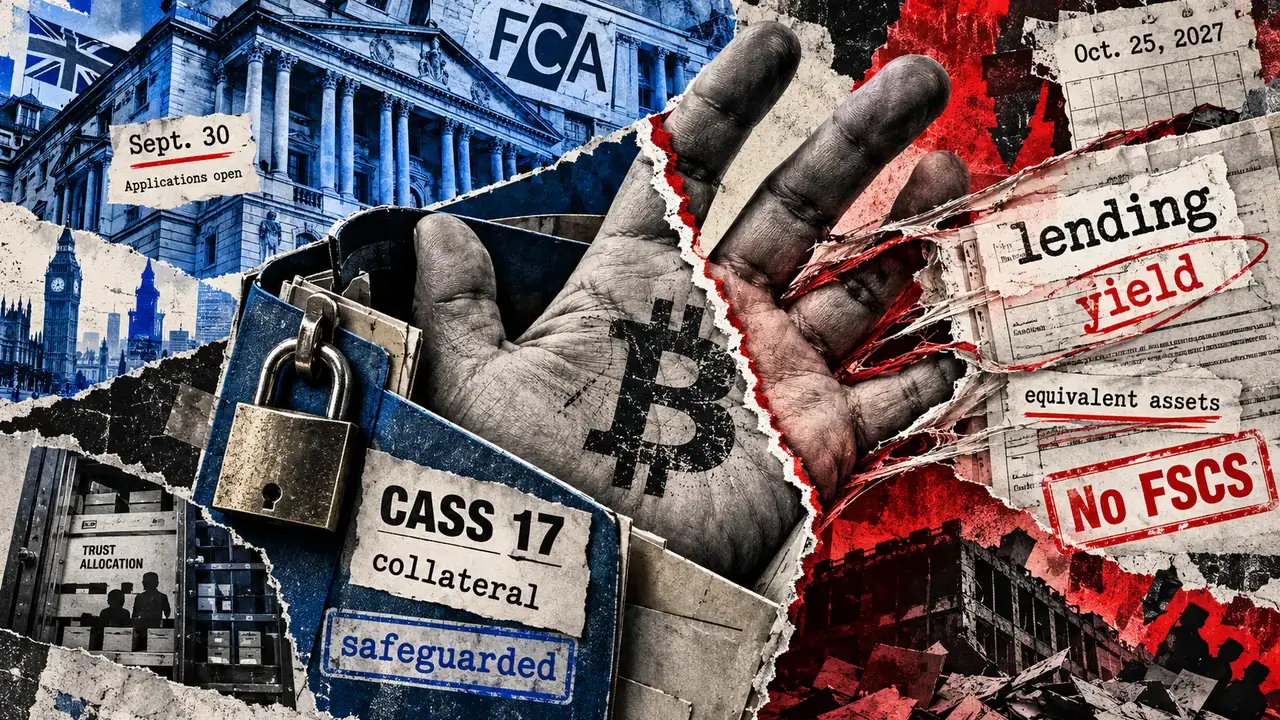
UK’s 2027 crypto rules let firms remove trust protection from Bitcoin lent for yield
UK crypto firms can now apply for authorization as of Sept. 30, bringing Bitcoin holders closer to a rulebook that will treat coin...
FCA Opens Five-Month Authorisation Window for UK Crypto Firms
The UK's financial regulator has given crypto companies five months to apply for FCA authorisation if they want their applications...
SEC Sues Four Firms Over Alleged $15 Million Crypto Scams Run Through WhatsApp Chats
The Securities and Exchange Commission charged four entities on Tuesday over two alleged schemes that used WhatsApp group chats an...

Bill Miller IV critiques MSCI’s proposal to exclude Bitcoin treasury firms
Miller's critique highlights the risk of rigid index rules potentially excluding diverse companies, impacting market dynamics and...
Tax on Bitcoin Gains? Dutch Government to Introduce Capital Gains Tax From 2028
Bitcoin Magazine Tax on Bitcoin Gains? Dutch Government to Introduce Capital Gains Tax From 2028 Dutch people could soon be paying...

BitMart Proposes Court-Backed Plan Offering Users Payouts or Tokens Tied to Its 2021 Hack
BitMart has published a preliminary plan for repaying its users, more than two months after the crypto exchange began winding down...