Economics Professor Warns ‘Cryptocurrencies May Contribute to Monetary and Financial Instability’
Cornell University’s professor of economics and former head of the IMF’s China division, Eswar Prasad, has warned that “Cryptocurrencies may contribute to monetary and financial instability.” He added that the risk is am...
Archive context
Older archive item. Useful for background and entity history, but not a fresh market-moving signal.
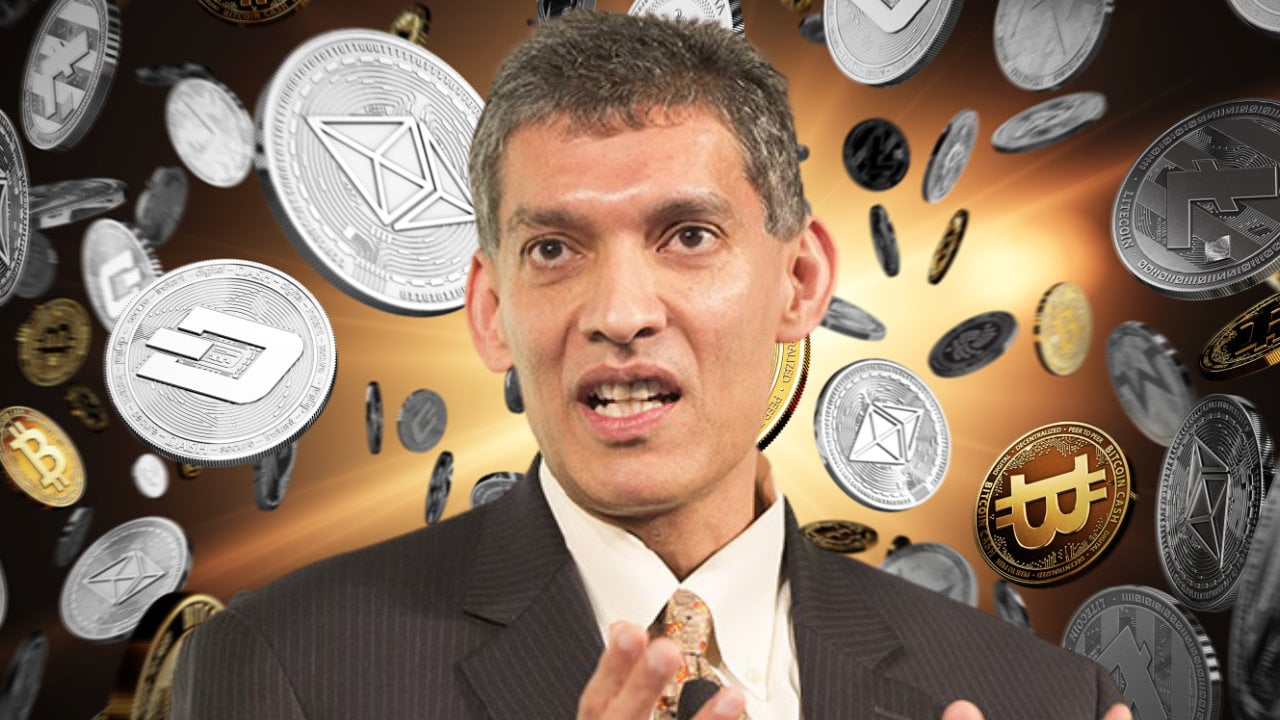
Cornell University’s professor of economics and former head of the IMF’s China division, Eswar Prasad, has warned that “Cryptocurrencies may contribute to monetary and financial instability.” He added that the risk is amplified if the industry is unregulated and lacks investor protection.
Economist Sees Crypto Posing Risks to Financial Stability
Eswar Prasad, the Nandlal P. Tolani Senior Professor of Trade Policy and professor of economics at the Charles H. Dyson School of Applied Economics and Management at Cornell University, shared his view on cryptocurrency in an interview with CNBC, published Wednesday.
Prasad is also a senior fellow at the Brookings Institution, where he holds the New Century Chair in International Economics, and a research associate at the National Bureau of Economic Research. He was previously chief of the Financial Studies Division in the research department of the International Monetary Fund (IMF) and head of the IMF’s China division.
He said:
Cryptocurrencies may contribute to monetary and financial instability, especially if they were to spawn a large and unregulated financial system that lacks investor protection.
His statement echoes a report recently published by the IMF cautioning that the rising popularity of cryptocurrency could pose a threat to financial stability. Moreover, the deputy governor of the Bank of England, Jon Cunliffe, said this week that regulation is urgently needed since the crypto industry is growing rapidly, and there are some “very good reasons” to think that it could pose risks to the country’s financial stability in the future, even though the risks are currently limited.
Professor Prasad was also asked how cryptocurrencies could widen economic inequality. “Cryptocurrencies and their underlying technology hold out the promise of democratizing finance by making digital payments and other financial products and services easily accessible to the masses,” he replied. “But because of existing inequalities in digital access and financial literacy, they could end up worsening inequality.”
In addition, he emphasized that “any financial risks arising from investing in cryptocurrencies and related products might end up falling especially heavily on naïve retail investors.”
The Cornell professor of economics also discussed central bank digital currencies (CBDCs), stating:
I think central bank digital currencies are the way of the future. But every central bank will want to make sure that its money is not used for illicit purposes, so transactions will be auditable and traceable.
However, Prasad noted that “if every payment you make, including for a cup of coffee or for a sandwich, can be seen by a government agency, that’s an uncomfortable proposition.” The economist concluded: “You could, in a more dystopian world, have the government deciding what sort of goods and services its money can be used for.”
Do you agree with the economics professor? Let us know in the comments section below.
Why this matters
This cryptocurrency story adds another data point to the current market tape and is useful when read alongside nearby source coverage.
Original source
Read on Bitcoin NewsRelated market context
Chainlink And LG CNS Target South Korean Banks With Digital Asset Infrastructure Deal
TL;DR: Chainlink and LG CNS are partnering on oracle and cross-chain infrastructure aimed at South Korea’s financial institutions;...
Bloomberg Adds Basel Crypto Exposure Classification For Banks And Asset Managers
TL;DR: Bloomberg has expanded its crypto analytics to classify bank exposure under Basel standards, including indirect holdings hi...
SoFi Launches Yield-Bearing Tokenized Bank Deposit With Stablecoin Conversion
TL;DR: SoFi says its new SOFIE tokenized deposit represents money held at SoFi Bank, advertises 4.40% APY subject to terms, and ca...

Ripple Study Finds Banks Could Unlock $100M Beyond Crypto Custody
Digital asset services and custody choices could improve a regional bank’s financial results by up to $100 million, according to r...
Irish Central Bank Fines Coinbase Unit €3.25 Million Over Customer Fund Safeguards
TL;DR: Ireland’s central bank imposed a €3.25 million penalty on Coinbase Ireland over electronic-money safeguarding and outsourci...

Bank of Korea Wants Stablecoins Written Into Forex Law as Crypto Bill and Tax Fight Come to a Head
Bitcoin Magazine Bank of Korea Wants Stablecoins Written Into Forex Law as Crypto Bill and Tax Fight Come to a Head The Bank of Ko...