Expert Warns of Possible Deflationary Depression as Money Supply Contracts: ‘Pay Attention to QT and the Money Supply’
During the Covid-19 pandemic, central banks such as the U.S. Federal Reserve loosened fiscal and monetary policy. Now, these same financial institutions are seemingly engaging in quantitative tightening (QT) practices. A...
Archive context
Older archive item. Useful for background and entity history, but not a fresh market-moving signal.

During the Covid-19 pandemic, central banks such as the U.S. Federal Reserve loosened fiscal and monetary policy. Now, these same financial institutions are seemingly engaging in quantitative tightening (QT) practices. According to Nick Gerli, CEO and founder of Reventure Consulting, “the money supply is officially contracting.” This has only happened four times in the last 150 years. Gerli warns that every time it occurs, a depression takes place with double-digit unemployment rates.
The Contraction of Money Supply and its Impact on the EconomySeveral market analysts and economists are uncertain about the future of the economy, while many believe things will soon get worse due to significant inflation and failures in central planning. When the Covid-19 pandemic hit, the U.S. government and many other nation-states worldwide financed trillions of dollars in debt to sustain the economy. The debt has grown to colossal levels, and many believe it could sink several Western economies. Speculators insist that this will harm the dollar and that only hard assets will survive the fallout.
In a recent interview at the 2023 BMO Metals, Mining, & Critical Minerals Conference, Rob McEwen, executive chairman of McEwen Mining, said, “Hard assets will increase in value as the dollar drops in relative value to other currencies because governments are irresponsible. They steal from their citizens by printing excess money and borrowing in ways they shouldn’t … Look at the amount of debt most of the Western world has right now; it’s enormous.”
On March 8, 2023, Nick Gerli, CEO and founder of Reventure Consulting, warned that the money supply is contracting. ‘The money supply is officially contracting,’ Gerli said Wednesday. This has only happened four previous times in the last 150 years, and each time, a depression with double-digit unemployment rates followed.
The Reventure executive insists that when the money supply contracts while inflation rises, it creates a “nasty combination” because there are fewer dollars available to pay for higher prices, eventually leading to a deflationary crash.
Gerli added:
This is exactly what happened in the depression of 1921. (NOT the Great Depression). This occurred after WWI and the Spanish Flu. Where there were years of high inflation/money supply growth. And then…WHAM. 11% Deflation and the unemployment rate skyrocketed. All it took was a -2% contraction in the money supply in 1921 to cause that deflationary depression.
The Reventure executive noted that there has already been a 2% contraction in 2023. Gerli says that this suggests that ‘the resilience of our economy and the current inflation might not be as strong as people think.’ However, Gerli admits that there is still a significant amount of money circulating in the financial system in 2023, with the money supply being about 35% higher than it was pre-pandemic, at $21 trillion. Despite this, history shows that just a little nudge and depression and deflation could mount.
“[The] historical record is clear: Depressions/Deflation don’t need a ‘linear’ decrease in money supply to occur— It just needs to be a little bit. 2-4% contraction YoY — And then problems occurs,” Gerli added.
Gerli thinks that people are too focused on rate hikes and not paying attention to quantitative tightening (QT) practices and the money supply. He thinks that at the current pace, the money supply will shrink more while recession fears are mounting and inflation continues to persist. “That’s how you get a system meltdown and a deflationary depression,” Gerli stressed. The Reventure executive added that a deflationary depression in 2023-24 is “not a guarantee.” Because governments are watching diligently, there is a possibility they might “attempt to print money again, send stimulus checks, and re-ignite inflation/economy,” according to Gerli.
What do you think the government should do to address the possible contraction of the money supply and the threat of deflationary depression? Share your thoughts in the comments below.
Why this matters
This cryptocurrency story adds another data point to the current market tape and is useful when read alongside nearby source coverage.
Original source
Read on Bitcoin NewsRelated market context

Ethereum holds 54.1% of $300.3B stablecoin supply across 47 chains
Ethereum's stablecoin dominance faces challenges as Tron's rising transfer volume and supply gains could shift market dynamics if...
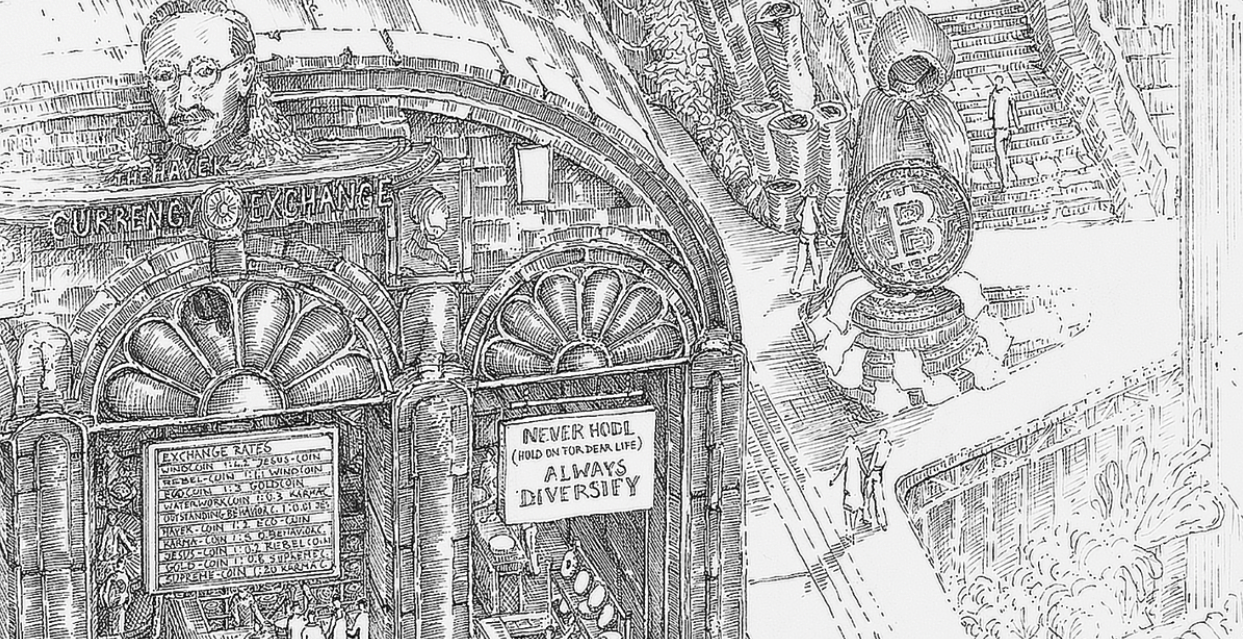
The Architecture of Money: Mapping Financial Power in the Age of Bitcoin
Bitcoin Magazine The Architecture of Money: Mapping Financial Power in the Age of Bitcoin Money determines where we live, what we...

Ethereum Sets October 26 Hoodi Test For Glamsterdam Upgrade As 200M Gas Limit Nears
Ethereum’s next major upgrade has another date on the calendar, though it is not a mainnet launch. Developers have scheduled Glams...

JPMorgan Picks Ethereum for JPM Coin, Citing the Network’s Liquidity and Client Use
JPMorgan is launching JPM Coin, its dollar deposit token, on Ethereum and will offer it to the bank’s institutional clients there,...

Stablecoin Payments Reach $482 Billion As Token Supply Barely Grows
A new payments dataset offers a useful correction to the idea that stablecoin growth must be measured by how many tokens are in ci...

JPMorgan Takes JPM Coin To Ethereum As Banks Test Public-Chain Settlement
JPMorgan is taking its bank-issued deposit token onto public Ethereum, an expansion that puts an established Wall Street payments...