Exploring the Niche Market of Gold-Backed Stablecoins
As geopolitical tensions fuel record highs in the price of gold, one might expect a surge in activity within the gold stablecoin market. However, historical trends reveal a rather subdued landscape in this niche subsecto...
Archive context
Older archive item. Useful for background and entity history, but not a fresh market-moving signal.

As geopolitical tensions fuel record highs in the price of gold, one might expect a surge in activity within the gold stablecoin market. However, historical trends reveal a rather subdued landscape in this niche subsector.
Tether’s XAUT and Paxos’ PAXG stand as the major players in the gold stablecoin market. Yet, compared to their dollar stablecoin counterparts, USDT and USDP, their market presence appears minimal. XAUT boasts a market cap of $580 million, while PAXG trails behind at just under $450 million.
XAUT’s supply has remained steady at around 246,500 units since March 2022, contrasting with PAXG’s declining supply from its peak of around 340,000 units in August 2022 to just 182,650 units presently.
Although trading volumes on centralized exchanges for these gold stablecoins have shown some increase, it’s important to note that the rise may be partly attributed to the escalating value of gold.
The 7-day moving average of trading volumes for both stablecoins reached relative peaks in mid-March but has since declined, despite the continued climb of gold prices. These peaks pale in comparison to previous highs, such as during the 2023 regional banking crisis.
While volumes have slowly risen since hitting a low in May, recent events have seen a slight uptick. PAXG experienced a significant jump in volume to $71 million on April 13, the highest level since May 2022, following reports of Iranian drone attacks on Israel. Similarly, XAUT volumes increased, albeit to a lesser extent.
Despite these developments, $71 million in trading volume remains relatively low for a crypto asset. In contrast, larger dollar-pegged stablecoins often transact billions of dollars a day on-chain alone. On centralized exchanges (CEXs), dollar stablecoin volumes are notably higher, given their widespread use as a primary quote asset.
In conclusion, the gold-backed stablecoin market remains a niche subsector, despite the recent surge in gold’s popularity within the broader market.
Featured Image: Freepik
Why this matters
This cryptocurrency story adds another data point to the current market tape and is useful when read alongside nearby source coverage.
Original source
Read on CryptoCurrencyNewsRelated market context

Morgan Stanley Sets Up Lab to Test Stablecoins and DeFi
Morgan Stanley has established an internal Digital Asset Lab to test stablecoins, tokenization and decentralized finance applicati...
SEC Sues Cryptoaiml and TSAI Over Alleged $15 Million AI Trading Scams
The U.S. Securities and Exchange Commission sued four Cryptoaiml and TSAI entities on Tuesday, alleging they took at least $15 mil...
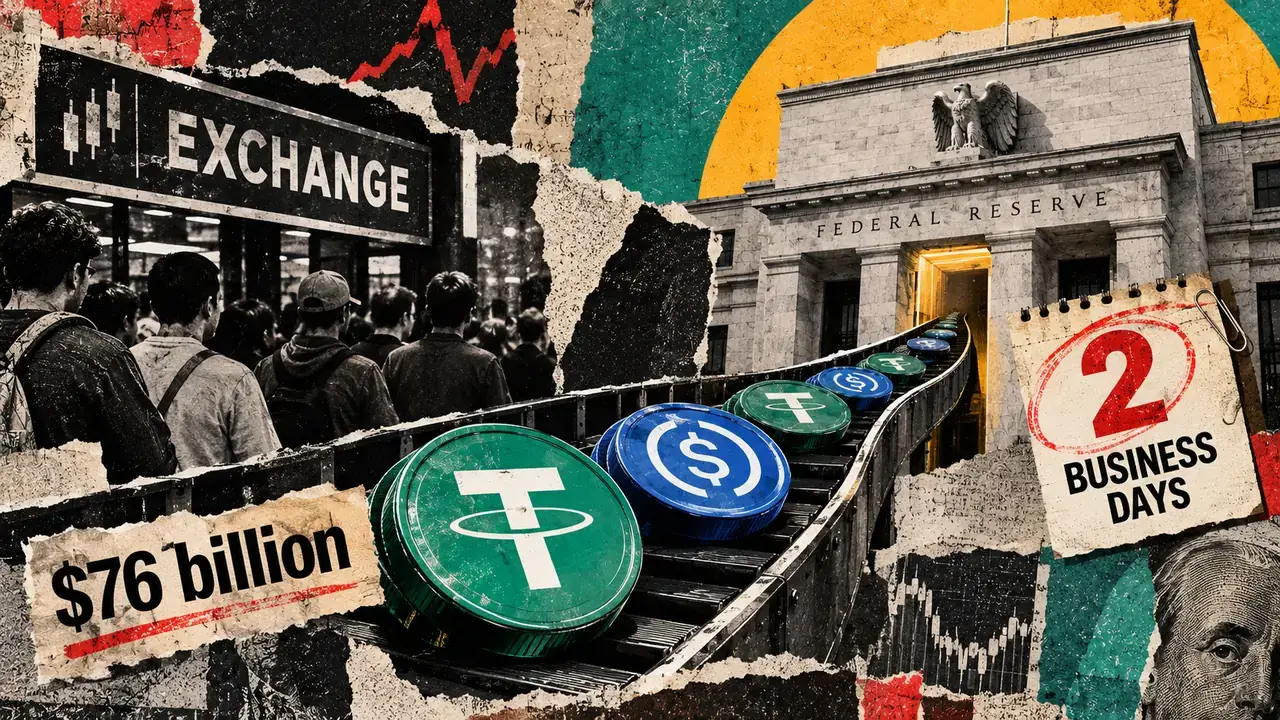
Fed guarantees 2-day stablecoin payouts, but $76B remains blocked
The Federal Reserve's stablecoin proposal would put a general two-business-day limit on redemption by issuers it supervises. For a...

Federal Reserve’s Waller embraces AI, stablecoins, and tokenization as future of payments
Waller's embrace of AI and stablecoins signals a shift towards modernizing payment systems, potentially reshaping regulatory and f...

Robinhood Readies 10x Crypto Perps for US Traders and Unveils AI Trading Agents in Its App
Robinhood plans to let eligible U.S. customers trade crypto perpetual futures in its app with up to 10x leverage, part of a batch...
SEC Sues Four Firms Over Alleged $15 Million Crypto Scams Run Through WhatsApp Chats
The Securities and Exchange Commission charged four entities on Tuesday over two alleged schemes that used WhatsApp group chats an...