Fed’s Barr Calls for Strong Stablecoin Oversight, Citing ‘Long and Painful’ History
Federal Reserve Governor Michael Barr invoked a “long and painful history of private money created with insufficient safeguards” in remarks Tuesday, making the most pointed Fed case yet for aggressive stablecoin oversigh...
Archive context
Older archive item. Useful for background and entity history, but not a fresh market-moving signal.

Federal Reserve Governor Michael Barr invoked a “long and painful history of private money created with insufficient safeguards” in remarks Tuesday, making the most pointed Fed case yet for aggressive stablecoin oversight under the newly enacted GENIUS Act.
The comments land directly on the two largest issuers in a $200 billion market – Tether and Circle – and signal that the Fed’s implementation posture will be harder-edged than the legislation’s passage suggested.
Barr addressed the GENIUS Act specifically, acknowledging that Congress’s stablecoin framework could accelerate development – then spending the bulk of his remarks cataloguing the risks that framework must contain. That sequencing was deliberate.
It tells markets that the regulatory rulemaking phase, now underway at the Fed and FDIC, will define what the GENIUS Act actually means in practice.
Key Takeaways:
- Barr’s Position: The Fed governor warned that stablecoins will only remain stable if they can be redeemed at par under stress conditions – including during Treasury market volatility and issuer-specific strain.
- Legislative Context: The GENIUS Act, signed into law in July 2025, established the first federal stablecoin framework; Barr’s March 31 remarks focus on implementation gaps that federal agencies must now fill through rulemaking.
- Reserve Risk: Barr flagged issuer incentives to maximize returns on reserve assets as a structural vulnerability – a direct warning applicable to Tether’s reserve composition history.
- Issuer Implications: The GENIUS Act mandates monthly reserve reporting and restricts backing assets to high-quality liquid instruments like U.S. Treasuries; Barr’s remarks signal strict Fed enforcement of those limits.
- Broader Regulatory Landscape: Stablecoin friction is already blocking progress on the Clarity Act, a separate digital asset bill – meaning Barr’s warnings have downstream effects beyond stablecoins alone.
Discover: Top Crypto Presales to Watch Before They Launch
What Barr Actually Said – and Why the Framing MattersThe phrase “long and painful history” is not rhetorical decoration. Barr is pointing at a specific lineage – the 19th-century free banking era when private bank notes traded at discounts and collapses wiped out depositors, money market fund runs in 2008 and 2020, and the 2022 TerraUSD collapse that erased $40 billion in weeks.
That history matters because it tells us exactly how Barr conceptualizes stablecoin risk: as a monetary problem, not just a consumer protection problem.
His core warning was precise: “Stablecoins will be stable only if they can be reliably and promptly redeemed at par in a wide range of conditions, including during stress in the market that can put pressure on the value of otherwise liquid government debt and during episodes of strain on the individual issuer or its related entities.”
Source: Micheal BarrThat framing matters because it directly challenges the assumption that Treasury-backed reserves are automatically safe – even U.S. Treasuries face liquidity pressure during acute market stress, as March 2020 demonstrated.
Barr also named the incentive problem explicitly: issuers profit from stretching reserve asset quality, and that pressure intensifies as the market grows.
His formulation – “stretching the boundaries of permissible reserve assets can increase profits in good times but risks a crack in confidence during inevitable bouts of market stress” – is a pre-emptive argument against any industry lobbying to broaden the GENIUS Act’s permitted asset list during rulemaking.
Congress and regulators now have a Fed governor on record with a specific structural critique. The question is whether that critique shapes the rulemaking text or gets absorbed as boilerplate.
Explore: Best Crypto Projects With High Growth Potential in 2026
What the GENIUS Act Actually Covers – and Where the Fed’s Position Creates FrictionThe GENIUS Act sounds clean on paper, but what matters now is how it actually gets enforced, because the rules it set are pretty strict.
Stablecoin issuers have to show their reserves every month, keep those reserves in safe and liquid assets like short term U.S. Treasuries, make it clear there is no FDIC protection, and follow real banking style rules around capital, liquidity, and AML.
–LAW DAY 249–
Just as we are starting to feel the effects of the stablecoin law (Genius Act) a little less than a year ago, a year from now we will see the results of tokenization.
This is a slow-moving tsunami that can't be stopped. https://t.co/rMD6xZQ18y
Barr is now pushing the next phase, and his focus is very direct. He wants tight control over what counts as safe reserves, especially under stress, stronger rules to stop companies from escaping into weaker jurisdictions, and capital requirements that actually match real redemption risk. On top of that, he is doubling down on AML and limiting what stablecoin firms can do outside of issuing, to reduce spillover risk.
But the real story is not the law itself, it is the rulemaking that comes next, because that is where things either stay strict or get loosened. The big question is how narrow regulators define “safe assets,” since that decides how flexible issuers can be, and right now Barr is clearly leaning toward a tighter definition.
That tension is already spilling into other legislation, with negotiations slowing as regulators push a more cautious stance, so what we are seeing is not just policy being written, but a broader shift in how seriously the system wants to control crypto going forward.
Explore: Best Crypto Projects With High Growth Potential in 2026
The post Fed’s Barr Calls for Strong Stablecoin Oversight, Citing ‘Long and Painful’ History appeared first on Cryptonews.
Why this matters
Federal Reserve is showing up inside the Stablecoins theme, so this story is worth tracking for follow-through rather than treating it as a one-off headline.
Original source
Read on CryptonewsRelated market context
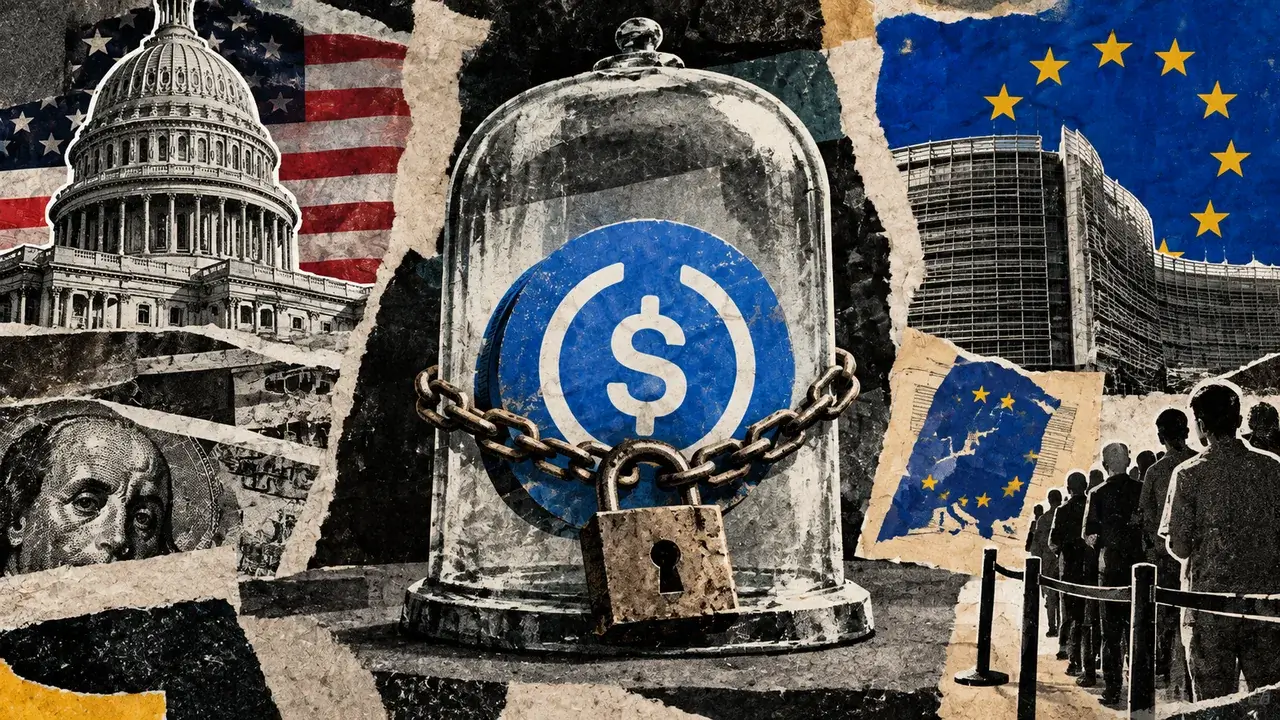
Circle and Tether find common ground against MiCA’s bank reserve rules
Circle is urging the European Union to open its Markets in Crypto-Assets Regulation (MiCA) to foreign-regulated stablecoins and lo...

American Bankers Sue OCC Over Crypto Bank Charters, Challenging Coinbase and Circle
The lawsuit, filed October 2 in the U.S. District Court for the District of Columbia, puts the growing role of crypto firms within...

Stablecoin issuers have replaced 40% of China’s lost US Treasury demand
Stablecoin issuers are emerging as a new source of demand for US government debt as foreign official holdings lose ground. Tether...
Circle Pushes Back on MiCA's Bank-Deposit Mandate for Stablecoins
The USDC issuer told the European Commission that MiCA's reserve mandates and concentration caps keep the largest global stablecoi...
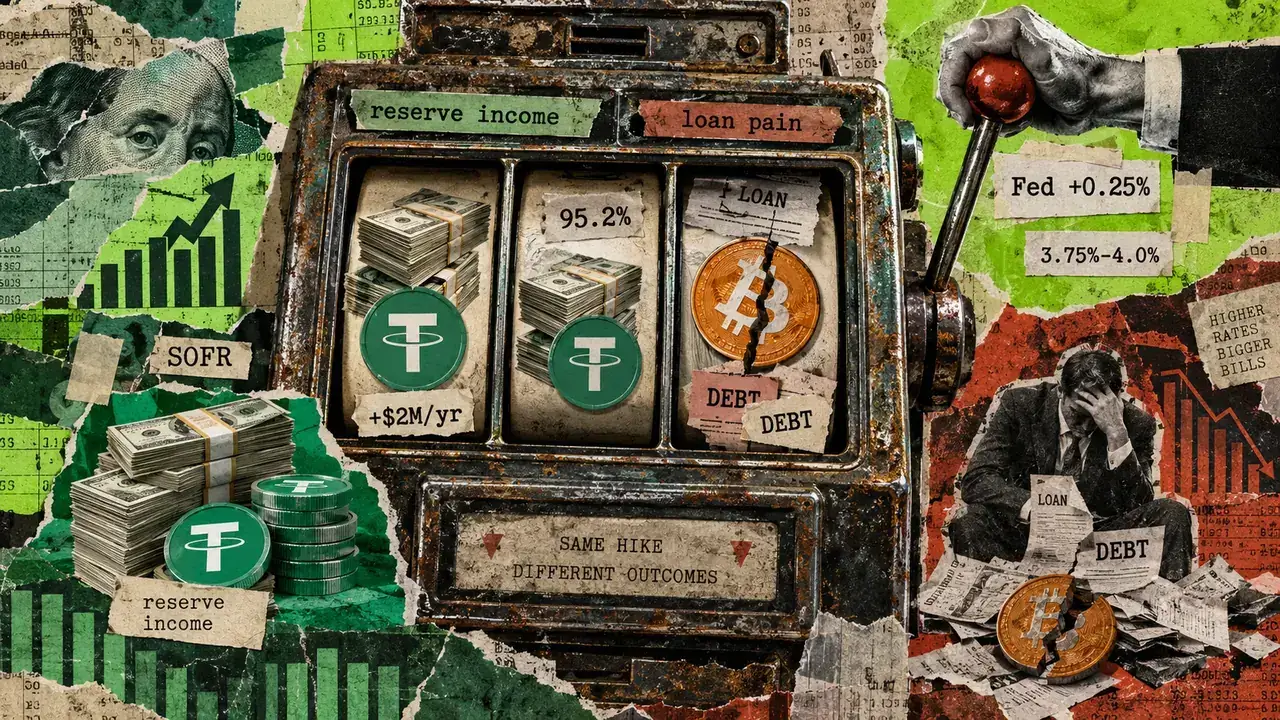
The same Fed rate hike can help stablecoins and hurt Bitcoin borrowers
When you hold a dollar stablecoin, somebody else may be earning interest on the assets backing your balance, while a company borro...

US expands Hamas sanctions after tracing crypto transfers from France
The US sanctioned two French charities and three individuals after alleging they helped channel cryptocurrency and other funds to...