Finiko Founder Doronin Offers to Testify Against 44 Accomplices at Crypto Pyramid
Kirill Doronin, mastermind of the Russian crypto Ponzi scheme Finiko, has proposed to testify against dozens of his former associates he claims violated his order to accept only cryptocurrency from investors. The founder...
Archive context
Older archive item. Useful for background and entity history, but not a fresh market-moving signal.
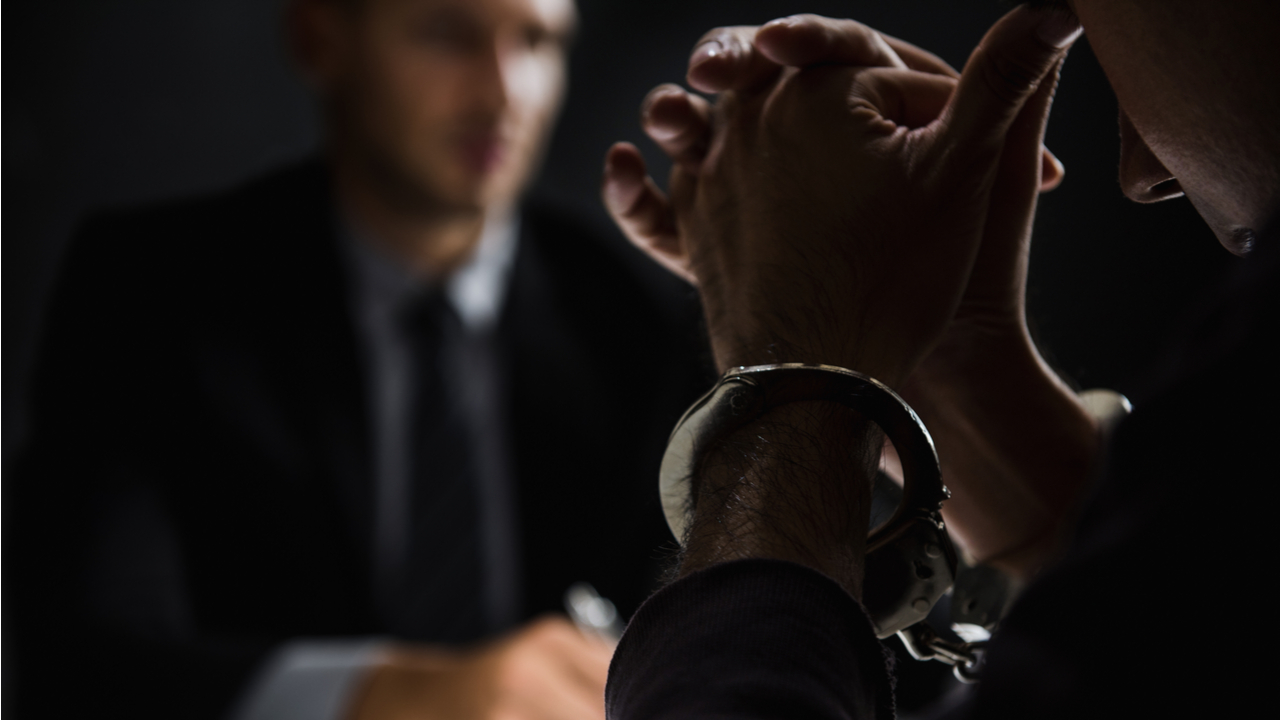
Kirill Doronin, mastermind of the Russian crypto Ponzi scheme Finiko, has proposed to testify against dozens of his former associates he claims violated his order to accept only cryptocurrency from investors. The founder of Russia’s largest financial pyramid in modern times has already provided detailed testimonies against a long list of accomplices, a media report revealed.
Kirill Doronin Ready to Expose His Closest Finiko Associates
The man behind the cryptocurrency pyramid Finiko has offered to cooperate with Russian authorities in a likely attempt to limit the repercussions for himself. Kirill Doronin, an Instagram influencer associated with other scams in the past, now wants to testify against 44 of his subordinates who, as he claims, “went against the precepts” of Finiko by taking fiat cash from victims, which he insists he never authorized.
Doronin was detained as the Ponzi scheme crumbled this summer, and has since been moved from the Russian Republic of Tatarstan to the capital Moscow where the federal Ministry of Internal Affairs (MVD) took over the Finiko investigation due to the size of the fraud. Three months after his arrest, the mastermind of the “automatic profit generation system,” continues to deny any responsibility and puts the blame for its collapse on his partners and assistants.
An article published by the Russian “Business Online” portal, quoting law enforcement sources, reveals that Doronin has recently offered to provide exposing information about his accomplices. “I am ready to give revealing testimony about the participants of the Finiko company who illegally collected fiat money (Russian rubles and U.S. dollars),” the head of the phantom entity said in a petition addressed to the chief investigator on the case, Grigory Antonov.
During an interrogation on Nov. 18, which lasted for hours on end, Kirill Doronin gave the MVD officials a list of 44 people, around 10% of Finiko’s “stars” or the pyramid’s influencers, whose task was to entice investors. “In relation to each of the above persons, I am ready to provide both incriminating testimony and additional evidence confirming the illegality of the actions of these persons,” Doronin wrote in the document, further stating:
I have always been categorically against attracting fiat funds and have always (during meetings) talked about banning fiat, only cryptocurrency transactions.
“Business Online” notes that Doronin’s defense is obviously trying to convince investigators, and the court at some point in the future, that the founder of Finiko has ordered its employees to accept only cryptocurrency. But this can prove problematic for him as crypto deals are not legal in Russia and also because the Ponzi scheme’s members had offered investors, the majority of whom did not possess digital currency, the option to convert their fiat funds into crypto assets.
According to a report by blockchain forensics firm Chainalysis, the scam has indeed received a serious amount of cryptocurrency, over $1.5 billion worth of bitcoin in 800,000 separate deposits made between December 2019 and August 2021. Its victims are citizens of the Russian Federation, neighboring Ukraine and other former-Soviet countries, several EU member states, and the U.S.
Among the 44 names on the blacklist, prepared and signed by Doronin, are many of the already known faces of Finiko. These include two of his vice presidents, Ilgiz Shakirov and Dina Gabdullina, as well as Lilia Nurieva, who rose to the rank of a so-called “10th Star,” who were also arrested and subsequently transferred to Moscow.
Kirill Doronin’s lawyers hope that authorities will agree to change his detention to house arrest in exchange for his cooperation with the investigation, especially in the light of him recently becoming a father. This is unlikely to happen, however, as the Finiko mastermind is still refusing to admit personal guilt.
What’s more, his testimony does not mention the identities of those who “technically” designed the fraudulent scheme, facilitated the transfer of funds abroad, and most importantly, the criminals and potentially officials who protected Finiko, allowing it to grow from a regional scam to the level of the notorious MMM pyramid from the 1990s.
At the same time, the report points out, the Russian public is still waiting to hear the answer to the main question: Where is the money? In early November, reports quoted Russian Youtuber Andrey Alistarov who alleged that 750 BTC, worth around $48 million at the time, had been withdrawn from a wallet associated with Finiko. Alistarov believes the transactions have been ordered by three of its high-ranking members, close associates of Doronin, who managed to leave the Russian Federation and avoid detention.
In September, a high court in Tatarstan confirmed the international arrest warrants for Zygmunt Zygmuntovich and Marat and Edward Sabirov. According to another article by “Business Online,” the fugitives have escaped to the United Arab Emirates through Belarus. Some sources claim, however, that Zygmuntovich, considered to be Doronin’s right hand, is hiding in Abkhazia, a Russia-backed breakaway republic of Georgia, while another source has been quoted as stating that the three Finiko co-founders are now in Turkey.
Do you think Russian authorities will be able to restore the funds of defrauded investors and bring the responsible Finiko members to justice? Tell us in the comments section below.
Why this matters
This cryptocurrency story adds another data point to the current market tape and is useful when read alongside nearby source coverage.
Original source
Read on Bitcoin NewsRelated market context

NY Seeks $1.37 Billion Judgment Against Operators of NovaTech Crypto Ponzi Scheme
Bitcoin Magazine NY Seeks $1.37 Billion Judgment Against Operators of NovaTech Crypto Ponzi Scheme New York Attorney General Letit...
JPMorgan Brings Tokenized Money Funds to Solana for US Investors
J.P. Morgan Asset Management has expanded its tokenized money market funds MONY and JLTXX onto Solana, giving qualified U.S. inves...
CMCC Global Plans Tokenized Bitcoin Funds With Tether And Bitfinex Securities
TL;DR: CMCC Global is bringing two existing fund strategies into tokenized securities issued through Tether’s Hadron infrastructur...
JPMorgan Expands Tokenized Money Market Funds To Solana
TL;DR: J.P. Morgan Asset Management says qualified U.S. investors can now access MONY and JLTXX tokenized money market funds on So...
HSBC Launches RedCoin Stablecoin and Plans to Let Customers Buy Tokenized Funds With It
HSBC put its first stablecoin, a Hong Kong dollar token called HSBC RedCoin (ticker RCHKD), on its PayMe payments app on Oct. 23,...
Interpol Africa Sweep Nets 1,462 Arrests, Exposes Crypto Laundering
An Interpol-coordinated cybercrime crackdown focused on Africa led to 1,462 arrests and recovered more than $105 million. A Nigeri...