G7 Nations Discuss Countering China’s ‘Economic Coercion’
The Group of Seven (G7) countries are discussing ways to counter China’s “economic coercion” against other nations, U.S. Treasury Secretary Janet Yellen has shared. Noting that Canada, France, Germany, Italy, Japan, the...
Archive context
Older archive item. Useful for background and entity history, but not a fresh market-moving signal.
The Group of Seven (G7) countries are discussing ways to counter China’s “economic coercion” against other nations, U.S. Treasury Secretary Janet Yellen has shared. Noting that Canada, France, Germany, Italy, Japan, the U.K., and the European Union share similar concerns, she emphasized that any action by the U.S. will be “narrowly scoped and targeted at technologies where there are clear national security implications.”
Janet Yellen Calls for Coordinated Efforts to Counter China’s Economic CoercionU.S. Treasury Secretary Janet Yellen revealed at a press conference Thursday that members of the Group of Seven (G7) are discussing how to respond to China’s use of “economic coercion” against other nations. The press conference took place in Niigata, Japan, ahead of the G7 meeting of finance ministers and central bank governors, which Yellen attended. Japan holds the G7 presidency this year.
Noting that the U.S. has been contemplating imposing more specific limitations on outbound investment to China for some time, and has been discussing the matter with its G7 allies, Yellen stated:
We have been engaging in discussions with our G7 colleagues, and I would expect that that would continue these meetings, at least in some informal way.
The G7 comprises Canada, France, Germany, Italy, Japan, the U.K., and the U.S. — with the European Union as a non-enumerated member. Yellen emphasized: “I would say that many G7 members share a common concern with this kind of activity and are looking to see what we could jointly do to try to counter this kind of behavior.”
In addition, she detailed that the U.S. government has been internally discussing the issue, but has not established a definitive plan of action. Lawmakers in the U.S. have been pushing the Biden administration to enhance its scrutiny of investments made by American companies and individuals in foreign countries, particularly China, citing concerns about national security and supply chain matters. They have also urged President Joe Biden to issue an executive order.
The Treasury Secretary clarified that any action by the U.S. would be “narrowly scoped and targeted at technologies where there are clear national security implications.” Yellen opined:
Obviously, it would be most effective if there’s coordinated action by a group of like-minded countries and agreement that this is a useful approach.
She noted that some restrictions on outbound investment would be a complement to existing measures in the U.S. aimed at protecting its national security, including inbound investment reviews and export controls. She described: “My own view is that this should be national security focused. It’s not focused at undermining, say, China’s economic competitiveness or ability to advance economically.”
Yellen further explained at the press conference that the G7 will “advance our work to mitigate geostrategic risks in our economies. As I said in a speech last month, the United States has a broad suite of tools to mitigate risks to our national security.” She concluded:
We will take narrowly targeted actions when necessary. We are looking forward to working with the G7 to effectively counter economic coercion, which is a key focus of Japan’s presidency.
What do you think about the G7 countries discussing ways to counter China’s “economic coercion”? Let us know in the comments section below.
Why this matters
This cryptocurrency story adds another data point to the current market tape and is useful when read alongside nearby source coverage.
Original source
Read on Bitcoin NewsRelated market context

Circle Says 59 Cents of Each Revenue Dollar Went to USDC Partners and Transaction Costs
Circle said it paid about $819 million of its roughly $1.4 billion in first-half 2026 revenue to USDC distribution partners and tr...

Safe launches Safenet Aegis security network on Ethereum, Gnosis, and Arbitrum
Safenet Aegis' launch could redefine blockchain security, balancing user costs with enhanced transaction safety and governance-dri...

Solana to enhance transaction speed with Alpenglow upgrade
The Alpenglow upgrade could enhance Solana's market appeal and utility, potentially influencing its price and attracting more user...
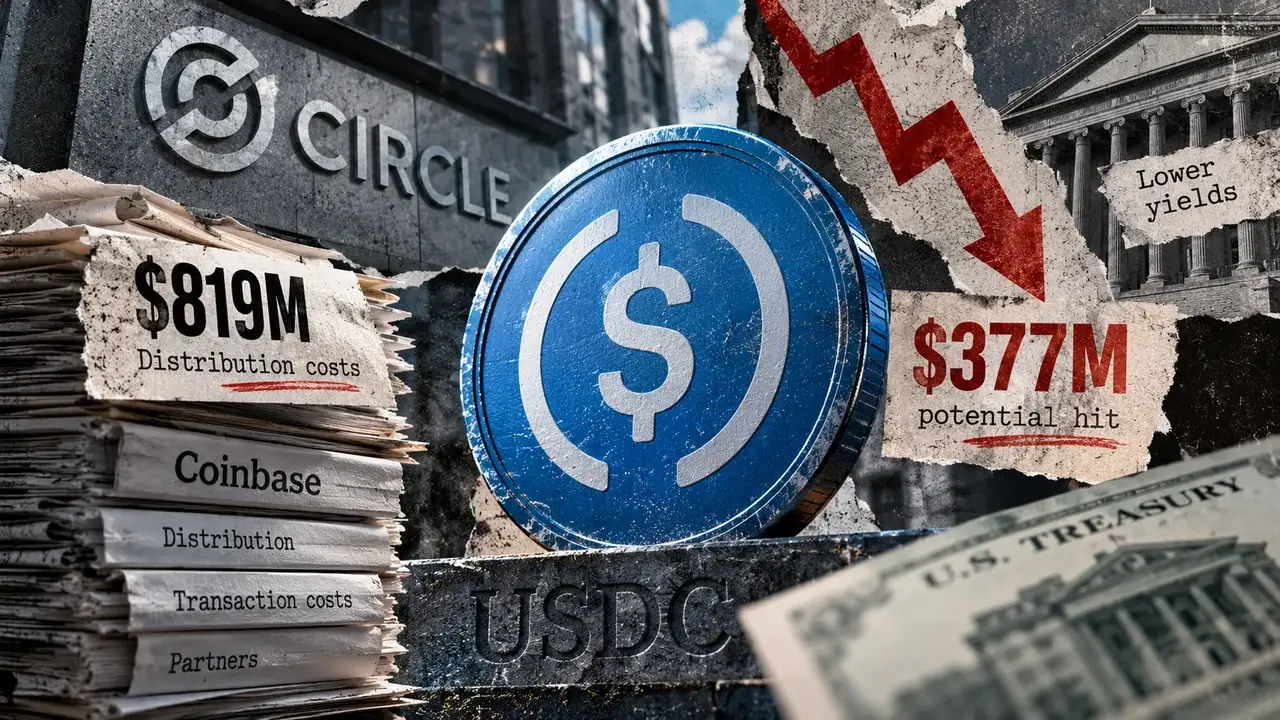
USDC processed $36 trillion in H1 transactions, but Circle kept just 7 cents of every revenue dollar
Stablecoin issuer Circle spent 93% of its first-half revenue on distribution, operations, and investment as USDC processed more th...
Japan’s megabank trio completes joint stablecoin payment test
Japan's successful stablecoin test by major banks could revolutionize cross-border payments, enhancing efficiency and fostering bl...

Pacific Meta taps Chainlink CCIP to push tokenized finance in Japan
The partnership could accelerate Japan's adoption of tokenized finance, enhancing cross-chain interoperability and compliance in t...