Gary Gensler: Cryptocurrencies Are 'Highly Speculative' Asset Class
Gary Gensler, chair of the U.S. Securities and Exchange Commission (SEC), today described cryptocurrencies as "an asset class that's highly speculative" and that in many cases, "there is not something standing behind it...
Archive context
Older archive item. Useful for background and entity history, but not a fresh market-moving signal.
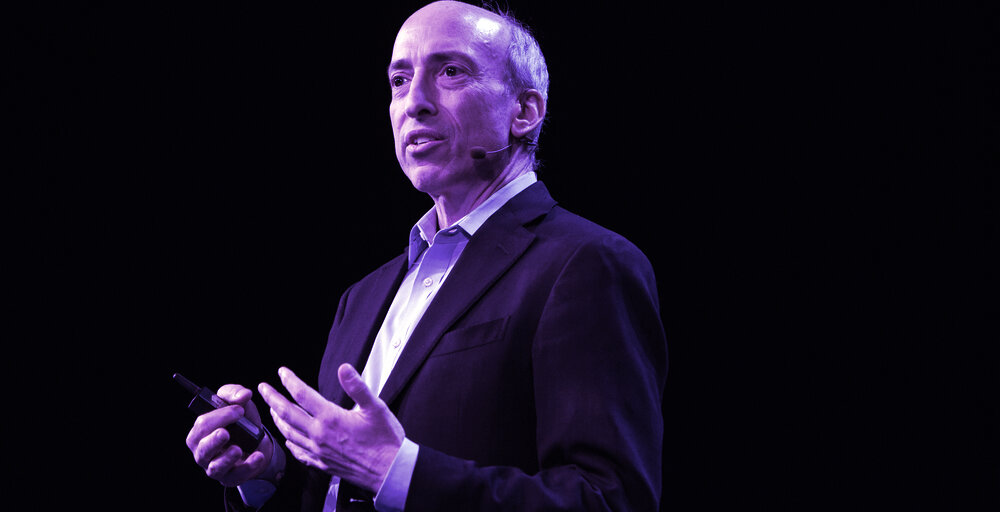
Gary Gensler, chair of the U.S. Securities and Exchange Commission (SEC), today described cryptocurrencies as "an asset class that's highly speculative" and that in many cases, "there is not something standing behind it other than what somebody else will pay for it."
Speaking during a livestreamed interview with The Washington Post, Gensler added that the value of cryptocurrencies "could go down dramatically, they could go up dramatically."
Gensler added that it is important for cryptocurrency innovation not to “undermine the stability of the system.” “I think it’s better to bring it inside the public policy framework, and ensure that we address these important public policy goals,” he said.
Regarding the question of securities, Gensler said the SEC has a “great deal of authority” when it comes to crypto tokens that “have the attributes of an investment contract.”
“It’s highly likely that [lending platforms] have thousands of tokens, and it’s highly likely that they have on these platforms, securities investment contracts or notes or others that fit the definition of a security,” he continued, adding that “there’s going to be a problem on lending platforms or trading platforms.”
What We’ve Learned About SEC Chairman Gary Gensler’s Stance on CryptoGensler added that the United States has experimented with private forms of money in the past, citing the wildcat banking era of the 1860s. At the time, banks would compete with each other by issuing different banknotes. “That all had a lot of cost and a lot of problems and so forth,” adding that he did not see a “long term viability for five or six thousand private forms of money.”
Gensler's view on cryptoThis is the latest in a long line of regulatory warnings that Gensler has aimed at the crypto industry, which he believes requires more consumer protection; a position shared by prominent political figures in the United States like Senator Elizabeth Warren (D-MA).
"We have to ensure for investor and consumer protection; that's what an agency like ours, the SEC does," Gensler said. He added that in order to ensure compliance with tax and AML laws, and to protect "the stability of the system," it's important to bring crypto inside the public policy framework.
Gensler has previously taken aim at crypto's emerging decentralized finance (DeFi) industry. On two separate occasions earlier this summer, Gensler said that DeFi platforms may be rife with unregistered securities.
He has also said that while cryptocurrencies do not fit the definition of money, they are often used to "skirt our laws."
Why this matters
This cryptocurrency story adds another data point to the current market tape and is useful when read alongside nearby source coverage.
Original source
Read on DecryptRelated market context
CMCC Global Plans Tokenized Bitcoin Funds With Tether And Bitfinex Securities
TL;DR: CMCC Global is bringing two existing fund strategies into tokenized securities issued through Tether’s Hadron infrastructur...
Paybis Adds iDEAL, BLIK, Multibanco and EPS for Buying Crypto in Europe
Customers in the Netherlands, Poland, Portugal and Austria can now buy crypto on Paybis through a banking app or a payment referen...
Irish Central Bank Fines Coinbase Unit €3.25 Million Over Customer Fund Safeguards
TL;DR: Ireland’s central bank imposed a €3.25 million penalty on Coinbase Ireland over electronic-money safeguarding and outsourci...
Chainlink Expands LG Tech Arm Tie-Up Into Formal Partnership on Korean Stablecoins
Chainlink and LG CNS, the technology arm of South Korea’s LG Group, announced a strategic partnership on Oct. 22, widening a relat...
NY Seeks $1.37 Billion Judgment Against Operators of NovaTech Crypto Ponzi Scheme
Bitcoin Magazine NY Seeks $1.37 Billion Judgment Against Operators of NovaTech Crypto Ponzi Scheme New York Attorney General Letit...
US Senator Questions Tether Over Reported Payments Linked To Former Crypto Adviser
TL;DR: Senator Richard Blumenthal has demanded records from Tether and consultancy Nxum over reported payments and potential ethic...