Germany’s Boerse Stuttgart Digital Secures MiCA Approval for EU Crypto Expansion
Germany granted one of its first MiCA license to Boerse Stuttgart Digital. The approval now positions the stock exchange’s digital unit as an important player in the European Union’s evolving crypto ecosystem. The licens...
Archive context
Older archive item. Useful for background and entity history, but not a fresh market-moving signal.

Germany granted one of its first MiCA license to Boerse Stuttgart Digital. The approval now positions the stock exchange’s digital unit as an important player in the European Union’s evolving crypto ecosystem.
The license, issued by Germany’s financial regulator BaFin, enables Boerse Stuttgart Digital to expand its offerings across all 27 EU member states, Coindesk reported.
European Crypto Regulation
This milestone reportedly aligns with the recent rollout of the Markets in Crypto Assets (MiCA) regulations, which aim to integrate the regulatory framework for crypto service providers across Europe. The MiCA regulations, implemented in late 2024, streamline the licensing process for crypto asset service providers (CASPs), replacing the previous country-by-country system.
🇩🇪 NEW: Boerse Stuttgart becomes Germany’s first crypto service provider licensed under MiCA. pic.twitter.com/Cgbf5i1Q9l
— Daddy ZeeJay🥃 (@daddyzeejay) January 17, 2025Boerse Stuttgart Digital is reportedly the first German firm to secure this EU-wide approval. Germany’s crypto ambitions nearly faltered due to political challenges, including a government coalition collapse.
However, the Bundestag managed to pass the necessary legislation before the year-end deadline, designating BaFin as the national regulator for MiCA compliance.
Boerse Stuttgart Digital faces stiff competition from institutionally focused players across Europe. Swiss-based Sygnum Bank, for instance, services over 20 banks and recently secured its own CASP license in Liechtenstein.
Meanwhile, Germany’s Boerse Stuttgart Digital aims to leverage its strong institutional ties, including its partnership with DZ Bank, which serves 737 German community banks.
Competition in the Institutional Crypto Market
The MiCA framework is expected to simplify operations for CASPs, fostering innovation and trust in the crypto space. Boerse Stuttgart Digital’s pioneering role underscores the growing institutionalization of crypto in Europe.
With this license, the company can reportedly offer integrated solutions for financial institutions across the EU, setting a precedent for other firms navigating the MiCA landscape.
Elsewhere, the Cyprus Securities and Exchange Commission provided updated guidance for CASPs under the transitional provisions for the MiCA regulations.
The regulator mentioned that (CASPs) must prove evidence of their compliance with national rules. It also mandates documentation, including a confirmation letter from their Internal Auditors and details on their operations.
This article was written by Jared Kirui at www.financemagnates.com.Why this matters
This cryptocurrency story adds another data point to the current market tape and is useful when read alongside nearby source coverage.
Original source
Read on Finance MagnatesRelated market context
CFTC Chair Selig Says Regulator Is Preparing for ‘24-7, On-Chain’ Markets
Bitcoin Magazine CFTC Chair Selig Says Regulator Is Preparing for ‘24-7, On-Chain’ Markets Commodity Futures Trading Commission Ch...
Raiffeisen Bank International to Roll Out Bitcoin Services Across Europe in Expanded Bitpanda Deal
Bitcoin Magazine Raiffeisen Bank International to Roll Out Bitcoin Services Across Europe in Expanded Bitpanda Deal Austrian banki...

Anchorage Digital Taps LayerZero To Take USAT Stablecoin Cross-Chain
TL;DR Anchorage Digital has selected LayerZero as its interoperability partner for regulated stablecoins issued through its platfo...

CFTC to develop crypto regulatory framework using existing powers
The CFTC's proactive crypto regulation could enhance market confidence and structure, potentially influencing crypto asset valuati...

Bloomberg: Crypto regulatory war ends as SEC, CFTC reach mutual acceptance
The resolution of regulatory conflicts may enhance market stability, potentially boosting investor confidence and fostering Bitcoi...
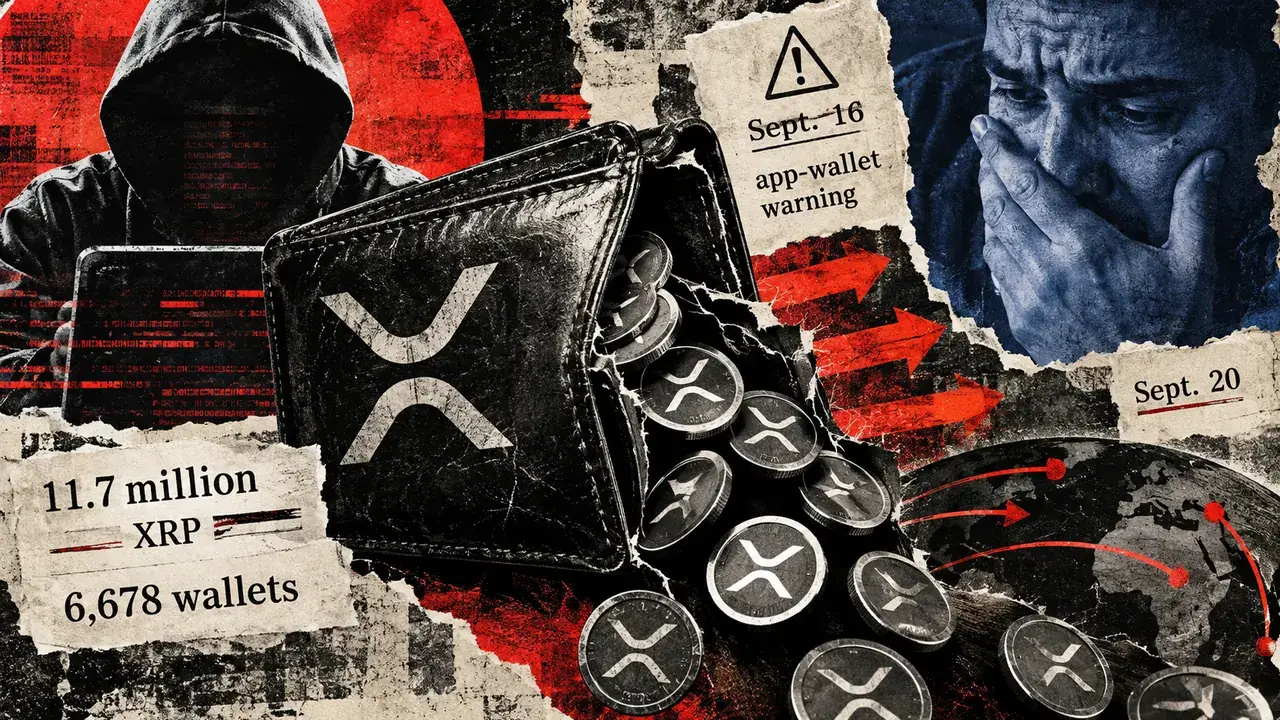
Nearly $20 million in XRP drained from 6,678 wallets across six attack waves
Nearly $20 million of XRP was drained from thousands of hardware wallets in six waves spanning nearly a week. Blockchain analysis...