Global Reserves Held in US Dollars Fell to Less Than 50% — Official States It Has Become a ‘Toxic’ Currency
The percentage of reserves held in U.S. dollars by central banks has fallen to less than half of the global total of reserves, according to a note from Eurizon SLJ Asset Management. The note states that the recent sancti...
Archive context
Older archive item. Useful for background and entity history, but not a fresh market-moving signal.
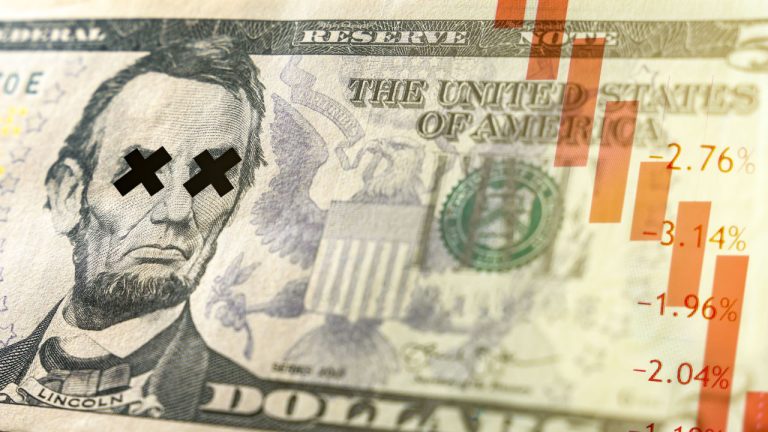
The percentage of reserves held in U.S. dollars by central banks has fallen to less than half of the global total of reserves, according to a note from Eurizon SLJ Asset Management. The note states that the recent sanctions enacted by the U.S. against the Bank of Russia have eroded trust in the dollar as a reserve currency.
Central Bank Dollar Reserves Hit 47% as Trust in the Currency ErodesCentral banks are beginning to diversify their reserves away from the U.S. dollar. A note issued by Eurizon SLJ Asset Management on April 17 revealed that the percentage of the reserves that central banks held in dollars hit 47% during 2022, falling sharply since 2021, when dollars represented 55%.
Analysts from the firm explain that this decline in just one year is “exceptional,” and marks an acceleration of the predicted erosion rate of the U.S. dollar.
The cause, the report states, has to do with the wide package of sanctions that the U.S. government applied to Russia due to its involvement in the current Russia-Ukraine conflict, freezing its gold and foreign currency assets abroad, and putting several key companies on the designated entity list of the Office of Foreign Assets Control (OFAC).
The note explains these “exceptional actions” have made other countries less willing to hold their reserves in the form of U.S. dollars.
The Dollar Has Become ‘Toxic’This de-dollarization trend fueled by the so-called “weaponization” of sanctions by the government of the U.S. has global blocs like BRICS and ASEAN looking for alternatives to safely conduct trade amongst themselves.
BRICS is currently studying an initiative for creating a common currency, that will be discussed at the next BRICS summit to be held in South Africa. In the same way, ASEAN countries have called for reducing reliance on the dollar, and the usage of national currencies for international settlements, fearing the application of secondary sanctions.
On April 19, Russian Deputy Minister of Foreign Affairs Alexander Pankin criticized this “weaponization,” noting that more and more countries were increasing their gold holdings while dropping their foreign currency reserves. He stated:
These trends show that the US dollar is becoming big, strong, but still toxic for everyday operations. It’s not a mainstream trend, but I believe it might become a trend.
What do you think about the drop in the global percentage of reserves held in U.S. dollars? Tell us in the comments section below.
Why this matters
This cryptocurrency story adds another data point to the current market tape and is useful when read alongside nearby source coverage.
Original source
Read on Bitcoin NewsRelated market context
US Hoovers up Bitcoin While the World Runs on Its Digital Dollars: Report
Bitcoin Magazine US Hoovers up Bitcoin While the World Runs on Its Digital Dollars: Report America is accumulating bitcoin while e...

Circle Says 59 Cents of Each Revenue Dollar Went to USDC Partners and Transaction Costs
Circle said it paid about $819 million of its roughly $1.4 billion in first-half 2026 revenue to USDC distribution partners and tr...

Circle Targets 40 New Markets As USDC Push Moves Beyond Crypto Trading
TL;DR: Circle plans to expand USDC infrastructure into approximately 40 developing and emerging markets. The company is targeting...

BFFS26 Denver: Joseph Kelly on Bitcoin Custody and Credit; Alan Lane on Banking Lessons
Bitcoin Magazine BFFS26 Denver: Joseph Kelly on Bitcoin Custody and Credit; Alan Lane on Banking Lessons The Bitcoin for Financial...
Bitcoin’s Volatility Has Fallen Within S&P 500 Ranks, Study Shows
Bitcoin Magazine Bitcoin’s Volatility Has Fallen Within S&P 500 Ranks, Study Shows Stocks and shares are a safer bet than buying b...

Musk’s Flying Roadster Sends Tokenized Tesla Trading Vertical as Crypto Becomes the After-Hours Market
Elon Musk's flying Tesla Roadster unveiling sent Hyperliquid's TSLA perpetual volume up 1,580% with US markets closed, as tokenize...