Growing Links Between Middle East, Russia, China Pose Huge Challenge for US, Warns Former Treasury Secretary
Former Treasury Secretary Lawrence Summers has expressed concerns that a rising number of countries, including China, Russia, and the Middle East, are aligning themselves and gaining global influence. “I think [it] is a...
Archive context
Older archive item. Useful for background and entity history, but not a fresh market-moving signal.
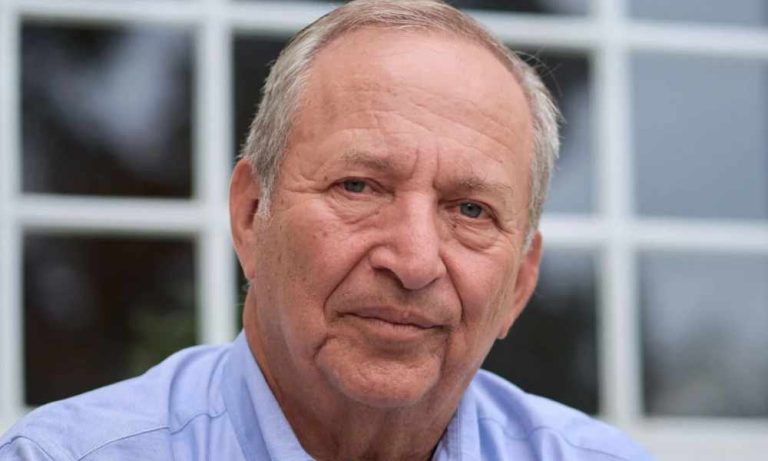
Former Treasury Secretary Lawrence Summers has expressed concerns that a rising number of countries, including China, Russia, and the Middle East, are aligning themselves and gaining global influence. “I think [it] is a huge challenge for the United States,” he cautioned.
Former Treasury Secretary Lawrence Summers expressed concern on Bloomberg TV Friday about an increasing number of nations coming together and gaining global influence against the U.S. He made these remarks on the sidelines of the spring meetings of the International Monetary Fund (IMF) and the World Bank in Washington, D.C.
Summers is currently the Charles W. Eliot University Professor at Harvard University. He previously served as Director of the National Economic Council and the Treasury Secretary of the United States, as well as chief economist at the World Bank.
He explained that a growing number of countries are aligning themselves on the opposite side of the U.S., elaborating:
There’s a growing acceptance of fragmentation, and — maybe even more troubling — I think there’s a growing sense that ours may not be the best fragment to be associated with.
The former Treasury Secretary shared: “Somebody from a developing country said to me: ‘What we get from China is an airport. What we get from the United States is a lecture.’”
Recently, Brazilian President Luiz Inácio Lula da Silva visited China and met with Chinese President Xi Jinping. Lula said Saturday that Brazil’s relationship with China “is going beyond that phase of commodity” exports. The Brazilian president also urged developing countries to abandon the U.S. dollar as the global reserve currency. China also recently brokered talks between Iran and Saudi Arabia, the two great oil-producing rivals of the Middle East. Iran and Saudi Arabia subsequently agreed to restore ties and reopen embassies seven years after severed relations.
Commenting on the deepening links between the Middle East and China, Summers opined:
I think what’s happening in the Middle East … the Chinese-brokered diplomatic relations between Saudi and Iran is a symbol of what I think is a huge challenge for the United States.
Moreover, OPEC+ members, including Saudi Arabia and Russia, recently agreed to cut crude oil output. OPEC+ is a group of 23 oil-exporting countries that meets regularly to decide how much crude oil to sell on the world market.
The economist added: “We are on the right side of history — with our commitment to democracy, with our resistance to aggression in Russia.” He opined:
But it’s looking a bit lonely on the right side of history, as those who seem much less on the right side of history are increasingly banding together in a whole range of structures.
Summers added that the U.S. government must address this new challenge. “If the Bretton Woods system is not delivering strongly around the world, there are going to be serious challenges and proposed alternatives,” he warned.
Do you agree with former Treasury Secretary Larry Summers that growing relations between the Middle East, China, and Russia is a concern for the U.S.? Let us know in the comments section below.
Why this matters
This cryptocurrency story adds another data point to the current market tape and is useful when read alongside nearby source coverage.
Original source
Read on Bitcoin NewsRelated market context

FBI helps smash crypto scam targeting Russian speakers in Brooklyn
The FBI has helped take down a crypto scam network that targeted Russian-speaking individuals living in the US and likely stole te...

Russia Crypto: Diesel Deal Falters as Zelensky Resumes Refinery Strikes, What Now for Oil Bitcoin?
In Russia crypto news, Donald Trump’s announced plan to release 300,000 tonnes of Russian diesel to the US and global markets face...

Solidus Labs hires former CFTC official Kevin Webb as VP of policy
Solidus Labs' strategic hire underscores the growing importance of regulatory expertise in navigating complex digital asset market...

MSCI Tightens Index Rules As Strategy And Other Bitcoin Treasury Firms Face Fresh Scrutiny
TL;DR: MSCI has revised its methodology for classifying non-operating companies, putting Bitcoin-heavy treasury businesses under c...

Bitcoin Price Prediction: Bitcoin Tracks Treasury Real Rates, Fidelity Finds
Bitcoin is trading at $82,000, rebounding from $80,000 since yesterday morning, as traders weigh a new macro signal that could fli...

Solana Breaches China’s Crypto Wall With New Shanghai Office
The establishment of a new Solana Foundation office in one of Shanghai’s highest commercial buildings has drawn out criticism from...