Harvard Economics Professor: US Default Could Spark Global Financial Crisis
Harvard economics professor Kenneth Rogoff, who previously served as the chief economist at the International Monetary Fund (IMF), has warned that the U.S. defaulting on its debt obligations could spark a global financia...
Archive context
Older archive item. Useful for background and entity history, but not a fresh market-moving signal.
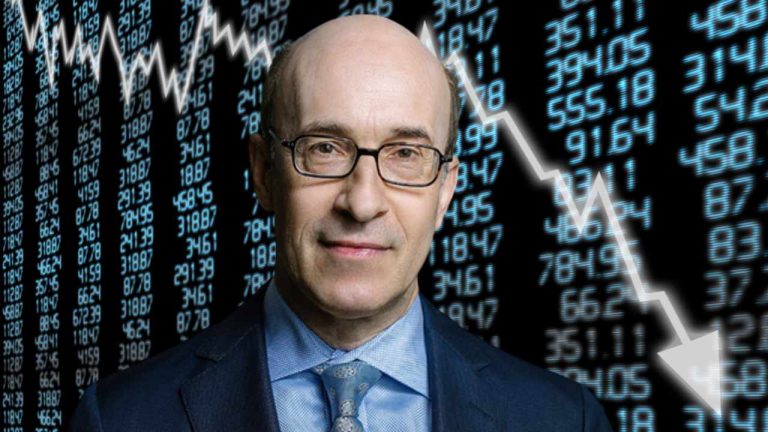
Harvard economics professor Kenneth Rogoff, who previously served as the chief economist at the International Monetary Fund (IMF), has warned that the U.S. defaulting on its debt obligations could spark a global financial crisis. “It’s a very perilous situation and we are in unknown waters,” he warned.
Harvard Professor of Economics Kenneth Rogoff on U.S. Default and Global Financial CrisisHarvard economics professor Kenneth Rogoff shared his view on the U.S. economy, a possible U.S. default, and a global financial crisis in an interview with ET editor Srijana Mitra Das, published Thursday. Rogoff is a professor of Economics and Maurits C. Boas Chair of International Economics at Harvard University. From 2001–2003, he served as Chief Economist and Director of Research at the International Monetary Fund (IMF).
He was asked whether the current U.S. debt crisis and its potential default could “bring back the risks of a global recession.” Rugoff replied:
Absolutely. The risks exist anyway but if this worsens, it could pose a global financial crisis. I hope it won’t come to that — but it’s a very perilous situation and we are in unknown waters.
“Generally, when you navigate government spending, you consider one bill at a time. You look over all its details and then negotiate how to work these out,” he explained. However, he stressed that the Republicans are trying to get everything all at once, emphasizing that “No country runs its fiscal policy that way.”
He cautioned: “Typically, these negotiations do get resolved at midnight but there is a two to three percent chance at the moment here that we will discover what a U.S. default looks like.”
How the U.S. ‘Defaulted’ in the PastRogoff further detailed that the U.S. has “defaulted” in the past but “in a different way.” One example was in the early 1930s when American debt used to be payable in gold. President Franklin Roosevelt changed the gold price from $20 to $35. “We defaulted on the gold clause while we paid the debt in dollars, which was worth a lot less,” the Harvard professor noted.
Another example was “after the Revolutionary War when the U.S. was forming,” the economics professor described. “Alexander Hamilton, the first secretary of the U.S. Treasury, only paid some of the inherited colonial debt,” Rugoff explained, adding:
We’ve also had high inflation recently — so, if you’re a U.S. debt holder, the value of your holding has reduced markedly in the last two years. That is a kind of default since you weren’t expecting the loss of value but it is much less disruptive than this situation which is like facing a black hole.
U.S. Treasury Secretary Janet Yellen has said that the Treasury may not be able to pay all of the government’s bills as early as June 1 “if Congress does not raise or suspend the debt limit before that time.” However, some believe that raising the debt ceiling will make the problem worse, including economist Peter Schiff.
Like Yellen, the Congressional Budget Office similarly warned that the government could default on its debt in the first two weeks of June. The IMF cautioned last week that a U.S. default would have “very serious repercussions.” Meanwhile, former President and 2024 presidential candidate Donald Trump has urged Republican lawmakers to let the U.S. default on its debt if the Democrats do not agree to spending cuts.
Do you agree with Harvard economics professor Kenneth Rugoff? Let us know in the comments section below.
Why this matters
This cryptocurrency story adds another data point to the current market tape and is useful when read alongside nearby source coverage.
Original source
Read on Bitcoin NewsRelated market context

Math Professor Warns of Threat to Bitcoin from AI Pivot
Bitcoin Magazine Math Professor Warns of Threat to Bitcoin from AI Pivot Could anyone actually break Bitcoin? Micah Warren, associ...

Bitcoin mining stocks plunge more than 10% in AI debt reckoning
The plunge in Bitcoin mining stocks highlights the financial vulnerability of AI infrastructure investments amid rising borrowing...

Brooklyn DA and FBI Crush Massive International Crypto Scam
On Wednesday, Brooklyn prosecutors disclosed that they have dealt a major blow to an international cryptocurrency scam that stole...
A7 International enables USDT payments for foreign invoices via SWIFT
A7 International's USDT-SWIFT integration could streamline global trade, reducing costs and delays, while bypassing traditional ba...
Bybit Expands Beyond Crypto as CEO Outlines Next Phase of Financial Platform
Dubai, United Arab Emirates, October 13th, 2026, Chainwire. Bybit Co-founder and CEO Ben Zhou has outlined the latest stage of the...

Crypto Regulation: Firms Face AI Controls Before Dedicated Rules Arrive
In crypto regulation news, the rise of AI has led financial supervisors to shift from broad concern to concrete expectations for h...