Hong Kong’s e-HKD Program Enters Critical Phase – Here’s What It Means
Key Takeaways: In Phase 2 of Hong Kong’s e-HKD pilot, the project focuses on real-world testing of CBDC applications. The program evaluates on-chain enforcement of KYC and transfer restrictions using ERC-20 and ERC-3643...
Archive context
Older archive item. Useful for background and entity history, but not a fresh market-moving signal.

Key Takeaways:
- In Phase 2 of Hong Kong’s e-HKD pilot, the project focuses on real-world testing of CBDC applications.
- The program evaluates on-chain enforcement of KYC and transfer restrictions using ERC-20 and ERC-3643 standards.
- Participants describe the pilot as a foundation for future digital money infrastructure rather than a consumer-facing rollout.
Hong Kong’s central bank has moved into the next stage of digital currency testing, with the second phase of its e-HKD pilot focusing on live applications in asset settlement, cross-border payments, and programmable finance.
In a report published by the Hong Kong Monetary Authority (HKMA) in collaboration with Visa, ANZ, Fidelity International, and ChinaAMC, active trials involving tokenized money, fund units, and smart contracts are designed to simulate real-world transaction flows between banks and asset managers across jurisdictions.
Hong Kong Tests Tokenized Cross-Border Fund SettlementOne of the core tests involves allowing an Australian investor to purchase a Hong Kong-based money market fund using tokenized Australian dollars exchanged for tokenized Hong Kong dollars.
The process combines permissioned bank infrastructure with public blockchain settlement using Chainlink’s interoperability protocol.
We’re excited to share that Chainlink is facilitating the secure exchange of a Hong Kong CBDC and an Australian dollar stablecoin as part of an ongoing use case in Phase 2 of the e-HKD+ Pilot Program.
Congratulations to participants @Visa, ANZ, China AMC, and Fidelity… pic.twitter.com/ts2C6Vt4Ul
While the HKMA previously explored conceptual use cases, the current phase focuses on execution under constrained but operational conditions. This includes integrating compliance checks, reserve management, and identity verification into an end-to-end cross-border payment system.
The testing environment also experiments with different token standards, including ERC-20 and ERC-3643, to evaluate how regulatory features such as transfer restrictions and KYC enforcement perform on-chain.
The participants describe this stage as a proving ground for core infrastructure rather than a retail rollout.
“We are extremely excited about the future of tokenization for payments,” said Visa Crypto’s Head of Institutional Client Solutions, Catherine Gu.
“Visa’s long-term collaboration with the HKMA and our partners for two consecutive years has provided us with many valuable insights around tokenization technology and new business flows,” said Gu.
e-HKD Pilot Explores Real-World CBDC UseThe results could help shape how financial institutions structure cross-chain asset transfers, settle trades without intermediaries, and align blockchain design with existing compliance frameworks.
While the pilot is still limited in scope, its architecture reflects the technical and regulatory compromises required to embed digital money into global financial plumbing.
Other central banks have focused on retail pilots or isolated technical proofs. In contrast, Hong Kong is testing how digital money moves through actual financial workflows—across borders, institutions, and legal jurisdictions.
The pilot raises a larger question about control over the rules encoded in programmable money. When compliance and restrictions are built into tokens, authority may move from legal contracts to code, changing how institutions manage trust and enforcement.
Frequently Asked Questions (FAQs)How could programmable CBDCs affect central bank oversight in cross-border markets?Programmable features may allow central banks to embed rules directly into currency flows, reducing the need for external enforcement.
What risks could arise if financial institutions rely on third-party blockchain infrastructure for CBDC operations?Dependence on external networks could introduce vulnerabilities in data security, protocol governance, and operational continuity, particularly if control lies outside domestic regulatory reach.
How does token standard experimentation in CBDC pilots relate to future financial regulation?Testing standards like ERC-3643 helps regulators evaluate how to codify legal restrictions into digital assets. This may inform how laws are translated into technical specifications, shifting enforcement into infrastructure.
The post Hong Kong’s e-HKD Program Enters Critical Phase – Here’s What It Means appeared first on Cryptonews.
Why this matters
This cryptocurrency story adds another data point to the current market tape and is useful when read alongside nearby source coverage.
Original source
Read on CryptonewsRelated market context
Moscow Exchange to Launch Bitcoin Trading, Testing Underway
Bitcoin Magazine Moscow Exchange to Launch Bitcoin Trading, Testing Underway The Moscow Exchange plans to let clients trade crypto...

Pando Sets Oct. 13 Hong Kong Listing for Spot Solana ETF
The fund will charge a 0.60% annual management fee, adding another option alongside ChinaAMC’s Solana ETF, which held $8.58 millio...

FTX’s old Bitcoin-mining infrastructure gets a second life powering AI
The shift from crypto mining to AI workloads highlights the evolving landscape of digital infrastructure, emphasizing connectivity...
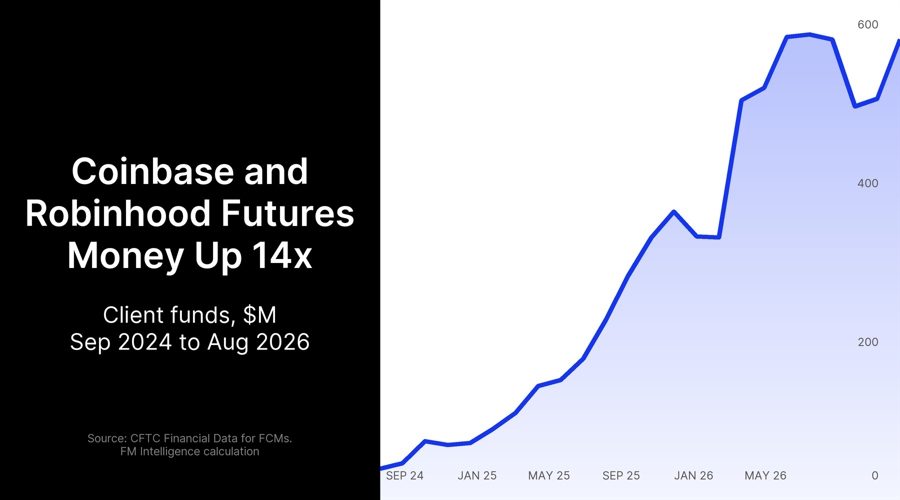
Coinbase and Robinhood Futures Arms Now Hold More Client Money Than the US Retail Forex Pool
The futures brokers of Coinbase and Robinhood held $581.4 million of segregated client money at the end of August. That is more th...

Meta AI Predicts This Huge Catalyst Could Lead to $40 XRP
Mark Zuckerberg’s Meta AI predicts an insanely wild bullish price target for XRP by January 1, 2027. The AI bot believes $25–$40 i...
Russia’s Moscow Exchange Pilots Crypto Trading for December Launch
The exchange is currently testing its crypto trading capabilities with professional participants in a pilot environment that will...