Hoskinson Warns the Crypto Slump Will Get Worse as $LIQUID Targets Fluidity
What to Know: $BTC near $66K and $ETH near $1.9k highlight a fragile tape where volatility dictates positioning. ‘It’ll get worse’ warnings resonate because liquidity stress amplifies risks like wider spreads and higher...
Archive context
Older archive item. Useful for background and entity history, but not a fresh market-moving signal.

- $BTC near $66K and $ETH near $1.9k highlight a fragile tape where volatility dictates positioning.
- ‘It’ll get worse’ warnings resonate because liquidity stress amplifies risks like wider spreads and higher cross-chain costs.
- Bitcoin DeFi competition is heating up, placing a premium on platforms that attract real liquidity rather than just headlines.
- LiquidChain’s unified liquidity narrative aligns with a risk-off market that is actively punishing complexity.
Crypto’s latest downdraft feels less like a temporary shakeout and more like a regime change. Bitcoin is trading around $66K and Ethereum is hovering near $1.9K, with both assets posting sharp 24-hour swings. Volatility is back in the driver’s seat.
That backdrop is precisely why Cardano founder Charles Hoskinson’s warning that the slump could ‘get worse’ is hitting home. Speaking during a livestream from Tokyo he noted that further problems could lie ahead, and that’s on top of the current conditions.
In a market where liquidity thins out, narratives don’t save you; execution does. The second-order effects are where the damage compounds: once spot prices turn choppy, leverage resets, spreads widen, and cross-chain capital becomes incredibly picky about where it sits. A ‘risk-off’ tape doesn’t just hit prices; it stresses the plumbing.
Some could see this as a 2026 ‘crypto winter,’ citing steep drawdowns from 2025 highs and fading risk appetite. But the real structural weakness is fragmented liquidity across Bitcoin, Ethereum, and Solana. When users are forced into multi-step bridging and wrapped-asset dependency just to put capital to work, the system cracks.
Here, the ‘fluidity’ angle becomes critical. When markets bleed red, the winners tend to be systems that reduce friction, collapse steps, and make liquidity composable, especially for developers who can’t afford operational headaches.
Fragmented Liquidity Is the Bear Market Tax: $LIQUID is Here to PayIn bull markets, fragmented liquidity is annoying. In bear markets, it’s expensive.
Liquidity fractures across ecosystems because execution environments don’t naturally talk to each other. The industry has historically papered over this with wrapped assets and bridges. The risk is obvious: bridge trust assumptions and wrapped collateral structures become the weakest link right when stress is highest. Sound familiar? Spreads gap out, redemptions get crowded, and that ‘one extra hop’ suddenly becomes a major liability.
The next leg of crypto adoption, particularly institutional, won’t be powered by yet another isolated app chain. It’ll be powered by liquidity that moves cleanly. Frankly, the market is asking a blunt question: why should capital accept extra steps and extra risk just to access basic DeFi primitives? That is the opening LiquidChain is trying to exploit.
LEARN WHAT LIQUIDCHAIN IS BUILDING
LiquidChain ($LIQUID) Pitches Single-Step Cross-Chain ExecutionLiquidChain positions itself as ‘The Cross-Chain Liquidity Layer’, an L3 infrastructure protocol designed to fuse Bitcoin, Ethereum, and Solana liquidity into a single execution environment. The core pitch is straightforward: fragmented liquidity and complex user flows aren’t features; they’re failure points.
Its feature set addresses that thesis directly:
- Unified Liquidity Layer to merge $BTC, $ETH, and $SOL ecosystems
- Single-Step Execution to cut down multi-transaction user journeys
- Verifiable Settlement to strengthen trust assumptions versus ad-hoc routing
- Deploy-Once Architecture, letting developers access liquidity across networks from one deployment
LiquidChain targets the unglamorous but critical plumbing of crypto: the transaction choreography that users normally don’t see, until it breaks. For developers, the ‘deploy once’ narrative matters because it’s effectively a bet on efficiency: ship to one environment, tap multiple pools of capital, and avoid rebuilding the same app stack three times.
Traders watching this setup know that cross-chain layers live or die by security design and adoption. Without clear traction from builders and sustained liquidity depth, even good architecture stays theoretical.
BUY $LIQUIDCHAIN ON ITS OFFICIAL PRESALE PAGE
LiquidChain Presale Prices In the Risk-Off RealityBearish sentiment doesn’t necessarily kill early-stage demand; it filters it. When ‘number-go-up’ euphoria vanishes, the market starts pricing protocols on whether they reduce risk, steps, and failure modes.
On that front, LiquidChain’s presale metrics signal early interest: it has raised over $529K, with tokens currently priced at $0.01355. Those figures matter for tracking momentum, as they reflect live demand at the point of sale.
Right now, the market backdrop is punishing complexity. With $BTC and $ETH swinging hard, mainstream coverage is openly discussing deeper drawdowns.
The risk is obvious. If the macro tape remains hostile, ETF outflows persist, and regulation headlines tighten, presales broadly can slow as buyers hoard dry powder. Yet, if history serves, infrastructure that improves mobility tends to re-rate quickly once stability returns, simply because it becomes the route capital takes back into DeFi.
This article is not financial advice; crypto is volatile, presales are risky, and cross-chain systems carry smart-contract and bridge-related risks.
Why this matters
Bitcoin is showing up inside the DeFi theme, so this story is worth tracking for follow-through rather than treating it as a one-off headline.
Original source
Read on NewsBTCRelated market context

AI Could Weaken Ethereum Security as Cryptographic Risks Grow, Vitalik Buterin Warns
Buterin urged developers to prepare for potential AI vulnerabilities in both conventional and quantum-resistant cryptography, whil...

Aave’s USDG rollover plan has a yield below most quoted borrowing rates
Aave’s proposed USDG rollover would let borrowers carry their stablecoin debt into a new fixed-yield USDG position, but the replac...

Bitcoin Price Prediction: Can BTC USD Hold $82K Ahead of Next Week’s CPI Drop?
Bitcoin price prediction notes a brief recovery on Saturday, October 10, but the market remains poised for a weekly loss as rising...
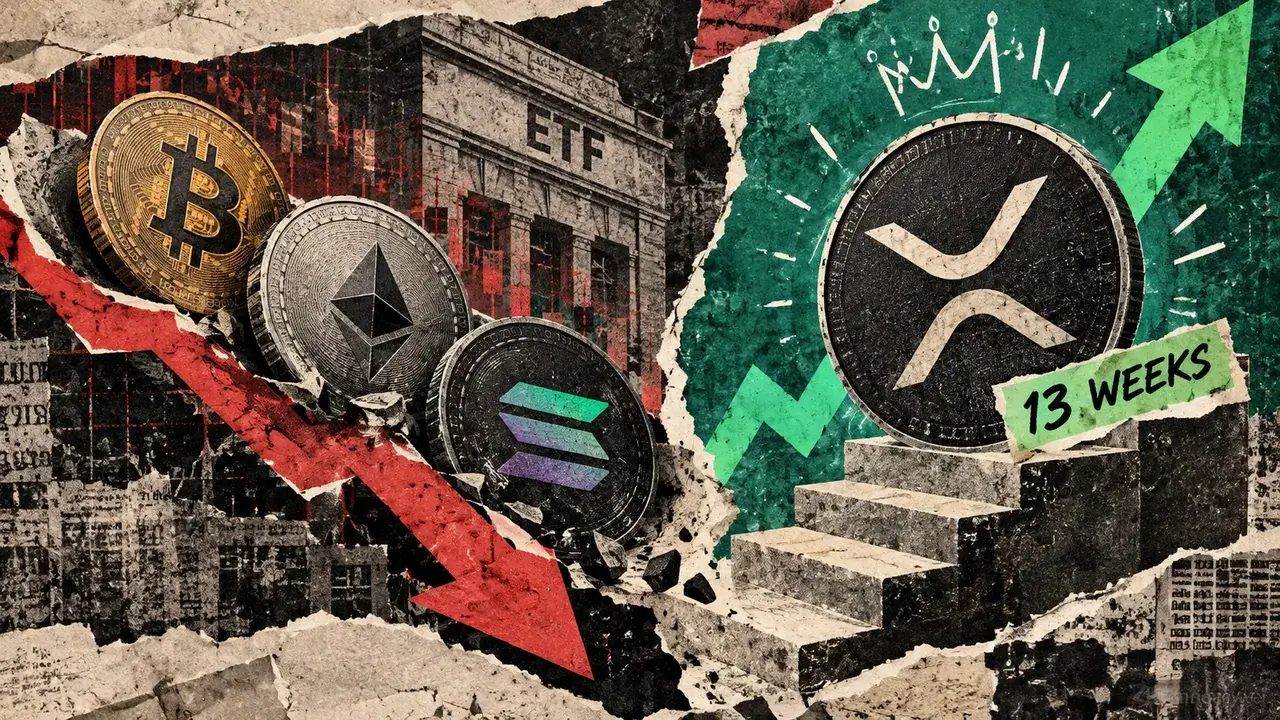
XRP ETFs extend a 13-week inflow streak as Bitcoin, Ethereum and Solana funds shed $1.25 billion
US-listed XRP ETFs extended their inflow streak to 13 weeks as Bitcoin, Ethereum and Solana funds suffered nearly $1.25 billion in...

Starknet considers leaving Ethereum for a quantum-resistant Layer 1
Starknet's STRK token more than doubled over seven days while developers considered leaving Ethereum to build an independent Layer...

Sam Altman ChatGPT AI Predicts Bitcoin to Hit Insane All-Time High in 2026
Sam Altman’s ChatGPT AI predicts Bitcoin could reach a new all-time high in 2026, nearly doubling its October 2025 high of $126,00...