How FBI turned Hamas’ crypto fundraising pipeline into a law-enforcement trap
The US Federal Bureau of Investigation (FBI) seized Hamas-linked fundraising infrastructure and used it to intercept cryptocurrency donations intended for the group. Earlier this week, the Justice Department said the ope...
Archive context
Older archive item. Useful for background and entity history, but not a fresh market-moving signal.

The US Federal Bureau of Investigation (FBI) seized Hamas-linked fundraising infrastructure and used it to intercept cryptocurrency donations intended for the group.
Earlier this week, the Justice Department said the operation followed earlier court-authorized seizures that traced and recovered more than $560,000 in digital assets tied to Hamas fundraising.
Those seizures came through warrants issued in March, June and October 2025 after investigators followed rotating donation addresses distributed through encrypted chats and fundraising websites.
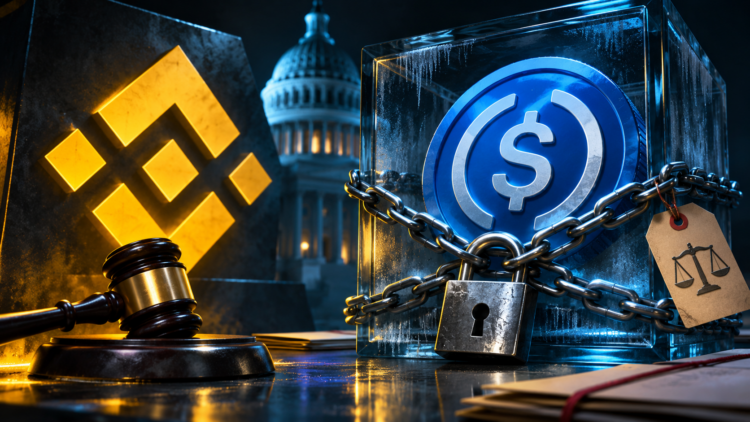
The June warrant showed how that process worked. Tether was ordered to burn targeted USDT and reissue an equivalent amount to a US law-enforcement-controlled address, while Binance was directed to transfer specified account balances into FBI-controlled wallets.
That approach allowed investigators to recover crypto after identifying where it had moved.
Special Agent in Charge Justin A. Garris of the FBI Albuquerque Field Office said:
“Reducing the capabilities of foreign terrorist organization's ability to receive donations and creating distrust in communications to their donors was the primary focus of this latest operation. This continued success demonstrates the unwavering commitment and determination of the FBI in fighting terrorism.”
FBI moved from tracing funds to intercepting themInvestigators targeted domains and servers linked to AlQassam.ps, a website the DOJ tied to the Al Qassam Brigades, Hamas’ military wing.
Affidavits filed in July and August said authenticated responses from [email protected] were routed through host.alaqsaflood.org, helping investigators connect fundraising communications to related infrastructure.
The FBI’s Albuquerque Field Office then worked with human sources to identify and seize domains and servers associated with the operation.
Control of that infrastructure changed the scope of the investigation. DOJ said agents were able to intercept crypto donations intended for Hamas and obtain additional information about people attempting to contribute.
That turned the case from a retrospective tracing effort into an active disruption operation.
DOJ said the broader investigation produced information about thousands of people who contacted Hamas online seeking to donate through cryptocurrency or traditional payment methods. The department did not specify how much of that information came directly from the seized servers.
Related Reading Tether freezes 134 wallets as stablecoins now sit inside the sanctions machineThe disclosure also does not establish that every person identified completed a donation or committed an offense.
However, this shows how several enforcement tools converged: blockchain tracing identified the money, court orders moved assets through centralized crypto providers, and infrastructure seizures gave investigators control over the fundraising channels themselves.
The post How FBI turned Hamas’ crypto fundraising pipeline into a law-enforcement trap appeared first on CryptoSlate.
Why this matters
Tether is showing up inside the Stablecoins theme, so this story is worth tracking for follow-through rather than treating it as a one-off headline.
Original source
Read on CryptoSlateRelated market context
Binance Hack: US Moves to Recover $1.1 Billion, but Who Gets the Money?
Key takeaways US authorities filed a civil forfeiture complaint on November 23 seeking more than $1.1 billion in USDC linked to th...

Tether’s USDT supply shrinks by $8.83 billion in 60 days
The shrinking USDT supply signals a cooling demand in the crypto market, reflecting a broader decline in risk appetite rather than...

Solana Price Prediction 2030: Is $2,000 SOL Still on the Table After a 75% Crash?
Key takeaways SOL trades near $73, roughly 75% below its January 2025 high of $294, and tracked Binance whale positioning leans be...

Clockwork Laundering: Binance Hackers Follow a Daily Cadence Linked to China
The laundering operation tied to Binance’s $6.3 billion cryptocurrency theft remains active to this very day, with stolen funds co...

Chainalysis traces billions stolen in Binance hack with its new AI tool
The Binance hack highlights the escalating arms race between crypto thieves and investigators, emphasizing the need for advanced A...

US prosecutors seek to forfeit $1.17 billion in stolen USDC from Binance hack
The case highlights the dual role of stablecoins in crime prevention and the trust implications for users, while raising questions...