Hungary Set to Drop Tough National Crypto Rules After Near-Total Industry Exodus
Just eight days after becoming the first Hungary-based provider to receive a MiCA licence, CoinCash said the country's parliament had approved legislation repealing Hungary's additional national crypto-asset requirements...
Archive context
Older archive item. Useful for background and entity history, but not a fresh market-moving signal.

Just eight days after becoming the first Hungary-based provider to receive a MiCA licence, CoinCash said the country's parliament had approved legislation repealing Hungary's additional national crypto-asset requirements.
CoinCash received its MiCA licence on July 20 following a 16-month review process, becoming the first locally based crypto provider authorised under the EU framework.
According to the company, the proposed legislative change would remove the national requirements that prompted several firms to suspend services, relocate or delay expansion in the Hungarian market.
Finance Magnates could not independently verify the vote.
Where the Gold-Plating Went Wrong
Alongside MiCA, Hungary introduced additional domestic requirements for crypto providers.
The regime required a national "validator" to certify individual crypto exchange transactions and imposed criminal penalties of up to two years' imprisonment for providing unauthorised exchange services.
Firms had until July 1, 2025, to comply, compared with MiCA's 18-month transition period. The changes prompted several firms to suspend or withdraw crypto services in Hungary.
Revolut, MoonPay, Strike and Kriptomat cited the legislation, while CashCoin relocated to the Netherlands and said it would return through MiCA passporting.
What it Means for Brokers
CoinCash suspended operations for seven months, while the National Bank of Hungary worked through multiple rounds of review.
"We chose to meet one of Europe's toughest regimes head-on rather than move offshore — and that choice is what this licence represents," said Attila Mogyorósi, co-founder and CEO of CoinCash.
If enacted, the repeal would remove the additional national requirements that had made Hungary an outlier under MiCA.
CoinCash's licence would remain valid regardless of the changes, while other European crypto firms could again serve Hungarian clients without navigating a separate domestic rulebook.
This article was written by Tanya Chepkova at www.financemagnates.com.Why this matters
Revolut is showing up inside the Regulation theme, so this story is worth tracking for follow-through rather than treating it as a one-off headline.
Original source
Read on Finance MagnatesRelated market context

Revolut secures Gibraltar crypto licence to support international expansion plans
Revolut secured a Gibraltar DLT licence for a new entity to support its international crypto expansion strategy.

Revolut Wins Gibraltar Crypto License, Reopens Sign-Ups for Local Residents
Gibraltar's financial regulator has authorized a new Revolut subsidiary to provide crypto services, the government said today (Mon...

BitTorrent Ushers in Next-Gen Web3 Infrastructure with Strategic Rebrand and Inaugural BTT Burn
The first round of BTT repurchased with decentralized service revenue has been completely burned, as BitTorrent leverages its reim...

BFFS26 Denver: Joseph Kelly on Bitcoin Custody and Credit; Alan Lane on Banking Lessons
Bitcoin Magazine BFFS26 Denver: Joseph Kelly on Bitcoin Custody and Credit; Alan Lane on Banking Lessons The Bitcoin for Financial...
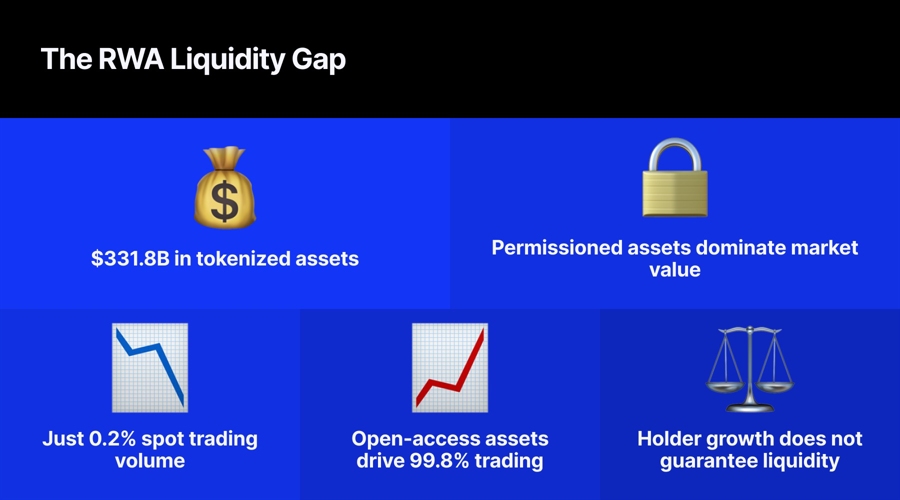
More Holders, Little Trading: The RWA Liquidity Problem Is Worse Than You Think
Let me ask you something straight. Does real-world asset trading on crypto exchanges feel like a genuine revolution, or does it fe...
BitTorrent Ushers in Next-Gen Web3 Infrastructure with Strategic Rebrand and Inaugural BTT Burn
Overview: The first round of BTT repurchased with decentralized service revenue has been completely burned, as BitTorrent leverage...