IMF Chief Warns of More Weaknesses in US Banking Sector — Sees ‘Gradual’ Shift Away From US Dollar
International Monetary Fund (IMF) Managing Director Kristalina Georgieva expects “more vulnerabilities” in the U.S. banking sector amid a growing de-dollarization trend worldwide. “There has been a gradual shift away fro...
Archive context
Older archive item. Useful for background and entity history, but not a fresh market-moving signal.
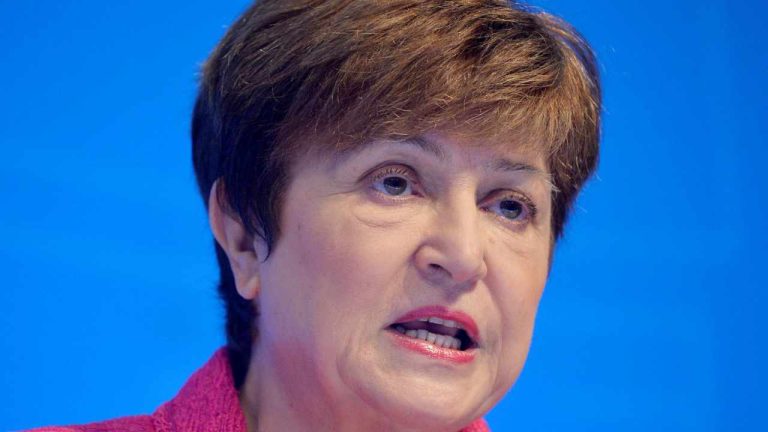
International Monetary Fund (IMF) Managing Director Kristalina Georgieva expects “more vulnerabilities” in the U.S. banking sector amid a growing de-dollarization trend worldwide. “There has been a gradual shift away from the dollar,” the IMF chief acknowledged.
U.S. Banking Crisis ContinuesThe managing director of the International Monetary Fund (IMF), Kristalina Georgieva, talked about the U.S. banking crisis and a growing de-dollarization trend Monday at the 2023 Milken Institute Global Conference in Beverly Hills, California.
The IMF chief warned of more vulnerabilities in the U.S. banking sector, noting that the Federal Reserve’s rapid interest rate hikes have exposed weaknesses at some banks and that the pain may not be over. She said:
It doesn’t mean that we have a free pass. It doesn’t mean that there wouldn’t be more vulnerabilities to come.
Several major banks in the U.S. have failed in recent months, with the latest being First Republic Bank. On Monday, regulators seized the bank and sold virtually all of its assets to JPMorgan Chase. This was the largest U.S. bank failure since the 2008 financial crisis.
Georgieva praised U.S. regulators for their swift action in dealing with the collapse of First Republic Bank, emphasizing that she expects to see “new regulatory and disclosure thinking around how we deal with this.”
Georgieva Sees Gradual De-Dollarization TrendThe IMF managing director also talked about a growing de-dollarization trend globally. While Georgieva does not see any viable alternative among global currencies to replace the U.S. dollar as the world’s reserve currency in the near future, she acknowledged:
There has been a gradual shift away from the dollar, it was 70% of reserves, now it is slightly under 60%.
She believes the euro is the biggest competitor to the U.S. dollar while the British pound, the Japanese yen, and the Chinese yuan “play a very modest role.”
The BRICS nations (Brazil, Russia, India, China, and South Africa) are among the most notable advocates of de-dollarization. In addition to promoting the use of national currencies, the economic bloc is working to create a new currency that will help its member countries reduce their reliance on the USD. A Russian official recently stated that he expects an agreement on a BRICS currency to be reached this year.
What do you think about the statements by IMF Managing Director Kristalina Georgieva? Let us know in the comments section below.
Why this matters
This cryptocurrency story adds another data point to the current market tape and is useful when read alongside nearby source coverage.
Original source
Read on Bitcoin NewsRelated market context

Ripple RLUSD Hits $2.5B, Enters Cross River Banking Stack for 24/7 Payme
Key Takeaways: RLUSD integration is being made by Cross River into the core banking infrastructure of the XRP Ledger. Fintechs wil...

Cross River Bank Brings Ripple’s RLUSD Into Traditional Banking
On Thursday, a spokesperson for Cross River Bank told Bitcoin.com News that it is teaming up with Ripple to make it easier for bus...

Cross River Bank brings Ripple’s RLUSD stablecoin into its core banking system
The integration of RLUSD into Cross River Bank's system signifies a shift towards mainstream adoption of stablecoins, enhancing pa...

BFFS26 Denver: Joseph Kelly on Bitcoin Custody and Credit; Alan Lane on Banking Lessons
Bitcoin Magazine BFFS26 Denver: Joseph Kelly on Bitcoin Custody and Credit; Alan Lane on Banking Lessons The Bitcoin for Financial...

USDC’s EU Reserves and Capital Shift to EBA Supervision in MiCA’s First ‘Significant’ Call
Circle’s European USDC issuer will answer to the European Banking Authority (EBA) on reserves, liquidity and capital from Nov. 12,...
Circle Says 59 Cents of Each Revenue Dollar Went to USDC Partners and Transaction Costs
Circle said it paid about $819 million of its roughly $1.4 billion in first-half 2026 revenue to USDC distribution partners and tr...