IMF Division Chief and Deputy Managing Director Call for Swift Regulatory Action to Avoid Crypto Contagion to Legacy Finance
An International Monetary Fund (IMF) division chief and deputy managing director are calling for more action to be taken in the regulatory aspect to avoid crypto’s ups and downs affecting banks and traditional financial...
Archive context
Older archive item. Useful for background and entity history, but not a fresh market-moving signal.
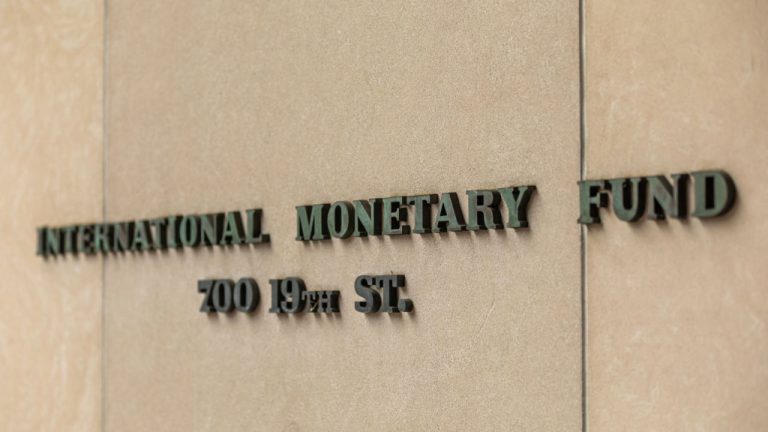
An International Monetary Fund (IMF) division chief and deputy managing director are calling for more action to be taken in the regulatory aspect to avoid crypto’s ups and downs affecting banks and traditional financial institutions. Nobuyasu Sugimoto, deputy division chief of the financial supervision and regulation division of the IMF, and Bo Li, deputy managing director at the IMF, believe that, given the growing links between legacy finance and crypto, cryptocurrency’s volatility might bring systemic risks to the existing markets.
IMF Blog Post Calls for Containing Future Crypto ContagionThe volatility and instability of cryptocurrency markets are starting to worry regulators from all over the world. On Jan. 18, Nobuyasu Sugimoto, deputy division chief of the financial supervision and regulation division of the IMF, and Bo Li, deputy managing director at the IMF, issued an article warning about the effect that the volatility of crypto markets might have on the existing financial system.
The article remarks that the instability developed in crypto markets as a result of the different collapses of tokens and exchanges might affect traditional markets and institutions, given the current deepening of the links between these two systems.
Regulating these markets is one of the elements to prevent this from happening, according to the authors, who also indicate that investors in developed markets have been flocking to some of these assets due to the returns they offer. The IMF Blog post states:
Advanced economies are also susceptible to financial stability risks from crypto, given that institutional investors have increased stablecoin holdings, attracted by higher rates of return in the previously low-interest rate environment.
Risks of Substitution and CryptoizationWhile the IMF still does not consider crypto and stablecoins as serious risks to the global financial system, some countries are substituting their currency with crypto and stablecoins, making international control of these funds especially difficult. For Sugimoto and Li, this situation has “the potential to cause capital outflows, a loss of monetary sovereignty, and threats to financial stability, creating new challenges for policymakers.”
This can be seen in economies that are being rammed with high levels of inflation and devaluation at the same time, with citizens losing trust in their fiat currencies and flocking to other alternatives, such as dollar-pegged stablecoins.
To control these risks, the blog post authors recommend setting up global regulations for virtual asset service providers, forcing customer assets to be segregated from the holdings of these companies. Also, stablecoin issuers should be heavily regulated, and are even advised to exert bank-like regulations, depending on the size of the project. Experts have stated before that a run on stablecoins might affect the U.S. Treasuries market.
Also, the global implementation of the Basel Committee directives, a standard on how much cryptocurrency exposure banks can have at any point in time, must be accelerated.
What do you think about the considerations of the IMF Blog post authors regarding cryptocurrency contagion risks? Tell us in the comments section below.
Why this matters
This cryptocurrency story adds another data point to the current market tape and is useful when read alongside nearby source coverage.
Original source
Read on Bitcoin NewsRelated market context

Beyond HODLing: How Bitcoin-Backed Loans Can Unlock New Financial Opportunities
Bitcoin Magazine Beyond HODLing: How Bitcoin-Backed Loans Can Unlock New Financial Opportunities For long-term Bitcoin holders, ac...

Switzerland Bitcoin ETF and Cameroon’s Paul Biya: A Financial Haven Debate
Switzerland approval of its first retail Bitcoin ETF puts investor protection and financial transparency in focus, as Cameroon Pre...

UK Financial Conduct Authority opens consultations for DeFi guidance
The FCA's DeFi guidance could reshape UK crypto markets by tightening compliance and operational standards, impacting firms' strat...

UK financial watchdog opens consultations for DeFi guidance, crypto laws
The UK Financial Conduct Authority consultations came just weeks after the agency opened applications for companies under its new...
Swiss Financial Regulator Gives Green Light to Country’s First Bitcoin ETF
Bitcoin Magazine Swiss Financial Regulator Gives Green Light to Country’s First Bitcoin ETF Swiss financial regulator FINMA has ap...

S&P Global Ratings launches Vault Risk Assessment to address DeFi risks
The introduction of VRA by S&P Global Ratings could enhance transparency and risk management in the rapidly growing DeFi sector. T...