IMF Says Nigerian CBDC Drawing Global Interest, Warns of Associated Risks
The International Monetary Fund (IMF) has acknowledged that the recently launched Nigerian central bank digital currency (CBDC) is attracting interest from many institutions globally, including central banks. Still, the...
Archive context
Older archive item. Useful for background and entity history, but not a fresh market-moving signal.
The International Monetary Fund (IMF) has acknowledged that the recently launched Nigerian central bank digital currency (CBDC) is attracting interest from many institutions globally, including central banks. Still, the fund warns that the CBDC carries risks for monetary policy implementation, cyber security, operational resilience, and financial integrity and stability.
CBDC Attracting InterestIn its latest country focus report authored by economist Jack Ree, the IMF explains why Nigeria’s new CBDC has drawn substantial interest from the outside world and from central banks in particular. In the report, the author notes that the e-naira, unlike cryptocurrencies like bitcoin or ethereum, features stringent access rights controls by the central bank. Also, unlike volatile cryptocurrencies, the CBDC draws its value from the physical naira.
According to the IMF, it is by way of such features that the Central Bank of Nigeria (CBN) is hoping that its CBDC will bring multiple benefits to the Nigerian economy. Some of the envisaged benefits include an increase in financial inclusion and reduced informality.
CBDC Boon for RemittancesThe report also explains why the CBN is hopeful that the CBDC will boost remittances into the country. The report states:
Remittances typically are made through international money transfer operators (e.g., Western Union) with fees ranging from 1 percent to 5 percent of the value of the transaction. The e-naira is expected to lower remittance transfer costs, making it easier for the Nigerian diaspora to remit funds to Nigeria by obtaining eNaira from international money transfer operators and transferring them to recipients in Nigeria by wallet-to-wallet transfers free of charge.
However, the same IMF report reiterates a common view that CBDC deposits may in fact function as deposits at the central bank and reduce demand for deposits in commercial banks. The report also warns of other risks associated with the CBDC. “Relying as it does on digital technology, there is a need to manage cybersecurity and operational risks associated with the eNaira,” the author writes.
In conclusion, the report says the IMF, which was involved in the e-naira rollout process, remains available to help the CBN with technical assistance and policy advice.
Do you agree with the IMF’s comments about the Nigerian CBDC? Tell us what you think in the comments section below.
Why this matters
This cryptocurrency story adds another data point to the current market tape and is useful when read alongside nearby source coverage.
Original source
Read on Bitcoin NewsRelated market context

One Vanguard job posting could decide how crypto reaches 50 million investors
Vanguard posted a Head of Digital Assets, Personal Wealth role on July 6, with openings in Dallas, Scottsdale, Charlotte, and Malv...

Bankers file suspicious activity report over Farage’s £5M gift from Tether billionaire
The scrutiny over Farage's gift highlights growing concerns about crypto's influence in politics and the need for regulatory clari...

Circle reports USDC surpasses $90T in total transaction volume
USDC's dominance signals a shift in stablecoin market dynamics, raising concerns about centralization and potential systemic risks...
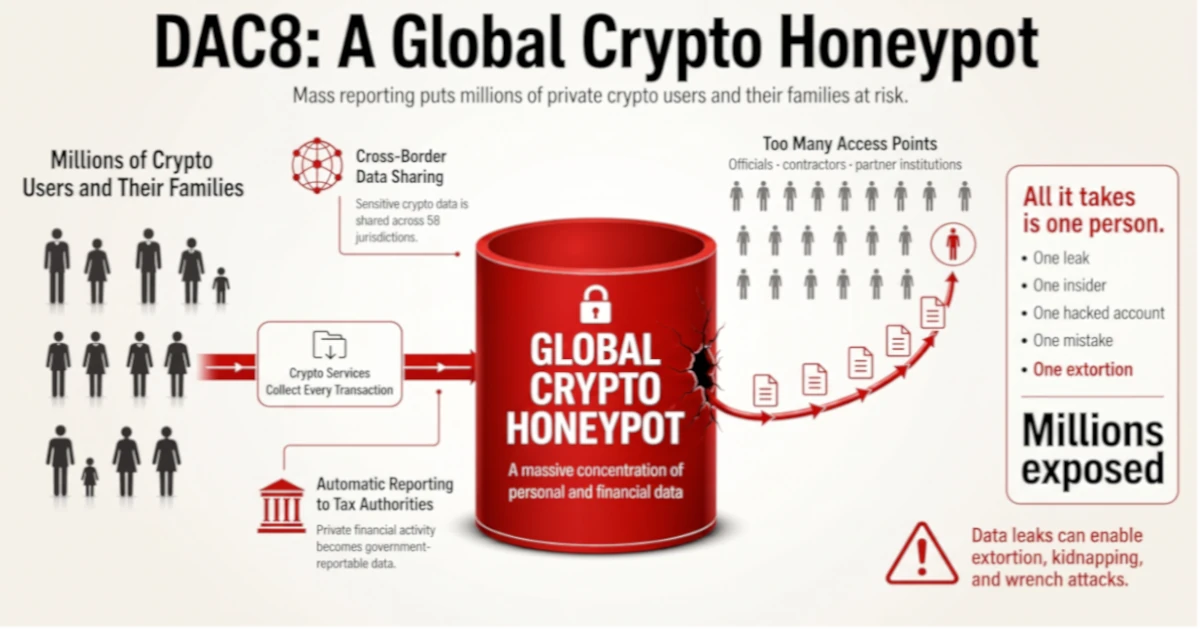
Bull Bitcoin Files Landmark Legal Challenge to Annul France’s DAC8 Crypto Data Surveillance Rules
Bitcoin Magazine Bull Bitcoin Files Landmark Legal Challenge to Annul France’s DAC8 Crypto Data Surveillance Rules Bull Bitcoin ex...

Kraken Pursues a Full Banking License in Europe, With Lithuania as Its Target Jurisdiction
Kraken is seeking a full banking license in Europe, focusing on Lithuania as the jurisdiction where it hopes to secure the designa...

Bank of Korea signals rate hikes as inflation overshoots, and Korea’s massive crypto market should pay attention
Rising interest rates in South Korea could dampen crypto enthusiasm, as higher returns on traditional savings reduce the appeal of...