India’s Central Bank Digital Currency Will Act as Alternative to Cryptocurrency, Says RBI Official
An official of India’s central bank, the Reserve Bank of India (RBI), says that the country’s central bank digital currency (CBDC) will act as an alternative to cryptocurrency. He stressed that the digital rupee must pos...
Archive context
Older archive item. Useful for background and entity history, but not a fresh market-moving signal.
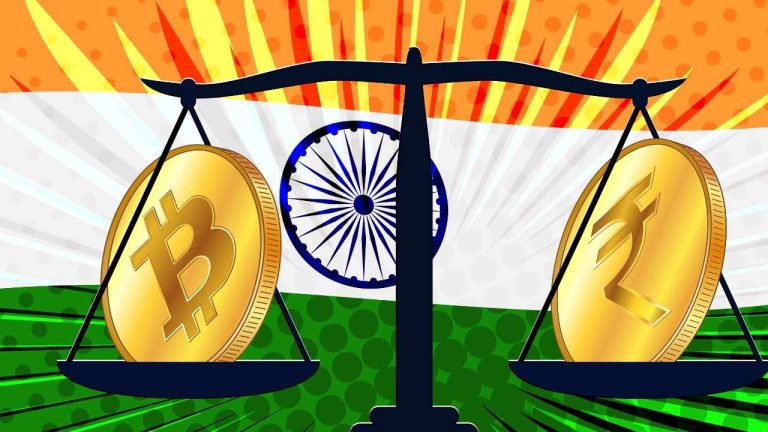
An official of India’s central bank, the Reserve Bank of India (RBI), says that the country’s central bank digital currency (CBDC) will act as an alternative to cryptocurrency. He stressed that the digital rupee must possess all the attributes of physical currency, including anonymity.
India’s CBDC UpdateReserve Bank of India (RBI) Executive Director Ajay Kumar Choudhary provided some updates on India’s central bank digital currency (CBDC) during an interview with CNBC-TV18 on Friday.
The Indian central bank is exploring the offline functionality of the digital rupee, Choudhary conveyed. Noting that the CBDC will soon become a medium of exchange in India, he emphasized that it needs to have all features of physical currency, including anonymity. The RBI executive director previously said the design of India’s CBDC will be the least disruptive and will not replace physical currency or the current financial system.
Choudhary further told the news outlet that the digital rupee will provide the public with a digital form of money and will act as an alternative to cryptocurrencies. His statement echoed RBI Deputy Governor T. Rabi Sankar’s recent claim that the digital rupee should be able to do anything cryptocurrency can do but without the associated risks of crypto.
India’s central bank began piloting its digital rupee in the wholesale sector in November and in the retail sector in December last year. Reliance Retail became the first retailer to accept digital rupees. Last month, Sankar revealed that the digital rupee now has over 50,000 users and is accepted by 5,000 merchants.
RBI Governor Shaktikanta Das said in December last year that the CBDC is the currency of the future. He clarified that India’s existing instant real-time payment system, the Unified Payments Interface (UPI), relies on banks as intermediaries, whereas a CBDC functions more like physical currency notes with an automated sweep in and out feature.
Meanwhile, the RBI continues to recommend a complete ban on cryptocurrencies, including bitcoin and ether. Das has warned that crypto poses major risks to India’s financial stability, monetary system, and cyber security. Moreover, he cautioned that it could undermine the central bank’s authority.
What do you think about the RBI executive director’s statements about the digital rupee? Let us know in the comments section below.
Why this matters
This cryptocurrency story adds another data point to the current market tape and is useful when read alongside nearby source coverage.
Original source
Read on Bitcoin NewsRelated market context

Kraken Parent Payward Moves Into European Banking With Saldo Deal
Payward, the company behind crypto exchange Kraken, has agreed to acquire Lithuania-based Saldo Bank, taking a route into European...
The Architecture of Money: Mapping Financial Power in the Age of Bitcoin
Bitcoin Magazine The Architecture of Money: Mapping Financial Power in the Age of Bitcoin Money determines where we live, what we...

German Savings Banks Begin Crypto Trading Rollout Inside Sparkassen App
Germany’s Sparkassen savings-bank group is beginning a phased cryptocurrency-trading rollout inside its existing banking app, taki...

European Banking Authority Puts USDC Under Significant-Token Supervision
The European Banking Authority has designated USDC as the EU’s first significant e-money token under MiCA, setting up an additiona...

Morgan Stanley Builds Crypto Lab to Test Stablecoins, Tokenization and DeFi at Scale
Key Takeaways: Morgan Stanley has opened a Digital Asset Lab dedicated to blockchain technologies. The test is to be applied to th...

Super League Stockholders Approve Metaplanet’s 2,100 BTC Investment, Paving Way for ‘Superplanet’
Bitcoin Magazine Super League Stockholders Approve Metaplanet’s 2,100 BTC Investment, Paving Way for ‘Superplanet’ Super League st...