Iranian Professor: Saudi Arabia May Join De-Dollarization Shift as US Dollar Is Now ‘Unreliable and Dangerous’
A University of Tehran professor and member of Iran’s Presidential Delegation to China has stressed the importance of de-dollarization for the international community. “The dollar has been used as a weapon by the U.S. ag...
Archive context
Older archive item. Useful for background and entity history, but not a fresh market-moving signal.
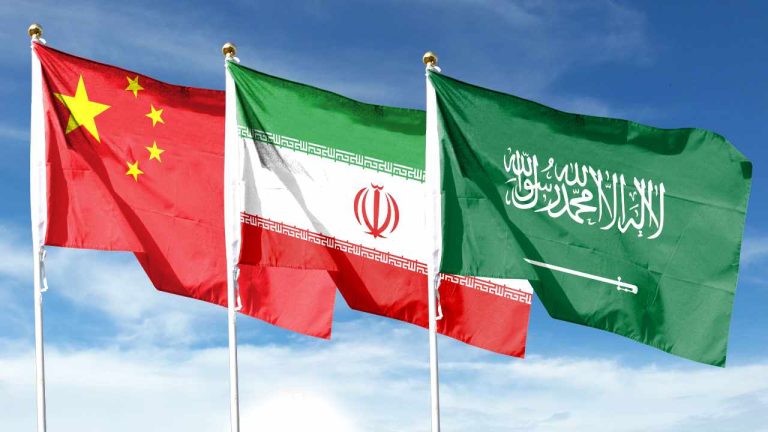
A University of Tehran professor and member of Iran’s Presidential Delegation to China has stressed the importance of de-dollarization for the international community. “The dollar has been used as a weapon by the U.S. against different countries. It is unreliable and it is dangerous,” the professor warned.
Iranian Professor Stresses the Importance of De-DollarizationProfessor Mohammad Marandi discussed de-dollarization and Iran’s relations with Saudi Arabia and China in an interview with Chinese government-owned news outlet Global Times, published Wednesday. He is an Iranian American academic who is the University of Tehran’s Vice President for International Affairs and a member of Iran’s Presidential Delegation to China.
Commenting on the de-dollarization trend in several parts of the world, Marandi emphasized:
De-dollarization is very important for the international community, because the dollar has been used as a weapon by the U.S. against different countries. It is unreliable and it is dangerous.
“Therefore, countries like China, Iran, and Russia among many others, need to move away from the dollar so that the U.S. cannot use it as a weapon against them … The U.S. should not be allowed to use the dollar to put pressure on other countries,” the professor added.
The restoration of bilateral ties between Saudi Arabia and Iran, brokered by China in March, has been seen as a significant step towards peace in the long period of turbulence in the Middle East.
“Iran already sells a substantial amount of petroleum using currencies other than the U.S. dollar,” Marandi continued. “I think for Saudi Arabia, ultimately it will be in its best interests to move away from the dollar as well in order to make sure that it is not vulnerable or less vulnerable to the U.S.” The professor opined:
If the rapprochement continues, then I think the chances for Saudi Arabia to join the camp of de-dollarization increases substantially.
Moreover, he said: “Since China is a major energy importer from the Gulf region, it would be ideal for China to be able to use China’s yuan to import energy from the region.”
What do you think of Professor Mohammad Marandi’s view? Let us know in the comments section below.
Why this matters
This cryptocurrency story adds another data point to the current market tape and is useful when read alongside nearby source coverage.
Original source
Read on Bitcoin NewsRelated market context
9/11 victims claim bitcoins seized from Chinese-Iranian mining pool
Victims and families of victims of the 9/11 terrorist attack filed a statement of interest in BTC previously seized by the US gove...

Math Professor Warns of Threat to Bitcoin from AI Pivot
Bitcoin Magazine Math Professor Warns of Threat to Bitcoin from AI Pivot Could anyone actually break Bitcoin? Micah Warren, associ...
Circle Says 59 Cents of Each Revenue Dollar Went to USDC Partners and Transaction Costs
Circle said it paid about $819 million of its roughly $1.4 billion in first-half 2026 revenue to USDC distribution partners and tr...
Solana Breaches China’s Crypto Wall With New Shanghai Office
The establishment of a new Solana Foundation office in one of Shanghai’s highest commercial buildings has drawn out criticism from...

Aave V4 opens dollar-euro borrowing on Circle’s Arc network
Aave V4's new feature could enhance euro liquidity in DeFi, testing risk management and potentially influencing stablecoin market...
US Hoovers up Bitcoin While the World Runs on Its Digital Dollars: Report
Bitcoin Magazine US Hoovers up Bitcoin While the World Runs on Its Digital Dollars: Report America is accumulating bitcoin while e...