Iran’s Nobitex Exchange Faces Renewed Threat After Hackers Leak Core Code
The fallout from the $100 million Nobitex exchange hack continues to deepen as hackers release the platform’s full source code, exposing users to further risk amid an already fragile security situation. Key Takeaways: Ha...
Archive context
Older archive item. Useful for background and entity history, but not a fresh market-moving signal.
The fallout from the $100 million Nobitex exchange hack continues to deepen as hackers release the platform’s full source code, exposing users to further risk amid an already fragile security situation.
Key Takeaways:
- Hackers leaked Nobitex’s full source code, putting remaining user assets at risk.
- The $100M breach was politically motivated, with attackers burning most of the stolen funds.
- Iran imposed new crypto exchange curfews as Nobitex works to restore services amid internet disruptions.
The Iranian crypto exchange, which suffered a major breach on Wednesday, is now facing renewed threats after the pro-Israel hacker group “Gonjeshke Darande” followed through on its warning to leak internal data.
On Thursday, the group posted a link on X containing Nobitex’s source code, privacy configurations, cold wallet scripts, and server lists.
“Time’s up – full source code linked below. ASSETS LEFT IN NOBITEX ARE NOW ENTIRELY OUT IN THE OPEN,” the group declared in its post, suggesting that any assets still on the platform are vulnerable.
Hackers Share Nobitex Code in Politically Motivated HackGonjeshke Darande claims it targeted Nobitex due to its alleged ties to the Iranian government and its role in circumventing international sanctions.
In a follow-up post on Wednesday, the group said it had burned $90 million across eight wallets, effectively removing the stolen funds from circulation.
12 hours ago
8 burn addresses burned $90M from the wallets of the regime's favorite sanctions violation tool, Nobitex.
12 hours from now
The source-code of Nobitex will be open to the public, and Nobitex’s walled garden will be without walls. Where do you want your assets to be?…
The breach took place amid heightened geopolitical tensions between Iran and Israel.
The hack occurred on the fifth day of open conflict, which included strategic missile strikes exchanged by both countries.
It also marks the largest cyber-related damage to Iran’s crypto sector since the beginning of its digital finance expansion.
Nobitex, for its part, stated on Thursday that no further losses had occurred and that it was working to restore services within five days.
The company cited internet instability inside Iran as a key challenge to its recovery timeline. CEO Amir Rad is expected to issue a video address to update users on the next steps.
In response to the hack, Iran’s central bank has introduced a curfew on domestic cryptocurrency exchanges, restricting operational hours to 10 a.m. to 8 p.m., according to data referenced by Chainalysis.
Crypto Market Bleeds $200B Amid Iran-Israel ConflictThe escalating conflict between Israel and Iran triggered a sharp dip in crypto market confidence, with sentiment dropping over 30% between June 12–15, according to Santiment.
This coincided with a 4–6% drop in Bitcoin’s price, erasing more than $200 billion in total crypto market value.
The ongoing conflict between Israel & Iran has led to a visible increase in volatility across crypto. Sentiment data showed major bearish sentiment coming in between June 12th to 15th, in particular, coinciding with a 4–6% drop in Bitcoin's price and erasing over $200B from… pic.twitter.com/t1Qe7DlOCf
— Santiment (@santimentfeed) June 18, 2025Despite the initial panic, Bitcoin has since stabilized around the $104K–$105K range. Analysts attribute this resilience to steady ETF inflows and the lack of further military escalation.
A similar pattern was observed during Russia’s invasion of Ukraine, where Bitcoin dipped briefly before recovering.
Geopolitical crises continue to influence crypto volatility, with Bitcoin often following a “drop then stabilize” cycle.
As tensions persist in the Middle East, markets may see further short-term price swings, though the long-term trajectory remains uncertain.
The post Iran’s Nobitex Exchange Faces Renewed Threat After Hackers Leak Core Code appeared first on Cryptonews.
Why this matters
This cryptocurrency story adds another data point to the current market tape and is useful when read alongside nearby source coverage.
Original source
Read on CryptonewsRelated market context
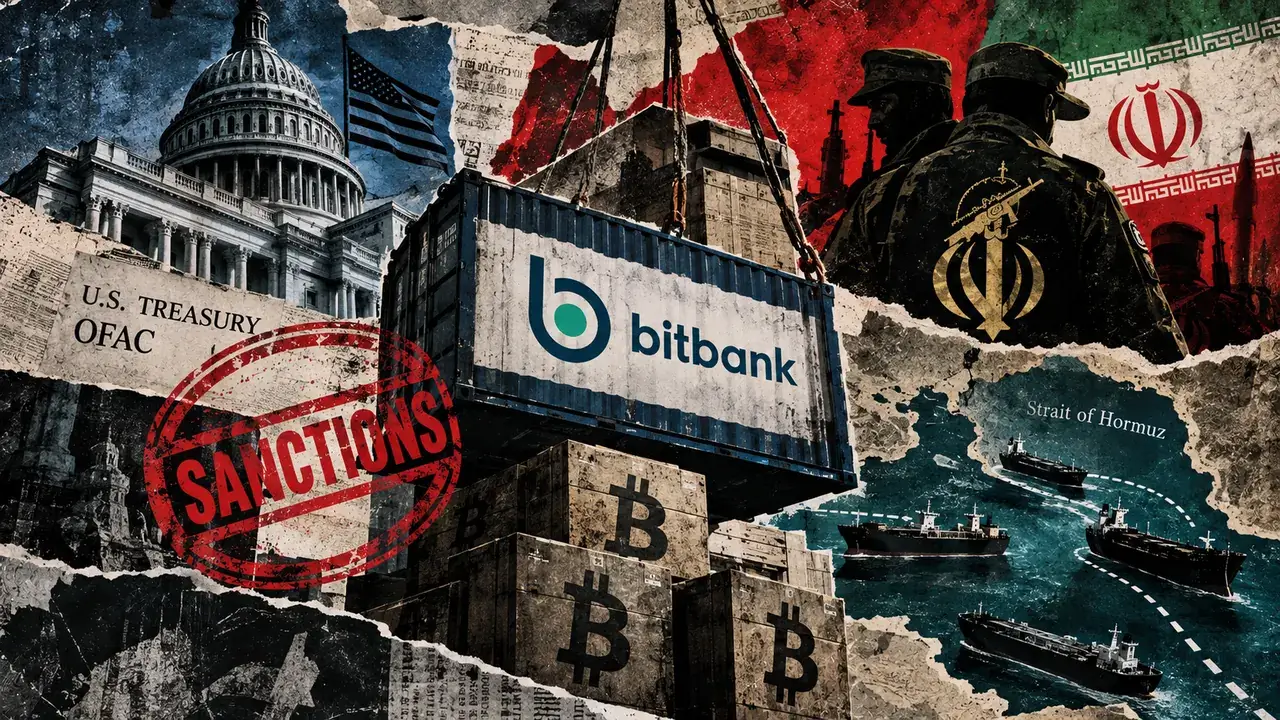
US sanctions Iranian crypto exchange and its software developer over alleged IRGC Bitcoin transfers
The US sanctioned Iranian crypto exchange BitBank, widening its campaign against digital-asset infrastructure allegedly used to fi...

US Sanctions Iranian Exchange BitBank Over Bitcoin Transfers to the IRGC and Hormuz Passage Fees
The US Treasury sanctioned BitBank, a Tehran cryptocurrency exchange, on Thursday, saying the platform moved hundreds of millions...
Treasury Sanctions Iranian Crypto Exchange BitBank Over Bitcoin Transfers to IRGC
Bitcoin Magazine Treasury Sanctions Iranian Crypto Exchange BitBank Over Bitcoin Transfers to IRGC The U.S. is continuing to targe...
US Sanctions Iranian Exchange BitBank Over Alleged IRGC Bitcoin Transfers
The US has sanctioned Iranian crypto exchange BitBank over alleged bitcoin transfers tied to the IRGC, extending sanctions enforce...
Iran uses bitcoin exchange for Strait of Hormuz tolls, US claims
Iran's use of bitcoin for tolls in the Strait of Hormuz may intensify economic tensions, challenging traditional sanctions and fin...
Blockchain Dead Drop Attacks Jump 420% as State Hackers Expand
Blockchain dead drop attacks — campaigns that use public chains to hide malware instructions — increased 420% over the past 12 mon...