Is Europe Losing the Stablecoin War? ECB Advisor Warns Yes
A senior European Central Bank advisor has warned that Europe risks losing monetary sovereignty as euro-backed stablecoin(s) capture only 0.15% of the $230 billion global market.Jürgen Schaaf, writing in an official ECB...
Archive context
Older archive item. Useful for background and entity history, but not a fresh market-moving signal.
A senior European Central Bank advisor has warned that Europe risks losing monetary sovereignty as euro-backed stablecoin(s) capture only 0.15% of the $230 billion global market.
Jürgen Schaaf, writing in an official ECB blog post on July 28, described stablecoins as reshaping international finance while warning that European financial stability and policy autonomy could face serious erosion without strategic action.
The stark disparity reveals the scale of Europe’s challenge, with USD-pegged tokens like Tether’s USDT and Circle’s USDC accounting for 99% of total stablecoin market capitalisation while euro-denominated alternatives remain stuck below €350 million in total value.
Size of stablecoins in the crypto-asset ecosystem, January 2020-June 2025 (Sources: ECB.)Schaaf cautioned that widespread adoption of dollar stablecoins in the eurozone could weaken the ECB’s control over monetary conditions, potentially echoing patterns observed in dollarised economies where local currencies lose ground to foreign alternatives.
Dollar Stablecoins Threaten European Financial ControlSchaaf outlined multiple channels through which dollar stablecoins could undermine European monetary control, starting with their integration into mainstream payment systems by major US card networks Visa and Mastercard.
Large American retailers, including Walmart and Amazon, are exploring stablecoin adoption for high-volume transactions, threatening to shift significant payment flows outside traditional banking infrastructure entirely.
The ECB advisor highlighted particular concerns around interest-bearing stablecoins, which could divert deposits from European banks if they become commonplace among businesses and consumers seeking yield opportunities.
Such shifts would pose greater risks in Europe compared to other regions, given banks’ central role in the financial system and their heavy reliance on deposits for refinancing operations, according to Schaaf’s analysis.
Settlement applications present another vulnerability, with stablecoins increasingly used for trades in decentralised finance, crypto exchanges, tokenised assets, and cross-border payments due to their speed and global accessibility.
The ECB official warned that if dollar stablecoins cement early dominance in tokenised settlement infrastructure, European alternatives may struggle to gain traction given the network effects and economies of scale inherent in digital payment systems.
Schaaf noted that the US administration has made clear through executive orders and congressional testimony that its stablecoin support extends beyond technological innovation to protecting the dollar’s global dominance by expanding its use on digital platforms worldwide.
He emphasized that the Eurosystem’s digital euro project will serve as “a robust line of defence of European monetary sovereignty” in a broader European digital payments strategy.
Europe has responded with initiatives, including the recently launched EURAU stablecoin by Deutsche Bank, Galaxy Digital, and Flow Traders, representing the continent’s first MiCA-compliant euro token. However, its impact remains limited given the market’s current scale.
Deutsche Bank's DWS partners @galaxyhq for Europe's first MiCA-compliant EURAU stablecoin, making Germany's first regulated euro digital currency with full BaFin approval.#Europe #Stablecoin #Eurohttps://t.co/XuX9b8XLyh
— Cryptonews.com (@cryptonews) July 2, 2025 Competing Global Visions for the Future of MoneyThe European stablecoin challenge reflects a broader global scramble as nations recognize that digital currencies could reshape monetary power structures established over decades.
While Europe emphasizes comprehensive oversight through MiCA’s stringent requirements, the United States has chosen market-friendly approaches designed through the recently signed GENIUS Act to reinforce existing dollar advantages in global finance.
China has emerged as another major player in this space, with former Deputy Finance Minister Zhu Guangyao proposing the integration of yuan-backed stablecoins into the country’s national financial framework to counter what he described as the third phase of US monetary dominance.
Asian economies are also moving rapidly to establish their own regulatory frameworks, with South Korea unveiling legislation to allow local stablecoin issuance and Hong Kong implementing comprehensive rules that will take effect from August 1st.
However, the competitive dynamics extend beyond simple market share battles, touching fundamental questions about who controls the infrastructure underlying future global commerce.
The International Monetary Fund has cautioned on the regulatory uncertainty around stablecoins, with Deputy Managing Director Bo Li noting that classification issues remain unsettled regarding whether these tokens should be treated as currencies or financial assets.
Beyond classification, stablecoin is likely to shape how countries approach financial access, compliance, and infrastructure.#imf #stablecoinhttps://t.co/sfZwAdUH3k
— Cryptonews.com (@cryptonews) June 25, 2025Looking forward, it is still unclear whether Europe can catch up to the US’s head start, since network effects and first-mover advantages are so hard to overcome in digital payments.
The post Is Europe Losing the Stablecoin War? ECB Advisor Warns Yes appeared first on Cryptonews.
Why this matters
This cryptocurrency story adds another data point to the current market tape and is useful when read alongside nearby source coverage.
Original source
Read on CryptonewsRelated market context

State of TRON Q3 2026 Report Highlights $2.21 Trillion in Stablecoin Settlement Amid Network Activity Growth
Geneva, Switzerland, October 12, 2026 — TRON DAO, the community-governed DAO dedicated to accelerating the decentralization of the...

Ark Invest’s Lorenzo Valente: Bitcoin’s 5-Year Forecast – Stablecoin & Gold Impacts
Bitcoin Magazine Ark Invest’s Lorenzo Valente: Bitcoin’s 5-Year Forecast – Stablecoin & Gold Impacts Bitcoin has been flat to down...

Financial Stability Board warns of untested stablecoin risks in crises
The FSB's warning highlights the urgent need for robust global regulatory frameworks to manage stablecoin risks and ensure financi...

Can Gold Rewards Solve the Stablecoin Distribution Problem? XASH Thinks So
If you already pay for this, I especially want your answer. We’re deciding what Unchained does next; new shows, stream times, and...

Xash’s Kevin Huynh Pitches Stablecoin Issuers on Gold Rewards Instead of Passive Yield
Kevin Huynh, introduced on Unchained Premium as co-founder and CEO of Xash, said the startup wants stablecoin issuers to pay for t...
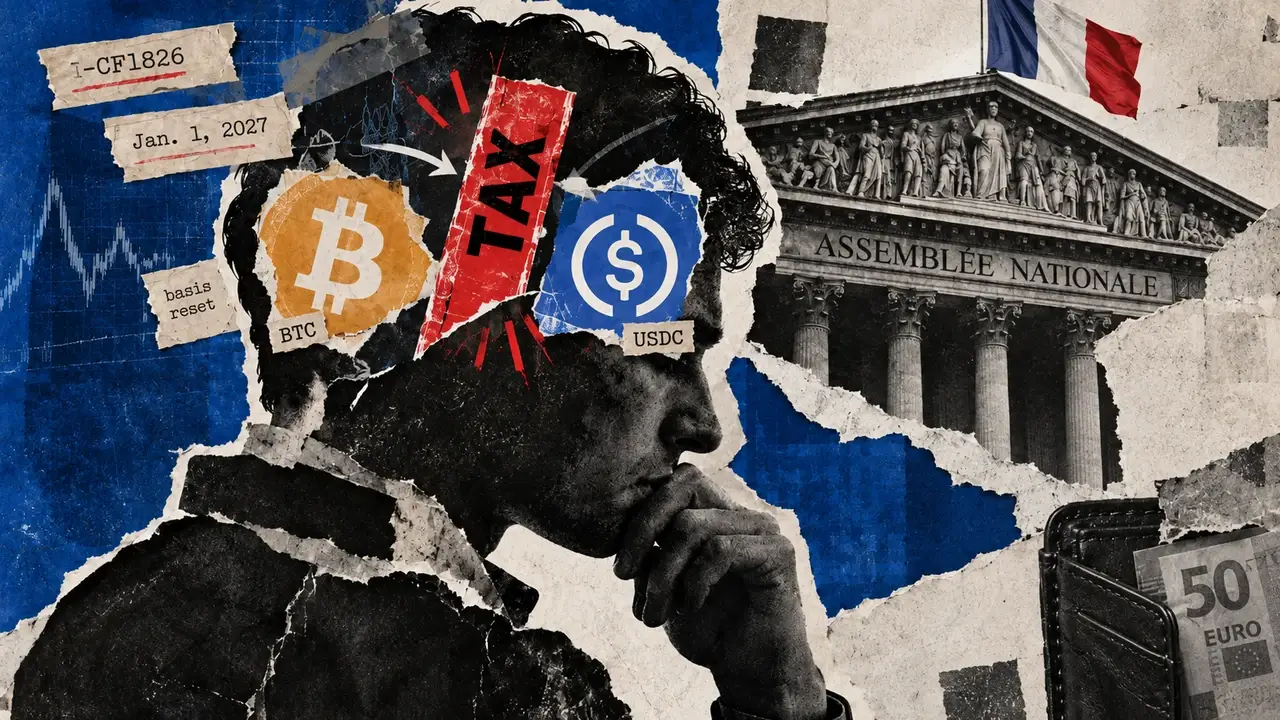
France’s tax proposal would tax Bitcoin-to-USDC swaps before investors cash out
France’s proposed crypto tax changes would make a move from Bitcoin or Ether into certain stablecoins a taxable disposal, even if...