Is Your Crypto at Risk? FBI Issues Dire Warning Over ‘Phantom Hacker’
As the crypto market continues to attract substantial investments, it has also witnessed a surge in scams and fraudulent activities. Regulatory institutions worldwide, spearheaded by the United States, seem to intensify...
Archive context
Older archive item. Useful for background and entity history, but not a fresh market-moving signal.
As the crypto market continues to attract substantial investments, it has also witnessed a surge in scams and fraudulent activities. Regulatory institutions worldwide, spearheaded by the United States, seem to intensify their efforts to combat cyber threats, hacks, and frauds that affect the industry.
However, the nascent sector is far from the only one suffering from increasing cyber threats. Since 2020, these attacks have been common both within the crypto space and outside.
In line with this, the Federal Bureau of Investigation (FBI) identified a new threat dubbed “The Phantom Menace.” The FBI issued a warning on September 29, alerting the public about the escalating “Phantom Hacker” scams, particularly affecting senior citizens.
FBI Warns Of ‘Phantom Hacker’ Scams Targeting CryptoThe FBI’s statement revealed that the “Phantom Hacker” scam is an evolution of traditional tech support scams, employing imposter tech support, fraudulent exchange account support, and government personas to gain victims’ trust. This multi-layered approach helps scammers identify lucrative accounts to target.
From January to June 2023, the FBI Internet Crime Complaint Center (IC3) received over 19,000 complaints about tech support and crypto scams, resulting in estimated losses exceeding $542 million. Losses have already surpassed 2022 figures by 40% as of August 2023.
The Scam Phases:
- In the initial phase of the scam, fraudsters adopt the guise of tech or customer support representatives from legitimate companies. They reach out to their victims through various communication channels and employ persuasive tactics to convince them to call a designated number for assistance.
Once victims are connected, scammers manipulate them into downloading software that grants remote access to their computers. By fabricating a fictitious virus scan, scammers deceive victims into believing their computers have been compromised or are at risk.
Subsequently, they coax victims into opening their financial accounts, allowing scammers to identify the most lucrative targets.
- Upon successfully gaining access to victims’ financial accounts, scammers proceed to the second phase of the scam. In this stage, they assume the role of representatives from reputable financial institutions such as banks or brokerage firms.
The scammers falsely inform victims that foreign hackers have compromised their computers and accounts. To ensure the safety of victims’ funds, they instruct victims to transfer their money to a purportedly “secure” third-party account, often claiming an affiliation with recognized entities like the Federal Reserve or other US government agencies.
These transfers typically involve wire transfers, cash, or even cryptocurrencies, with the funds predominantly sent overseas. Scammers coerce victims into maintaining secrecy regarding the true purpose of these transfers.
Rise In Ransomware AttacksIn contrast with the alarming rise of “Phantom Hacker” scams, a Chainalysis report indicates an overall decline in cryptocurrency-related crime in 2023. Cumulative daily inflows to known illicit entities have decreased by 65% compared to the same period in 2022.
Notably, scams have experienced the most significant decline, with scammers generating nearly $3.3 billion less revenue in 2023 than in 2022. However, the report highlights a concerning trend: ransomware attacks.
Ransomware attackers extorted $175.8 million more by June 2023 than during the same period in 2022, suggesting a reversal from the downward trend observed in 2022.
While overall crypto-related crime has declined, the resurgence of ransomware attacks poses a significant menace and could spill over to the nascent sector. While the number declines, the amount stolen in the crypto space urging users to remain cautious in the face of new threats.
Featured image from Shutterstock, chart from TradingView.com
Why this matters
This cryptocurrency story adds another data point to the current market tape and is useful when read alongside nearby source coverage.
Original source
Read on NewsBTCRelated market context

Stealing $1.5B in crypto is easy, cashing out is the trap
North Korean hackers stole around $1.5 billion from Bybit in February 2025. While the hack itself has been widely covered and anal...

Ripple Custody Adds Canton Network Support, Bringing CC and CIP-56 Into One Vault
Key Takeaways: Ripple Custody 1.43 adds support for Canton Network, CC and CIP-56 tokens. Institutions can be given the same custo...

Samsung Wallet Brings USDC to 82M Galaxy Devices With Coinbase, Solana and Sui Support
Key Takeaways: Samsung Wallet will support 82 million U.S. Galaxy to add transfers on USDC. Coinbase will keep USDC in their Coinb...

GSR CEO says tokenization has a buyer problem, not a tech problem
Tokenization's growth hinges on boosting buyer interest, as technical readiness alone can't drive liquidity in illiquid asset mark...

BTC price support holds ahead of US CPI data: Three things Bitcoin traders need to know this week
Bitcoin traders braced for inflation-based volatility after BTC price action preserved key weekly support around $82,500.
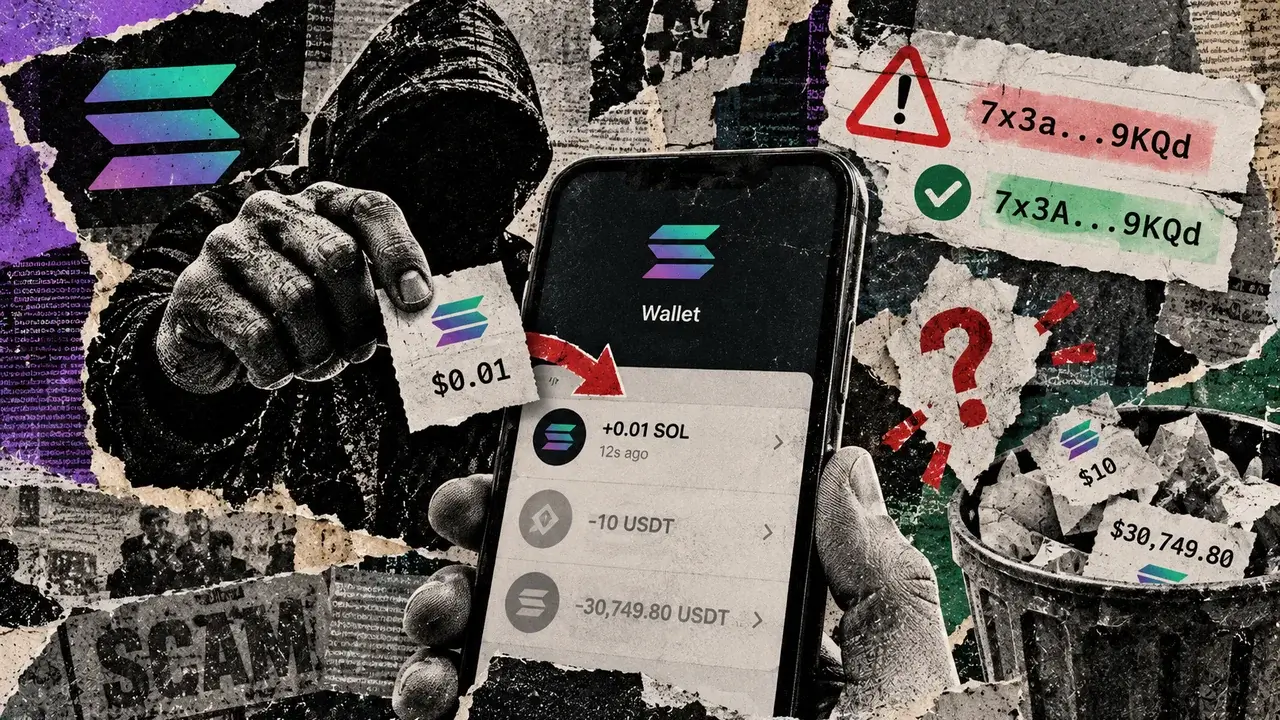
A Solana wallet tested a fake address with $10, then sent it $30,750
Lookalike payment addresses targeted nearly 4.5 million Solana wallets over 11 months, according to blockchain-data firm Bitquery’...