JPMorgan Lost $75 Billion In Institutional Deposits
A recent report reveals that JPMorgan Chase is experiencing a significant outflow of institutional cash as investors seek higher yields. JPMorgan Chase loses institutional cash The Financial Times reports that the bank’s...
Archive context
Older archive item. Useful for background and entity history, but not a fresh market-moving signal.
A recent report reveals that JPMorgan Chase is experiencing a significant outflow of institutional cash as investors seek higher yields.
JPMorgan Chase loses institutional cashThe Financial Times reports that the bank’s corporate and investment arm saw a decline of $75 billion in cash deposits in Q2 2023.
This represents a 10% drop from the previous year. Individuals and corporations with sizable cash holdings are turning to digital banks and money market funds, which often offer insured deposits with yields of 4% or higher, instead of relying on traditional banking institutions like JPMorgan.
Many traditional banks are shifting away from offering non-interest-bearing accounts. Bank of America has reported that its corporate clients are now holding 60% of their cash in interest-bearing accounts, which reflects a significant 30% increase from the previous year.
However, the expenses that BofA is paying on interest have risen twice as fast as the interest the bank is earning through loans and interest-bearing assets.
Other banks such as Citigroup and State Street are also experiencing a heightened awareness of the yield they are earning on deposits.
Meanwhile, JPMorgan has observed that its retail clients are increasingly remaining loyal, with retail deposits decreasing by only 2% during the second quarter of this year.
JPMorgan in the newsThere are reports that major American banks, such as JPMorgan and Citibank, are exploring the use of crypto technology to develop new payment systems that could be valued at up to $5 trillion.
The banks aim to tokenize assets on blockchains to revolutionize the financial industry. Citibank’s Ryan Rugg has stated that the bank’s clients prioritize a consistently trustworthy blockchain-based system.
At present, Wall Street banks follow the “T+2” system, which takes two days to settle transactions and requires multiple intermediaries.
However, the banks are considering adopting blockchain technology to achieve faster and more efficient transactions. According to Citi analysts, it is possible to tokenize $5 trillion worth of real-world assets using blockchain technology by 2030.
Why this matters
This cryptocurrency story adds another data point to the current market tape and is useful when read alongside nearby source coverage.
Original source
Read on CryptoGazetteRelated market context

Brazilian Depository With $4.2 Trillion in Assets Taps XRP Ledger to Mirror Fund Shares
CSD BR, a Brazilian central securities depository with more than 22 trillion reais (about $4.2 trillion) in registered assets, wil...

Stablecoin cards enter ‘hyper growth’ mode as monthly spending hits record $1.17 billion
Stablecoin card spending is accelerating to record levels, but the payment rail remains a fraction of the traditional card market....

Perplexity AI Predicts Insane $40 Price Target for XRP: How Did It Get There?
Perplexity AI predicts something that few analysts or other AI models do. It has produced an insanely wild bullish prediction for...

Standard Chartered says Ethena’s ENA could crush Bitcoin and Ethereum returns by 2028
Standard Chartered expects Ethena’s ENA token to rise about sevenfold by 2028, provided the protocol can rebuild its shrinking syn...

Bitcoin Is More Than Just an Asset, Says TD Cowen
Bitcoin Magazine Bitcoin Is More Than Just an Asset, Says TD Cowen Investment bank TD Cowen has said that Bitcoin is more than an...
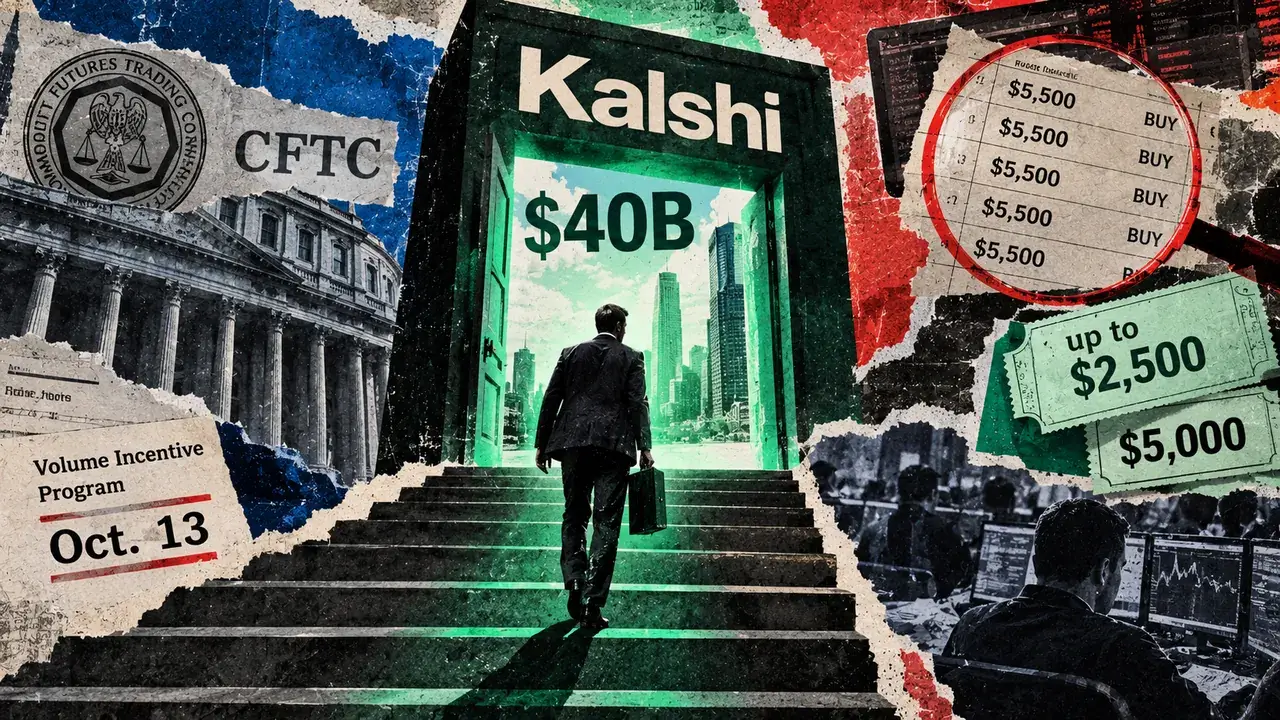
Kalshi’s $40 billion growth story hits tough questions about its trading volume
Kalshi is ending a trader-volume incentive program nearly a year early as scrutiny of activity in its crypto markets intensifies....