Moody’s Downgrades US Banking Sector to Negative After Collapse of Three Major Banks
After the failure of three major U.S. banks last week, with two of them being the second and third largest banking failures in the country, Moody’s Investors Service has downgraded the rating of the U.S. banking system f...
Archive context
Older archive item. Useful for background and entity history, but not a fresh market-moving signal.
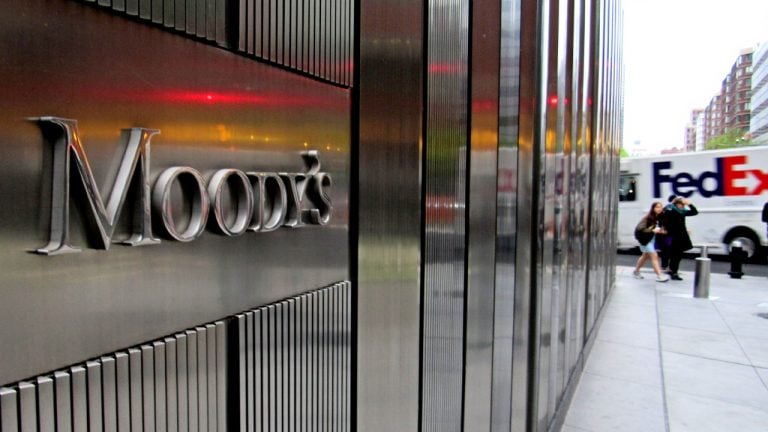
After the failure of three major U.S. banks last week, with two of them being the second and third largest banking failures in the country, Moody’s Investors Service has downgraded the rating of the U.S. banking system from “stable” to “negative.” As one of the “Big Three” credit rating firms, Moody’s cited a “rapid deterioration in the operating environment” following the collapse of these banks.
Moody’s Downgrades U.S. Banks, Financial Institutions Face Rising Deposit Costs and Reduced EarningsMoody’s Investors Service, the American credit rating agency, has downgraded the U.S. banking sector from “stable” to “negative.” The agency cited the collapse of three banks within seven days in the United States last week. Silvergate Bank decided to voluntarily liquidate, and Silicon Valley Bank (SVB) experienced a large bank run last Thursday.
After the FDIC placed SVB into receivership, New York regulators revealed that the FDIC also took over Signature Bank on Sunday. SVB’s collapse was the second-largest banking failure since Washington Mutual (Wamu) in 2008, and Signature’s failure was the third-largest following SVB’s.
“We have changed to negative from stable our outlook on the U.S. banking system to reflect the rapid deterioration in the operating environment following deposit runs at Silicon Valley Bank (SVB), Silvergate Bank, and Signature Bank (SNY) and the failures of SVB and SNY,” Moody’s detailed on Monday.
The credit agency added that even though the U.S. government made depositors whole, “the rapid and substantial decline in bank depositor and investor confidence precipitating this action starkly highlight risks in U.S. banks’ asset-liability management (ALM) exacerbated by rapidly rising interest rates.”
MIS analysts stated that while the U.S. Federal Reserve’s backstopping liquidity facility for banks is beneficial and could help the situation, “banks with substantial unrealized securities losses and with non-retail and uninsured U.S. depositors may still be more sensitive to depositor competition or ultimate flight, with adverse effects on funding, liquidity, earnings, and capital.”
MIS is referring to the U.S. central bank’s recently created Bank Term Funding Program (BTFP), which was announced after Treasury secretary Janet Yellen revealed that SVB and Signature would be bailed out.
Moreover, while Goldman Sachs and other market participants believe Fed chair Jerome Powell and the Federal Reserve won’t raise rates this month, Moody’s thinks the central bank’s monetary tightening process should proceed. “Our base case is for the Fed’s monetary tightening to continue, which could deepen some banks’ challenges,” the MIS report emphasized.
“We expect pressures to persist and be exacerbated by ongoing monetary policy tightening, with interest rates likely to remain higher for longer until inflation returns to within the Fed’s target range,” Moody’s said. The credit agency added that U.S. banks now face rising deposit costs, which will result in reduced earnings.
What do you think the impact of the downgrading of the U.S. banking system by Moody’s will be on the economy? Share your thoughts in the comments section below.
Why this matters
This cryptocurrency story adds another data point to the current market tape and is useful when read alongside nearby source coverage.
Original source
Read on Bitcoin NewsRelated market context

BFFS26 Denver: Joseph Kelly on Bitcoin Custody and Credit; Alan Lane on Banking Lessons
Bitcoin Magazine BFFS26 Denver: Joseph Kelly on Bitcoin Custody and Credit; Alan Lane on Banking Lessons The Bitcoin for Financial...

Ripple RLUSD Hits $2.5B, Enters Cross River Banking Stack for 24/7 Payme
Key Takeaways: RLUSD integration is being made by Cross River into the core banking infrastructure of the XRP Ledger. Fintechs wil...

JPMorgan Takes JPM Coin To Ethereum As Banks Test Public-Chain Settlement
JPMorgan is taking its bank-issued deposit token onto public Ethereum, an expansion that puts an established Wall Street payments...
Banks Hold a Lever Over Stablecoin Adoption, BIS Economists Say
A Bank for International Settlements working paper found that stablecoin growth slows when U.S. banks raise deposit rates, with Ci...

BIS paper finds banks could slow stablecoin growth by raising rates
Rising bank rates could curb stablecoin growth, impacting monetary policy, regulation, and competition between banks and digital c...

Coinbase crypto-backed loans hit $2.3 billion as banks build tokenized deposits
Coinbase's crypto-backed loans and banks' tokenized deposits signal a shift towards blockchain integration in traditional finance...