More Transparency Is Needed in the Crypto Industry
The high-profile collapse of FTX was more proof, if we needed any, that the crypto bull run is over. The extraordinary events of 2019 through to 2021, which included the COVID-boom of retail investors in crypto, created...
Archive context
Older archive item. Useful for background and entity history, but not a fresh market-moving signal.

The high-profile collapse of FTX was more proof, if we needed any, that the crypto bull run is over. The extraordinary events of 2019 through to 2021, which included the COVID-boom of retail investors in crypto, created a crypto gold rush in which proper risk management and operational transparency were overlooked, in favour of riding the wave of positive momentum. What has emerged is a need to re-evaluate what constitutes good practice from crypto providers, and look at how they can regain the trust lost over the past twelve months.
Transparency over Proof of Reserves for Crypto Industry
There are too many crypto providers who are detached from the fiscal reality of what is on their balance sheets. Examples such as FTX and the FTT token have shown us that bad actors have the ability to create value from thin air and that the difference between physical money and virtual currencies was greatly underestimated. This lack of liquidity was the real issue: there was almost no physical collateral in these companies, and they were unable to facilitate requests from customers to withdraw or remove funds.
In order for crypto to get its house in order and for the industry to regain trust, we need to see a closer alignment between DeFi and traditional finance. It is simply not good enough for crypto providers to state that they have adequate funds; they need to be audited regularly by a reputable third-party, just as traditional financial services providers are. Crypto holders who have deposited funds with these providers need to know how these deposits are being held, and if they are being used in any other activities, such as lending or staking.
Check out the recent FMLS22 session on 'Hodling on? Reimagining Crypto Market Structure'.
Regulation Is Better than Self-Governance
Regulation has existed in traditional finance for hundreds of years; rather than entrusting this responsibility to financial services providers, there are a number of external entities (such as the FCA in the UK) which operate independently and regularly audit the industry as a whole. The same needs to apply to crypto; too often we see bad actors making critical errors because their decision-making has remained unchecked.
Self-governance does not work, and the collapse of Terra Luna, Three Arrows and FTX et al. is a testament to this. In the case of FTX, Sam Bankman-Fried is solely blamed for the irresponsible actions of a multi-billion dollar crypto exchange, and yet there was a team of stakeholders and advisors around him that did not intervene or advise, despite their fiduciary duty to do so. Self-governance requires accountability and participation from crypto providers; relying on the internal force of each crypto provider to keep the entire industry in check. Instead, there needs to be an external force to check on the health of the industry as a whole.
Regulation still has its limitations, even with the promises of MiCA on the horizon for the crypto industry. Too often, we see the regulatory framework focused on preventing fraud and implementing anti-money laundering rules, rather than addressing the lack of proper risk management and poor financial fundamentals. The key is to address the shortcomings of the crypto industry, rather than apply blanket legislation that suffocates it. Ideally, we would see 'good' crypto providers work more closely with the regulators to shape the regulation, creating a better environment for all.
The Future of Crypto
We need a closer relationship between crypto providers and regulators for years. Regulation isn’t the enemy, and it won’t stifle innovation in the crypto industry. In fact, new regulation often acts as a trigger for people to innovate and build within the newly established framework, and many crypto providers have risen to this challenge to create products that satisfy the needs of both clients and regulators.
The goal for the crypto industry must be better transparency; in safeguarding funds, identifying and managing risk, and having the correct procedures in place should things go wrong. As with traditional finance, there is a strong chance we could see more high-profile collapses in the crypto industry in the future, but if the correct regulation is in place, and the powers that be can properly assess the financial fundamentals of each crypto provider, then we are much better placed to predict, and, therefore, mitigate this risk.
Adam Bialy is the CEO and founder of Fiat Republic.
This article was written by Adam Bialy at www.financemagnates.com.Why this matters
This cryptocurrency story adds another data point to the current market tape and is useful when read alongside nearby source coverage.
Original source
Read on Finance MagnatesRelated market context

PHP Attack Threatens Crypto Safety: Should You Cash Out or Pull Funds From Exchanges?
The FBI, National Security Agency (NSA), and Cybersecurity and Infrastructure Security Agency (CISA) have warned organizations to...
Bitcoin Price Prediction: Michael Saylor Says BTC Will Reach $100K in 12 Months as 4-Year Bull Run Begins
Speaking on the Schwab Network, Saylor said the cryptocurrency was entering a new bull market and predicted that the broader rally...
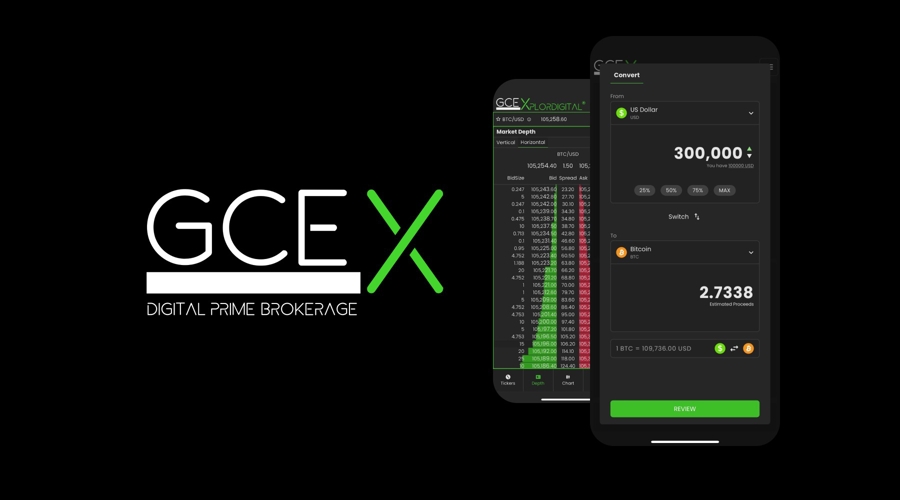
UK Crypto Broker GCEX Starts Offering Bitcoin and Ether Options to Professional Clients
Crypto prime broker GCEX began offering Bitcoin and Ether options to professional and institutional clients today (Thursday). The...

Cardano Pushes Back on EU MiCA Expansion for DeFi, Staking and Crypto Lending
Key Takeaways: The Cardano Foundation advocated against the EU coming up with new rules for DeFi, staking, lending, or protocol-le...

Beyond HODLing: How Bitcoin-Backed Loans Can Unlock New Financial Opportunities
Bitcoin Magazine Beyond HODLing: How Bitcoin-Backed Loans Can Unlock New Financial Opportunities For long-term Bitcoin holders, ac...

ETH to XMR: How to Swap Ethereum to Monero Without an Account as XMR Outpaces Ether
One Ether (ETH) now swaps for about 3.7 Monero (XMR), down from almost 13 a year ago. On October 22, 2025, ETH traded near $3,866...