Negative Crypto News Bolsters the Case for Decentralization
There have been several events around cryptocurrency, bitcoin and metaverse development that at first glance appear to be negative for the crypto industry, initiating uncertainty. However, consider events more closely, a...
Archive context
Older archive item. Useful for background and entity history, but not a fresh market-moving signal.

There have been several events around cryptocurrency, bitcoin and metaverse development that at first glance appear to be negative for the crypto industry, initiating uncertainty.
However, consider events more closely, and it becomes apparent that when taken from a broader perspective, any significant message they might contain about the state of crypto actually runs in a positive direction.
What some recent occurrences have in common is that they reinforce the importance of decentralization, illustrating its benefits and functionality, or underlining the fact that crypto is built to level the playing field, working in favor of ordinary people rather than for large corporate entities who are used to exercising disproportionate amounts of power.
DeFi Not CeFiWith the collapse of major crypto entities, such as Three Arrows Capital, Celsius and Voyager, some crypto skeptics presumed that we were witnessing a real-time demonstration of crypto’s fragility. Cynics took the opportunity to point out the irony in bitcoin having emerged in 2009 as an alternative to traditional finance’s unfolding catastrophes, only, within thirteen years, for crypto to have then repeated the mistakes it was intended to remedy.
This reading is not without merit, damaging behaviour from traditional finance was indeed replicated, but it aims its critical barrage at the wrong targets. It is not bitcoin, crypto as a whole, nor DeFi that crashed out in 2022’s contagious demolitions, but rather it is specific centralized operations that have proved faulty.
By contrast, decentralized protocols, such as Curve Finance and Aave, have continued to operate smoothly and as intended. What this bear market collapse has provided is a stark practical demonstration that DeFi is robust and neutral, while CeFi is vulnerable to corruption and recklessness. Quietly and without fanfare, decentralization comes out on top.
Tesla Sells, Retail BuyNews broke recently that Tesla had sold 75% of its bitcoin holdings at a loss, with the Founder and CEO, Elon Musk stating that due to uncertainty around covid lockdowns in China, “it was important for us to maximize our cash position.”
Again, this was taken as bearish, but at the same time, the market has absorbed any impact and, although there was a dip in bitcoin’s price when news of Tesla selling came out, volatility was not extreme and prices are now behaving much as they were.
Simultaneously, analysis shows that small holders, wallets containing 0.1 to 1 BTC, have been accumulating at unprecedented rates. Retail is sometimes caricatured as ill-informed, and there simply to provide exit liquidity for savvy full-timers. However, unlike previous spikes in accumulation, which occurred around all-time highs and actually do represent FOMO-driven, badly-timed buys, current moves are occurring after a major drawback. Presuming a long-term perspective, these recent accumulations are perfectly astute.
And, if you take those two incidents together, Tesla selling at a loss, retail picking up somewhere near the bottom (although we could still go lower), it paints a picture that Bitcoin’s creator might well be happy with. Bitcoin was built for everyone, no matter their circumstances, to enable unbanked, peer-to-peer transactions, and from that perspective it’s better to have bitcoin in the hands of regular users than gargantuan corporations.
Minecraft Says No to NFTsIn newly released guidelines, sandbox game Minecraft announced that it would no longer allow NFTs to be integrated within its applications. This was bad news for blockchain projects building on Minecraft’s infrastructure, such as metaverse platform NFT Worlds, whose NFTs immediately crashed in price.
NFT Worlds are looking into solutions and viable pivots, and it is notable that other metaverse and blockchain gaming projects reached out to them with regard to the development of a GameFi platform. Also of relevance is that Yuga Labs (creators of Bored Ape Yacht Club), in collaboration with metaverse tech developers, Improbable, recently ran an interactive first taste of their Otherside metaverse project, which was met with enthusiastic praise.
Put all this together and what we have is an orthodox, web2 platform, Minecraft, demonstrating precisely the limitations of operating on centralized infrastructure: that users and developers ultimately have the status of tenants who must abide by the rulings of their digital landlords.
It can certainly be argued that this web2 model has benefits. Minecraft is hugely successful and well-constructed. However, if one purpose of web3, or of the metaverse, is to move away from top-down control, then Minecraft just showed exactly why that is necessary, and bolstered the case for the next-generation, web3 class of developers who are building out new ways of doing business.
Relatedly, if you ever wondered about the Ethereum origin story, the Co-Creator, Vitalik Buterin jokingly cites an incident when his favorite game, World of Warcraft, unilaterally altered one of his in-game assets, thereby waking him up to the drawbacks of centralized platforms.
When it comes to what can be taken from Minecraft’s position on NFTs, there is a clear message: decentralization is not just a hazy, abstract concept, it actually serves real purposes, it has users and persuasive advocates, many of whom skew towards a younger age bracket, and it looks to be gathering momentum as we surge through what may come to be a memorably transformative decade.
This article was written by Sam White at www.financemagnates.com.Why this matters
This cryptocurrency story adds another data point to the current market tape and is useful when read alongside nearby source coverage.
Original source
Read on Finance MagnatesRelated market context
SEC Sues Four Firms Over Alleged $15 Million Crypto Scams Run Through WhatsApp Chats
The Securities and Exchange Commission charged four entities on Tuesday over two alleged schemes that used WhatsApp group chats an...

Token Spotlight: What is SoFiUSD (SOFID)?
Key takeaways SoFiUSD (SOFID) is a stablecoin, a crypto asset designed to hold a steady value of about one US dollar rather than m...

Standard Chartered says Ethena’s ENA could crush Bitcoin and Ethereum returns by 2028
Standard Chartered expects Ethena’s ENA token to rise about sevenfold by 2028, provided the protocol can rebuild its shrinking syn...
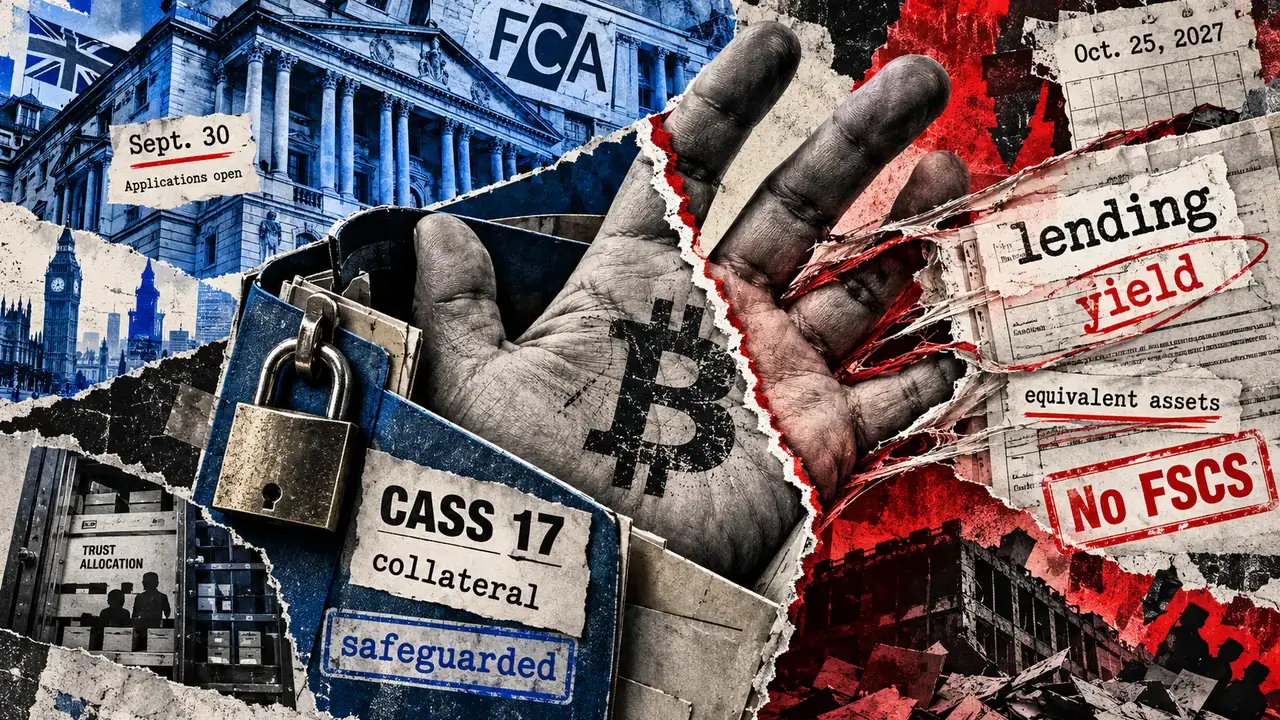
UK’s 2027 crypto rules let firms remove trust protection from Bitcoin lent for yield
UK crypto firms can now apply for authorization as of Sept. 30, bringing Bitcoin holders closer to a rulebook that will treat coin...

SEC changes token buyback guidance as spending hits $638M
The US Securities and Exchange Commission tightened its guidance for crypto token buybacks just three days after publishing it. On...
Ethereum Price Prediction: Could Aztec’s zk.money Drive ETH Higher as Zcash Fuels Privacy Narrative?
Ethereum is trading at $2,665, flat over 24 hours, leaving it below the $2,700–$2,735 resistance band as our recent price predicti...