New Naira Banknotes to Make Monetary Policy More Effective — Nigerian Central Bank Governor
The Central Bank of Nigeria governor, Godwin Emefiele, has said the newly designed naira banknotes are set to enhance the effectiveness of the organization’s monetary policy and bolster the financial inclusion cause. For...
Archive context
Older archive item. Useful for background and entity history, but not a fresh market-moving signal.
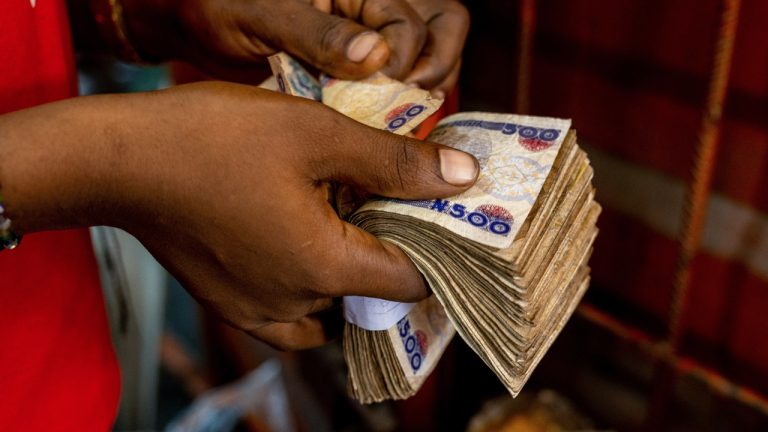
The Central Bank of Nigeria governor, Godwin Emefiele, has said the newly designed naira banknotes are set to enhance the effectiveness of the organization’s monetary policy and bolster the financial inclusion cause.
Forcing Currency Hoarders to Return to the Banking SystemAccording to the Nigerian central bank governor, Godwin Emefiele, the recently launched naira banknotes are expected to force currency dealers to return “hoarded currency [back] into the banking system.” In a speech delivered at the new naira banknotes unveiling ceremony, Emefiele claimed that the new banknotes could potentially enhance the effectiveness of the country’s monetary policy.
Besides helping return the older banknotes into circulation, the CBN governor insisted the redesigned naira banknotes are likely to bolster the bank’s financial inclusion cause. Emefiele explained:
We believe that this exercise would help in increasing financial inclusion, moving towards a more cashless economy, and ensuring greater formalization of the Nigerian economy.
According to Emefiele, once the exercise to phase out the older 100, 200, 500, and 1,000 naira banknotes has been completed, the CBN’s job of tracking and identifying suspicious movements of funds will become easier. At the moment this has not been possible because 84.71% of the naira banknotes “in circulation are outside commercial banks’ vaults.”
The CBN’s Controversial Naira Redesign PlanMeanwhile, in the same speech, Emefiele repeated the CBN’s earlier assertions which implied that the controversial decision to relaunch the banknotes had been greenlighted by Nigerian President Muhammadu Buhari.
According to the CBN, the phasing out of the current banknotes is not only long overdue but is “a global best practice for central banks” that must be repeated every 5 to 8 years. However, after the CBN announced its plan to replace the old naira banknotes with the redesigned ones, the currency’s parallel market exchange rate versus the U.S. dollar depreciated rapidly.
As reported by Bitcoin.com News, the naira’s plunge was caused by the abrupt surge in the demand for U.S. dollars versus the dwindling supply. However, after Nigeria’s Economic and Financial Crimes Commission began cracking down on the so-called illegal currency dealers, the local currency’s parallel exchange rate improved from just over 900 units per dollar in October to just under 800 units per dollar by Nov. 26.
Register your email here to get a weekly update on African news sent to your inbox:
What are your thoughts on this story? Let us know what you think in the comments section below.
Why this matters
This cryptocurrency story adds another data point to the current market tape and is useful when read alongside nearby source coverage.
Original source
Read on Bitcoin NewsRelated market context
Irish Central Bank Fines Coinbase Unit €3.25 Million Over Customer Fund Safeguards
TL;DR: Ireland’s central bank imposed a €3.25 million penalty on Coinbase Ireland over electronic-money safeguarding and outsourci...
Chainlink And LG CNS Target South Korean Banks With Digital Asset Infrastructure Deal
TL;DR: Chainlink and LG CNS are partnering on oracle and cross-chain infrastructure aimed at South Korea’s financial institutions;...
Bloomberg Adds Basel Crypto Exposure Classification For Banks And Asset Managers
TL;DR: Bloomberg has expanded its crypto analytics to classify bank exposure under Basel standards, including indirect holdings hi...

Bank of Korea Wants Stablecoins Written Into Forex Law as Crypto Bill and Tax Fight Come to a Head
Bitcoin Magazine Bank of Korea Wants Stablecoins Written Into Forex Law as Crypto Bill and Tax Fight Come to a Head The Bank of Ko...

Singapore, Malaysia and Thailand central banks expand cross-border stablecoin initiative involving Ripple, Visa and Mastercard
Malaysia and Thailand have joined Singapore's BLOOM initiative for cross-border stablecoin and tokenized deposit settlement.
SoFi Launches Yield-Bearing Tokenized Bank Deposit With Stablecoin Conversion
TL;DR: SoFi says its new SOFIE tokenized deposit represents money held at SoFi Bank, advertises 4.40% APY subject to terms, and ca...