No crypto project has registered with the SEC and ‘lived to tell the tale’ — House committee hearing
United States securities laws are not flexible enough to account for digital assets, as evidenced by the parade of crypto-native companies that have tried and failed to get into the Securities and Exchange Commission’s (...
Archive context
Older archive item. Useful for background and entity history, but not a fresh market-moving signal.

United States securities laws are not flexible enough to account for digital assets, as evidenced by the parade of crypto-native companies that have tried and failed to get into the Securities and Exchange Commission’s (SEC) good graces, Rodrigo Seira, special counsel to Cooley LLP, told a House Committee hearing on April 9.
The hearing, titled American Innovation and the Future of Digital Assets Aligning the U.S. Securities Laws for the Digital Age, featured Seira, WilmerHale partner Tiffany J. Smith, Polygon chief legal officer Jake Werrett and Alexandra Thorn, a senior director at the Center for American Progress.
“It is clear that the current securities regulatory framework is not a viable option to regulate crypto. It fails to achieve its stated policy goals,” Seira said in his opening remarks. “[T]he idea that crypto projects can come in and register with the SEC is demonstrably false.”
Cooley LLP special counsel Rodrigo Seira addresses the committee on April 9. Source: House Committee on Financial Services
Seira acknowledged that crypto promoters who raise capital for a new enterprise should be subject to federal securities laws.
“In practice, however, virtually no crypto projects have successfully registered their tokens under federal securities laws and lived to tell the tale,” he said, adding:
Projects that tried to comply with [the] SEC’s current regulatory requirements expended significant resources and effort only to fail or survive in a state of regulatory uncertainty. Moreover, registration is not a simple one-time process. Registering a token in the same manner as a stock triggers an obligation to operate as a publicly reporting company […].”Related: Crypto has a regulatory capture problem in Washington — or does it?
Righting the shipIn introducing the witnesses, Representative Bryan Steil, who heads the Subcommittee on Digital Assets, Financial Technology, and Artificial Intelligence, acknowledged regulatory roadblocks, which he said were put in place by the previous administration.
Congressman Bryan Steil addresses the hearing on April 9. Source: House Committee on Financial Services
Under President Donald Trump, lawmakers are attempting to right the ship by passing sensible legislation, said Steil.
One of the first steps occurred last week when the House Financial Services Committee advanced the STABLE Act, which is designed to regulate payment stablecoins tied to the US dollar and other fiat currencies.
Source: Financial Services GOP
A month earlier, the Senate Banking Committee advanced the GENIUS Act, which aims to regulate stablecoin issuers by establishing reserve requirements and requiring full compliance with Anti-Money Laundering laws.
The next step is “advancing the second half of this agenda: comprehensive digital asset market structure legislation,” said Steil.
Representative Ro Khanna told a digital asset conference last month that a market structure bill will cross the finish line this year.
The purpose of such legislation is to establish a clear regulatory framework for digital assets, including their legal categories and the enforcement jurisdiction of agencies such as the SEC and Commodity Futures Trading Commission.
Magazine: Unstablecoins: Depegging, bank runs and other risks loom
Why this matters
This cryptocurrency story adds another data point to the current market tape and is useful when read alongside nearby source coverage.
Original source
Read on CointelegraphRelated market context

ECB Plans Direct Investment In Tokenized Securities Using Pontes
TL;DR The ECB has started preparatory work to invest a small portion of its own-funds portfolio in tokenized euro-denominated secu...

ECB Launches Pontes For Central-Bank Settlement Of Tokenized Assets
TL;DR The European Central Bank has launched Pontes, a wholesale settlement service for tokenized financial assets. Pontes settles...

Ripple Powers Absa Digital Asset Custody Launch for Africa’s $205B Crypto Market
Key Takeaways: Ripple brings its custody technology to Absa Digital Asset Custody, which Absa Corporate and Investment Banking lau...

Broadridge Financial Solutions faces market share threats from tokenized equities and AI disruption
Broadridge's embrace of tokenization and AI could accelerate institutional adoption of digital assets, reshaping traditional finan...
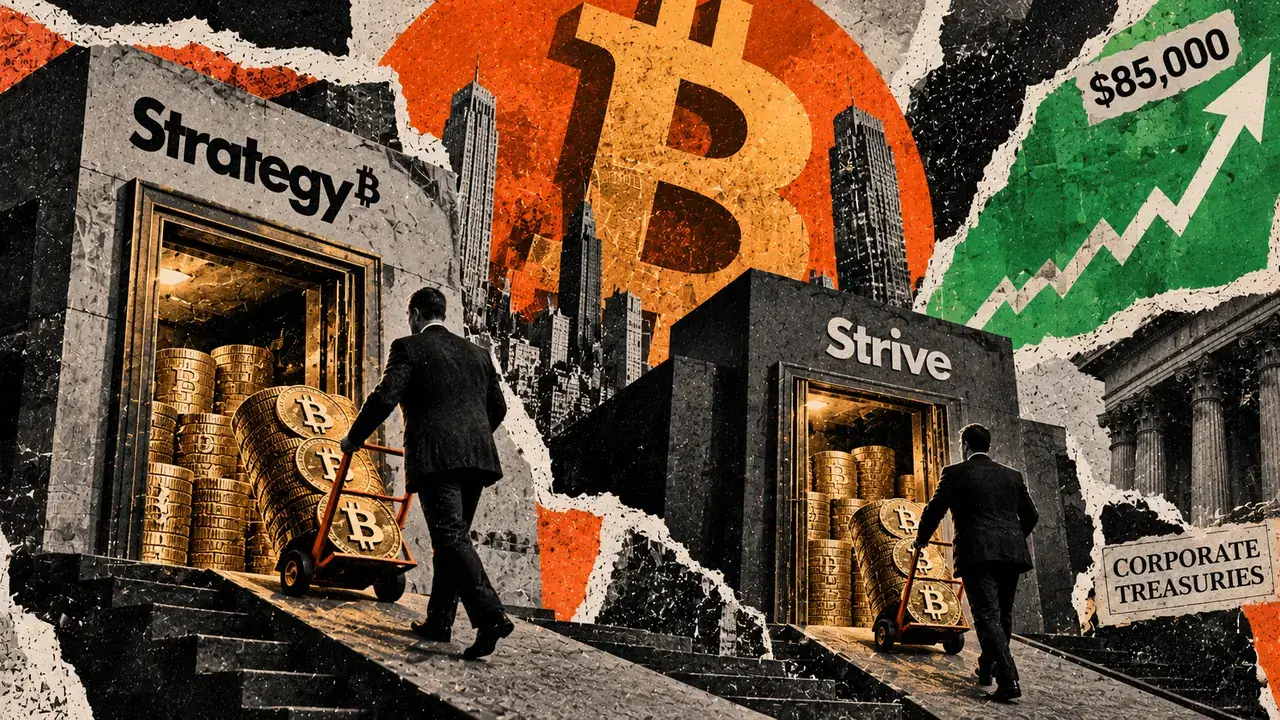
Strategy and Strive buy $183 million in Bitcoin as $85,000 rally revives treasury trade
Bitcoin treasury companies Strategy and Strive bought about $183 million of BTC last week as the cryptocurrency’s rebound helped c...

Bitcoin Price Shrugs Off Clarity Act Fail, Blasts Past $86,000
Bitcoin Magazine Bitcoin Price Shrugs Off Clarity Act Fail, Blasts Past $86,000 Long-awaited crypto legislation failed last week —...