North Carolina lawmaker introduces Digital Asset Freedom Act
North Carolina (NC) representative Neal Jackson introduced the North Carolina Digital Asset Freedom Act on April 10. The bill proposes that qualifying "digital assets" be accepted as a legally recognized form of payment...
Archive context
Older archive item. Useful for background and entity history, but not a fresh market-moving signal.

North Carolina (NC) representative Neal Jackson introduced the North Carolina Digital Asset Freedom Act on April 10. The bill proposes that qualifying "digital assets" be accepted as a legally recognized form of payment and for taxes.
Although the language of the bill does not specifically mention Bitcoin (BTC), there are several provisions laid out that make BTC uniquely qualified under the bill's definition of a "digital asset."
These stipulations include a minimum market capitalization of $750 billion and a daily trading volume of over $10 billion, a market history of 10 years or more, proven censorship resistance, proof-of-work consensus, lack of a central authority, 99.98% or more network uptime, and a maximum supply cap. The bill read:
"The General Assembly further finds that decentralized digital assets, which are not governed by any central entity or foundation, align with the economic principles of limited, noninflationary money and are capable of ensuring the security and integrity of transactions."Jackson's bill is merely the latest in state-led Bitcoin strategic reserve legislation in the United States amid inflation concerns, high US federal debt and a depreciating currency.
NC Digital Asset Freedom Act. Source: North Carolina Legislature
Related: North Carolina bills would add crypto to state’s retirement system
North Carolina takes a firm stance against CBDCsFormer North Carolina Governor Roy Cooper vetoed a bill banning a central bank digital currency (CBDC) in July 2024. At the time, Cooper characterized the bill as "premature, vague, and reactionary" to threats that have not yet materialized.
In August 2024, the North Carolina House of Representatives overrode Cooper's veto in a definitive and bipartisan 73-41 vote.
The North Carolina Senate followed suit by overriding Cooper's veto in a 27-17 vote and passed the anti-CBDC legislation into law in September 2024.
North Carolina’s anti-CBDC legislation. Source: North Carolina Legislature
Dan Spuller, the head of industry affairs at crypto advocacy organization the Blockchain Association, applauded the action taken by NC lawmakers to push back against the tide of CBDCs.
"This bill should have never been vetoed, and Governor Cooper blew an opportunity to send a strong message to the Federal Reserve that NC stands united against CBDCs," Spuller wrote in a Sept. 9 X post.
Magazine: Bitcoiner sex trap extortion? BTS firm’s blockchain disaster: Asia Express
Why this matters
This cryptocurrency story adds another data point to the current market tape and is useful when read alongside nearby source coverage.
Original source
Read on CointelegraphRelated market context

ECB Launches Pontes For Central-Bank Settlement Of Tokenized Assets
TL;DR The European Central Bank has launched Pontes, a wholesale settlement service for tokenized financial assets. Pontes settles...
European Central Bank Connects Tokenized Assets to Central Bank Money
The European Central Bank has launched Pontes, giving banks a new route to settle tokenized assets in central bank money. The roll...

Ripple Powers Absa Digital Asset Custody Launch for Africa’s $205B Crypto Market
Key Takeaways: Ripple brings its custody technology to Absa Digital Asset Custody, which Absa Corporate and Investment Banking lau...
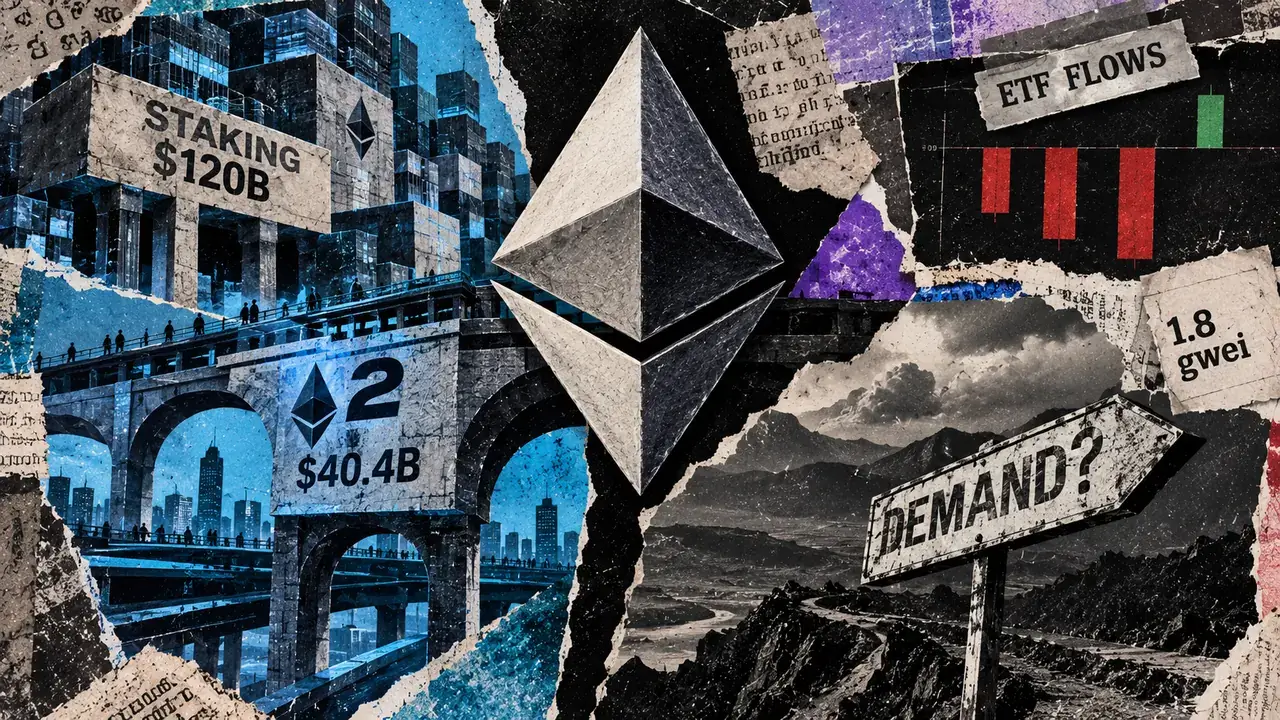
L2 growth and $120 billion in staking hide Ethereum’s supply reality
Ethereum's institutional data hub showed about $120 billion in staked ETH and $40.4 billion in daily average total value locked on...

Billionaire Investor Tim Draper: “Irresponsible” for Apple & Meta NOT to Hold BTC
Bitcoin Magazine Billionaire Investor Tim Draper: “Irresponsible” for Apple & Meta NOT to Hold BTC Government spending hasn’t slow...

Bitcoin ETFs pull in nearly $1 billion as IBIT leads buying
Institutional adoption of Bitcoin ETFs signals a growing mainstream acceptance, potentially stabilizing and legitimizing the crypt...