Russia Takes Aim at Pro-Western Crypto With New Fees and Limits
Russia Deputy Finance Minister Ivan Chebeskov disclosed on June 9, on the sidelines of the St. Petersburg International Economic Forum (SPIEF 2026), that Moscow is preparing fees, trading limits, and technical safeguards...
Archive context
Older archive item. Useful for background and entity history, but not a fresh market-moving signal.
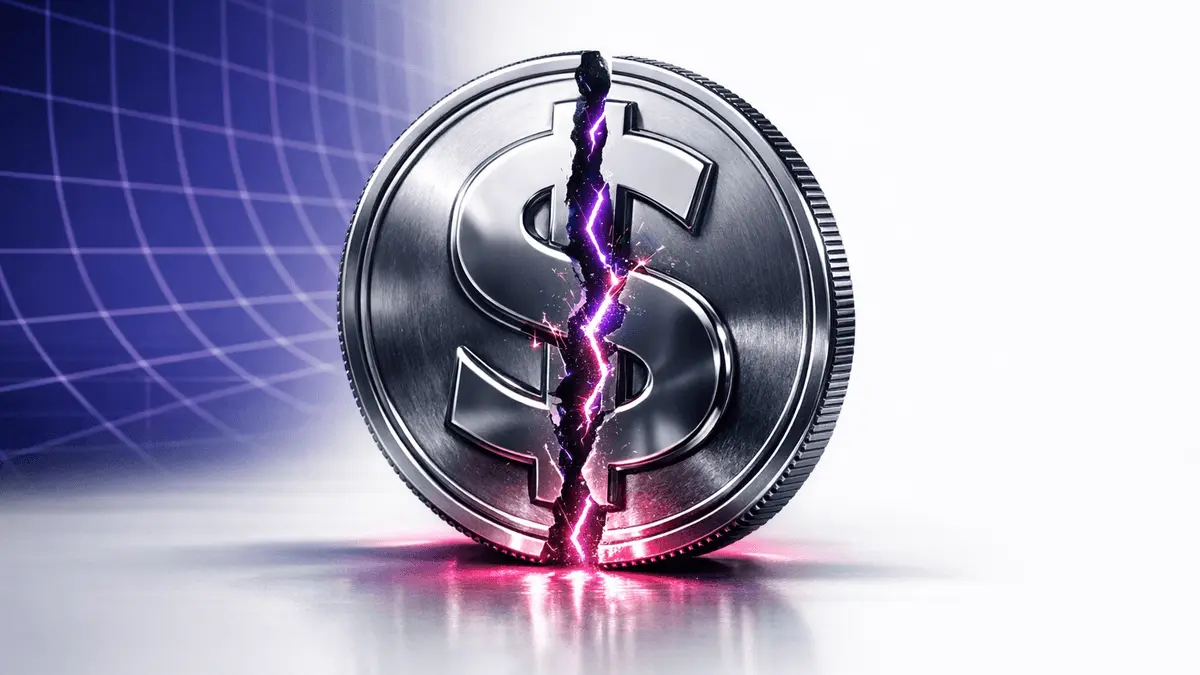
Russia Deputy Finance Minister Ivan Chebeskov disclosed on June 9, on the sidelines of the St. Petersburg International Economic Forum (SPIEF 2026), that Moscow is preparing fees, trading limits, and technical safeguards specifically targeting so-called unfriendly crypto assets, naming USDT, USDC, and BNB by name.
Freedom Global analyst Vladimir Chernov estimates those fees at 0.5–2% per transaction for broadly classified unfriendly assets, rising to as much as 3% per transaction for dollar-pegged stablecoins.
The stated rationale is investor protection, but the assets singled out share a common feature: their issuers, Tether, Circle, and Binance, are Western-linked entities that have previously frozen wallets tied to sanctioned addresses, and that is precisely the geopolitical problem Russia is trying to price into its new regulatory architecture.
#KCEXpressDaily
Russia’s Central Bank First Deputy Governor Vladimir Chistyukhin confirmed: From July 1, 2026, non-qualified retail investors can only trade $BTC, $ETH, and $USDT under the new Digital Currency and Digital Rights Law. Other assets are unavailable to ordinary… pic.twitter.com/NNOD32dEov
Chebeskov’s framing was explicit. ‘These could include both technical protection measures and various economic incentives, commissions or recommendations, that would encourage citizens to own other assets,’ he told Izvestia.
That sentence is doing more than describing a fee schedule; it is signaling a preferred direction of capital flow away from dollar-pegged instruments and toward ruble-based or BRICS-aligned alternatives.
Discover: The Best Crypto to Diversify Your Portfolio
Russia Crypto Regulation Bill: Where the State Duma Bill Actually StandsThe measures Chebeskov outlined are not yet law. They are being negotiated ahead of the second reading of the State Duma bill formally titled ‘On Digital Currency and Digital Rights,’ which passed its first reading 327–13 on April 21, 2026.
That first reading established the framework’s skeleton: five license categories for crypto operators, sweeping supervisory authority for the Bank of Russia, a continuing ban on domestic crypto payments, and an explicit carve-out permitting cross-border crypto settlements, the latter being the mechanism Russia has been using to route trade around sanctions.
Bitcoin (BTC)24h7d30d1yAll timeThe second reading is where the specifics get settled, and it is shaping up as the most contested phase. Duma Financial Markets Committee Chairman Anatoly Aksakov has flagged the crypto-market bill as one of two primary legislative priorities, alongside the ‘Antifraud 2.0’ package, with a target of completing the main framework by July 1, 2026 and enforcement rules operational by July 1, 2027.
The Russia crypto regulation debate is concentrated in that second reading, and the fee structure for unfriendly assets sits at its center.
The term ‘unfriendly’ carries legal weight in Russia: it maps directly to the government’s official list of countries that imposed sanctions following the 2022 invasion of Ukraine, a list that includes the United States, EU member states, and the United Kingdom.
Crypto assets issued or controlled by entities in those jurisdictions inherit that classification – which is why USDT (Tether, British Virgin Islands), USDC (Circle, US), and BNB (Binance, with deep US regulatory exposure) are the three assets most prominently in the crosshairs.
Discover: The Best Token Presales
The post Russia Takes Aim at Pro-Western Crypto With New Fees and Limits appeared first on Cryptonews.
Why this matters
Tether is showing up inside the Stablecoins theme, so this story is worth tracking for follow-through rather than treating it as a one-off headline.
Original source
Read on CryptonewsRelated market context
Circle Brings USDC and EURC Closer to the Corporate Finance Department
TL;DR: Circle and SAP-backed Tereina plan to embed USDC and EURC payments into enterprise workflows, beginning with SAP Cloud ERP....

Coinbase Institutional Co-CEO: Bitcoin’s “Second Wave” of Institutional Capital has Arrived
▶Bitcoin Magazine Coinbase Institutional Co-CEO: Bitcoin’s “Second Wave” of Institutional Capital has Arrived Seven of the largest...

Canada’s Stablecoin Draft Allows Usage Rewards, Bars Issuers Paying Yield via Third Parties
Canada’s Department of Finance has published draft Stablecoin Regulations that spell out where a permitted reward ends and a banne...

SoFi’s tokenized deposits put banks in competition with stablecoins, Truth Ventures CEO says
SoFi's tokenized deposits may drive innovation in banking, challenging stablecoins and prompting regulatory and consumer protectio...
Bernstein cuts Coinbase target, raises Circle outlook as crypto revenue mix shifts
The shift in crypto revenue sources highlights the growing importance of derivatives, prediction markets, and tokenization over tr...

Prediction markets and derivatives drive Bernstein’s crypto stock outlook for Coinbase, Robinhood and Circle
Bernstein cuts Coinbase’s target while raising Circle’s as new products shift their earnings outlook.