Russian Central Bank Attributes Recent Ruble Depreciation to Lower Forex Sales by Exporters
The Russian central bank has attributed the ruble’s latest plunge against the U.S. dollar to the temporary reduction “in sales of foreign currency earnings by exporters.” The central bank also revealed that the Chinese y...
Archive context
Older archive item. Useful for background and entity history, but not a fresh market-moving signal.
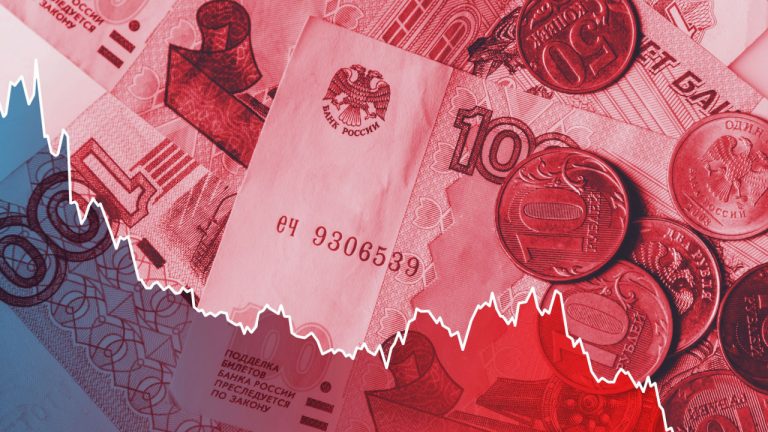
The Russian central bank has attributed the ruble’s latest plunge against the U.S. dollar to the temporary reduction “in sales of foreign currency earnings by exporters.” The central bank also revealed that the Chinese yuan accounted for 39% of the Russian forex market’s overall volumes.
Temporary Reduction in Sale of Foreign ExchangeThe Russian central bank has said the ruble’s recent plunge to its lowest level versus the U.S. dollar in 2023 is due to lower forex sales by the country’s exporters. The comments by the central bank followed media reports which attributed the ruble’s plunge (to more than 80 units for every dollar) to reduced oil revenues and the impact of Western sanctions on the Russian economy.
Although it ended the year 2022 as one of the world’s best-performing currencies, the Russian ruble has depreciated by more than 10% versus the U.S. dollar in 2023, and by about 5% in the first week of April. However, in its monitoring report that was unveiled on April 10, the Russian central bank insisted that the ruble’s latest fall may be temporary.
“There has been a temporary reduction in sales of foreign currency earnings by exporters, which led to an acceleration of the weakening of the ruble in early April,” the central bank reportedly said.
The central bank claimed, however, that individuals and companies have since responded to the currency’s fall by increasing sales of foreign currency.
Russian Interest in Chinese Yuan SurgesMeanwhile, the central bank also revealed that interest in the Chinese currency — the yuan — spiked in March, after $515 million worth of yuan was bought by Russians. Before that, Russians had bought Chinese currency valued at just over $143 million in the prior month. In addition, trades on the Russian forex market that involved yuan reportedly accounted for 39% of overall volumes. On the other hand, ruble-dollar trades only accounted for 34% of the volume.
Since the imposition of Western sanctions as well as the removal of several banks from the Society for Worldwide Interbank Financial Telecommunication (SWIFT) financial communications networks, the Russian government has advocated for an alternative to the U.S.-dominated financial system. Russia has also sought to diminish its reliance on the U.S. dollar by establishing bilateral currency agreements with countries such as China and India.
What are your thoughts on this story? Let us know what you think in the comments section below.
Why this matters
This cryptocurrency story adds another data point to the current market tape and is useful when read alongside nearby source coverage.
Original source
Read on Bitcoin NewsRelated market context
Russia Will Soon Ban Peer-to-Peer Bitcoin Trading, Central Bank Confirms
Russians have until July 1, 2027 to buy and sell crypto directly with each other. After that, every trade runs through a broker or...

Ripple Brings RLUSD to Cross River Bank as Garlinghouse Backs Evernorth’s XRP Strategy
Announced on October 15, the Cross River partnership integrates Ripple USD (RLUSD) into the bank’s proprietary Core Operating Syst...

ChatGPT AI Predicts Million-Dollar Bitcoin by 2027
ChatGPT AI predicts Bitcoin will hit $1M+, which isn’t a crazy call, since many analysts share the same view. What makes this pred...

Bitcoin ETFs log $228M in weekly sales as monthly outflows near $618M
Institutional shifts in Bitcoin ETF flows highlight market volatility and strategic reallocations, impacting broader cryptocurrenc...

Deutsche Bank Nears Bitcoin Custody Launch As Crypto Push Expands Beyond Europe
TL;DR: Deutsche Bank is preparing to introduce institutional digital asset custody services, initially targeting professional clie...

Circle Says 59 Cents of Each Revenue Dollar Went to USDC Partners and Transaction Costs
Circle said it paid about $819 million of its roughly $1.4 billion in first-half 2026 revenue to USDC distribution partners and tr...