SEC Issues New Reporting Guidance For Digital Asset Custody Firms
The SEC’s Division of Corporation Finance has issued updated staff guidance on public reporting expectations for digital asset depositories and crypto custody arrangements. The guidance centers on how public companies di...
Archive context
Older archive item. Useful for background and entity history, but not a fresh market-moving signal.

The SEC’s Division of Corporation Finance has issued updated staff guidance on public reporting expectations for digital asset depositories and crypto custody arrangements.
The guidance centers on how public companies disclose balance sheet treatment and risk factors when they hold crypto assets on behalf of third-party customers. That makes it important for custodians, exchanges, digital asset platforms, and any public company handling customer crypto.
This is staff guidance, not formal Commission rulemaking.
That distinction matters. The SEC is not creating a new law through the document. But staff guidance can still influence how companies prepare filings, describe risk, and answer regulator comments.
For more details, visit the official Sec platform.
TL;DR- SEC staff issued updated guidance for digital asset depositories.
- The guidance addresses public-company reporting around custody and customer crypto assets.
- It should be treated as staff guidance, not a new binding Commission rule.
Crypto custody is not just a technical issue.
It is also an accounting, disclosure, and investor-protection issue. When a public company holds digital assets for customers, investors need to understand what is on the balance sheet, what is off the balance sheet, what risks exist, and how those assets are protected.
That is not always simple.
Digital assets can involve private keys, third-party custodians, insurance limits, wallet architecture, legal title questions, bankruptcy risk, cybersecurity controls, and changing regulatory expectations.
SEC staff guidance helps companies understand what information may need to be disclosed.
Custody Risk Became A Central IssueThe industry learned the hard way that custody structure matters.
After major exchange failures and platform collapses, investors became more alert to questions around customer asset segregation, corporate control, rehypothecation, wallet access, and bankruptcy treatment.
Public companies cannot simply say they hold crypto safely and leave it there.
They need to explain the risks clearly. They may need to describe how assets are held, who controls private keys, whether customer assets are commingled, what happens if a custodian fails, and whether legal protections are clear.
That is why reporting guidance in this area carries weight.
Staff Guidance Is Not A RulebookThe SEC’s document should not be overstated.
Staff guidance does not have the same legal force as a formal rule adopted by the Commission. It also does not replace statutes, court decisions, or accounting standards. Companies still need legal and accounting advice for their specific facts.
But guidance can still matter in practice.
It tells issuers what SEC staff may ask about during filing reviews. It can shape disclosure norms. It can also signal which risks regulators believe investors need to see more clearly.
What Companies May Need To ClarifyThe guidance points toward more precise disclosure around crypto custody.
That may include the nature of assets held, customer rights, custody controls, risk exposure, insurance arrangements, third-party service providers, cybersecurity risks, and balance sheet presentation.
For companies in the digital asset depository business, vague language is becoming harder to defend.
Investors want to know what the company actually controls and what obligations it has to customers.
The Market ImpactThis is not a market-moving crypto rule by itself.
But it is part of a wider tightening around disclosure. As more companies hold, custody, or service digital assets, regulators are pushing for clearer reporting. That can make the sector more transparent, but it may also increase compliance costs.
For investors, that is probably healthy.
Crypto custody risk is not going away. Better disclosure makes it easier to compare companies and understand where the real exposure sits.
The SEC’s latest staff guidance adds another layer to that process.
This article draws on SEC Division of Corporation Finance staff guidance relating to digital asset reporting and custody disclosures.
This article was written by the News Desk and edited by Samuel Rae.
Why this matters
SEC is showing up inside the Regulation theme, so this story is worth tracking for follow-through rather than treating it as a one-off headline.
Original source
Read on NewsBTCRelated market context

$20B AUM Siebert Analyst: Bitcoin to $175K in 2027
Bitcoin Magazine $20B AUM Siebert Analyst: Bitcoin to $175K in 2027 Siebert Financial sees Bitcoin reaching $175K within the next...

Jeff Park: What The AI Pain Trade Means For Bitcoin
Bitcoin Magazine Jeff Park: What The AI Pain Trade Means For Bitcoin From Strategy and Strive to Google and Super Micro, companies...
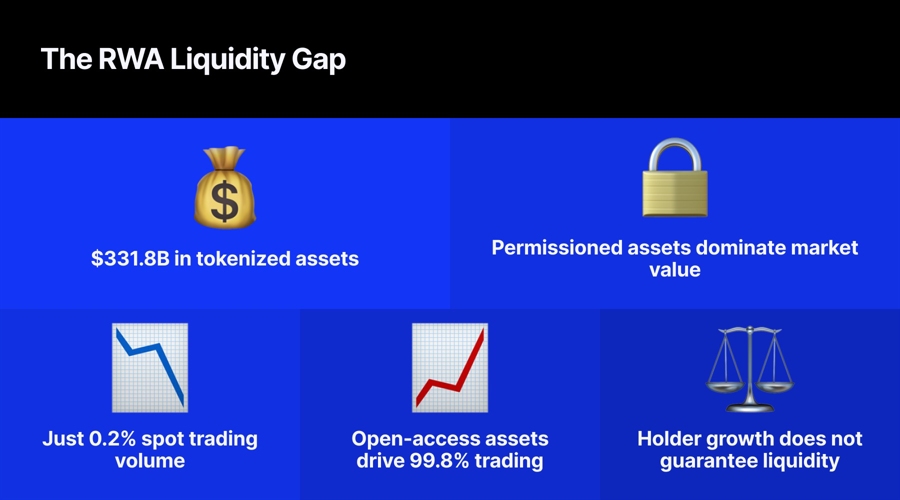
More Holders, Little Trading: The RWA Liquidity Problem Is Worse Than You Think
Let me ask you something straight. Does real-world asset trading on crypto exchanges feel like a genuine revolution, or does it fe...

Fidelity Sees A Stronger Solana Network, With Concentration Risks Still In View
TL;DR: Fidelity’s technology research team says Solana has operated for more than two years without a major mainnet outage, while...

Bitcoin’s Quantum Transition Won’t Stop at Bitcoin
HONG KONG, October 18, 2026 – As quantum computing advances, the challenge extends beyond Bitcoin’s cryptography to the financial...

Nine companies, including Broadcom and UnitedHealth, block tokenized stock trading on OKXICE
The objections highlight potential challenges in tokenized stock adoption, impacting market dynamics and issuer control over digit...