SEC Might “Challenge” FTX If Creditors Are Paid in Stablecoins
The Securities and Exchange Commission (SEC) has taken an interest in the restructuring plan of the now-collapsed FTX and revealed its intentions to challenge the crypto exchange’s payment plan to its creditors if they w...
Archive context
Older archive item. Useful for background and entity history, but not a fresh market-moving signal.

The Securities and Exchange Commission (SEC) has taken an interest in the restructuring plan of the now-collapsed FTX and revealed its intentions to challenge the crypto exchange’s payment plan to its creditors if they were paid in stablecoins.
“The SEC is not opining on the legality, under the federal securities laws, of the transactions outlined in the Plan and reserves its rights to challenge transactions involving crypto assets,” a motion filed by the SEC last Friday noted.
FTX’s Redistribution Plan
The regulator’s motion came after the collapsed crypto exchange floated a redistribution plan for its debtors.
FTX filed for bankruptcy in November 2022 with an $8 billion deficit. Although the exchange's condition looked grim when it filed for Chapter 11 protection, the bankruptcy administrators found a stash of digital currency holdings and other assets, gathering a substantial amount for repayment to the creditors.
Last May, FTX's bankruptcy administrators floated a restructuring plan to repay its creditors up to 118 percent of their claims in cash. However, only creditors with $50,000 or less in claims will be eligible, which is 98 percent of all creditors.
The non-governmental creditors would also receive their claims in full, along with 9 percent interest to be calculated from the date of the bankruptcy filing. According to the exchange, it will fulfil “the time value of their investments.”
Backlash from Creditors
However, that plan received backlash from a group of creditors who argued that it was not in their best interest. They even pointed out that any payment in fiat would attract tax liability.
Now, the SEC is pointing out that making payments using stablecoins might attract regulatory attention.
“The Debtors’ portfolio includes crypto asset securities, which the Debtors may seek to monetise and/or distribute pursuant to the Plan. And the Debtors are exploring different distribution options, including potentially distributing stablecoins to certain creditors,” the regulator added. “In addition, the Debtors have not identified the distribution agent, which may potentially distribute stablecoins to creditors under the Plan.”
Meanwhile, FTX settled the charges brought by the Commodity Futures Trading Commission earlier in July, paying $12.7 billion. Its founder and former CEO, Sam Bankman-Fried, also received a 25-year prison sentence.
This article was written by Arnab Shome at www.financemagnates.com.Why this matters
This cryptocurrency story adds another data point to the current market tape and is useful when read alongside nearby source coverage.
Original source
Read on Finance MagnatesRelated market context

Tokenized funds rise to $11.39 for every $100 in stablecoins, nearly quadrupling in two years
Tokenized funds' growth highlights a shift towards yield-seeking on-chain investments, potentially reshaping the stablecoin ecosys...
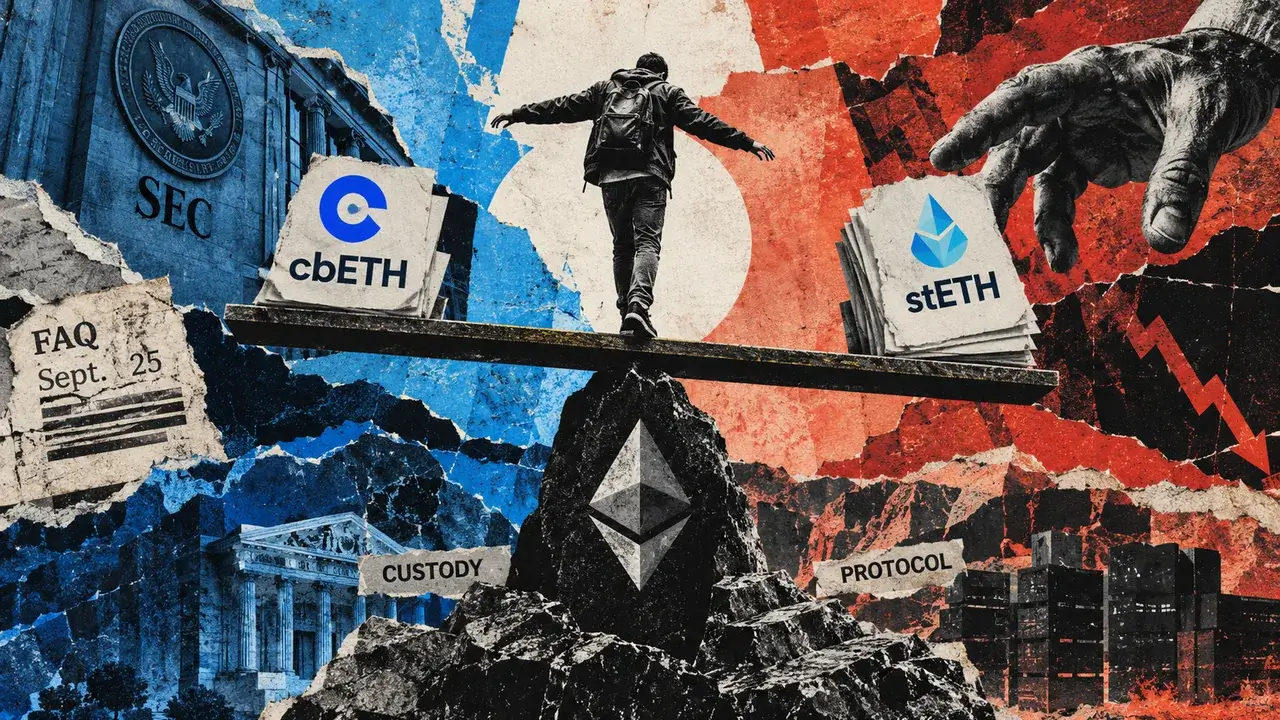
SEC staff’s staking-token split spotlights the exit risks behind staked ETH tokens
An ETH holder can sell a liquid-staking token while the ETH behind it remains staked. A Sept. 25 SEC staff FAQ draws a conditional...

Tokenized iShares MSCI South Korea ETF Arrives on StonkFun for Solana Coin Launches
Key Takeaways: StonkFun now supports coin launches paired with $EWY, the tokenized iShares MSCI South Korea ETF. Overall, the inte...

Jupiter Exchange COO says DeFi needs 5-10x improvement, not incremental tweaks, to attract real capital
DeFi must significantly outperform traditional finance to attract institutional capital, potentially reshaping financial systems a...

Centralized exchanges see $3B in Bitcoin outflows in past week
The significant Bitcoin outflows from exchanges suggest a trend towards self-custody, potentially reducing market liquidity and im...
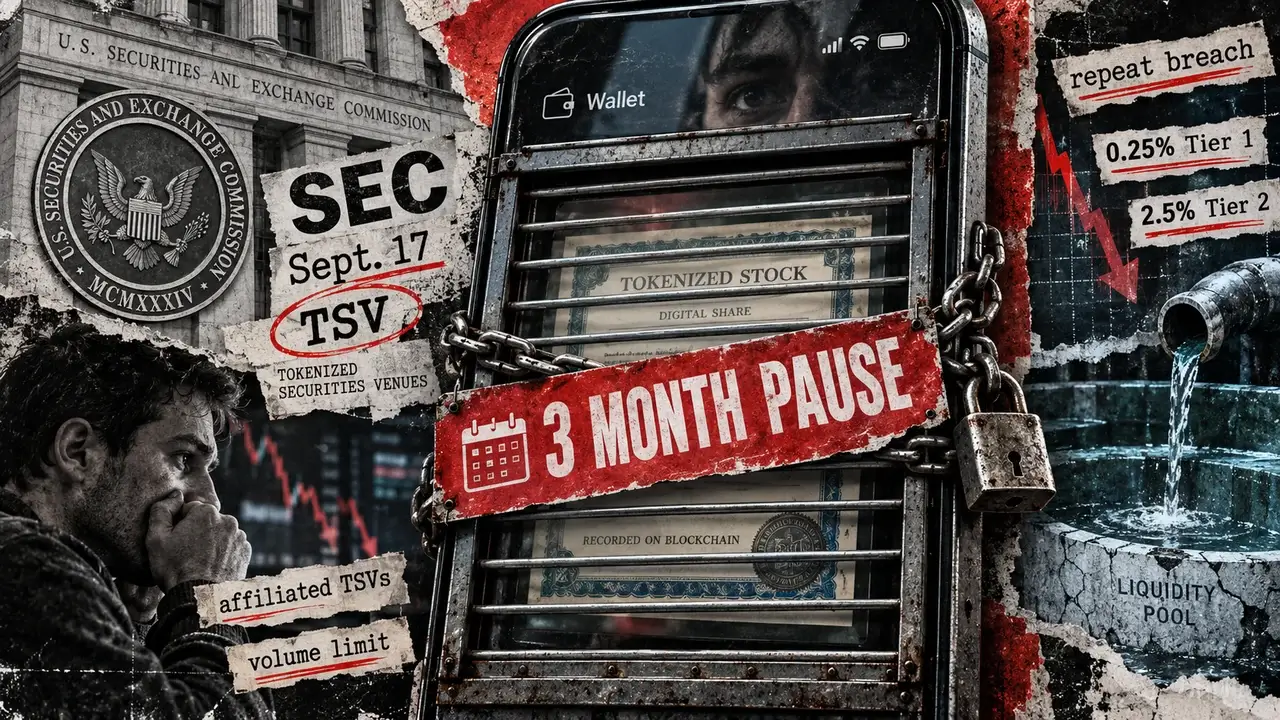
Why your tokenized stock could stop trading for three months
Buying a tokenized stock sounds as though it should be simple. You pick a company you know, buy a token representing its shares, a...