Several Major Central Banks Take Coordinated Action to Boost Liquidity Amidst Banking Crisis
On Sunday evening, March 19, 2023, at 5:00 p.m. Eastern Time, the U.S. Federal Reserve, along with several central banks including the Bank of England, Bank of Canada, Bank of Japan, the European Central Bank, and the Sw...
Archive context
Older archive item. Useful for background and entity history, but not a fresh market-moving signal.

On Sunday evening, March 19, 2023, at 5:00 p.m. Eastern Time, the U.S. Federal Reserve, along with several central banks including the Bank of England, Bank of Canada, Bank of Japan, the European Central Bank, and the Swiss National Bank, announced a coordinated action to enhance the provision of liquidity via the standing U.S. dollar liquidity swap line arrangements. The announcement followed a banking crisis that began with the collapse of three U.S. banks and spread internationally.
Turmoil in Banking Industry Leads to Coordinated Action to Enhance LiquidityBefore Wall Street opened on Monday and ahead of the next Federal Reserve meeting, the U.S. central bank, along with five other major central banks, announced decisive action to add liquidity to the financial system. The participating banks included the Bank of England, Bank of Canada, Bank of Japan, Swiss National Bank, and the European Central Bank (ECB). In fact, all participating central banks published similar press releases regarding the new measures.
“To improve the swap lines’ effectiveness in providing U.S. dollar funding, the central banks currently offering U.S. dollar operations have agreed to increase the frequency of 7-day maturity operations from weekly to daily,” the Federal Reserve announcement details. “These daily operations will commence on Monday, March 20, 2023, and will continue at least through the end of April.”
so central banks literally said a form of –
"Steady lads, deploying more capital"
— sol poor | $BONK enjoyeerr | (@DeChDAO) March 20, 2023
The central banks’ latest plan is a popular topic of conversation on social media and forums, as many believe that monetary tightening policies are over. Arthur Hayes, the founder of Bitmex, tweeted about the situation, saying, It’s All Over!!! This [is] what happens when no one wants to hold USD in banks that can’t borrow from the Fed using #banktermfundingprogram. Not sure how the Fed can hike when it’s handing out dollars to its peers. Cut Cut Cut.”
From Tightening to EasingThe turmoil in the banking industry began after the fall of Silicon Valley Bank and Signature Bank. The U.S. Federal Reserve announced a plan to make all uninsured depositors of both institutions whole. Shortly after, the Swiss banking giant Credit Suisse showed severe signs of weakness and borrowed 50 billion francs from the Swiss National Bank. Swiss authorities then orchestrated an emergency takeover of Credit Suisse by UBS, which acquired the financial giant for 3 billion Swiss francs ($3.2 billion).
From SVB, to medium US bank (First Republic), to global systemic bank (CS), to all central banks coordinating…
This escalated fast
— Mid (@Elmidou) March 20, 2023
Moreover, 11 large U.S. lenders injected $30 billion into First Republic Bank last week. The latest plan by the six central banks could potentially lead to monetary expansion, credit bubbles, and more bailouts. By providing liquidity to banks and markets, the major central banks are endorsing support for the creation of credit and money within the economy. The decision by the U.S. Federal Reserve and other central banks to increase the frequency of 7-day maturity operations from weekly to daily can safely be considered monetary easing.
“The network of swap lines among these central banks is a set of available standing facilities and serve as an important liquidity backstop to ease strains in global funding markets, thereby helping to mitigate the effects of such strains on the supply of credit to households and businesses,” the six central banks detail in the announcement. Moreover, after Switzerland resolved the Credit Suisse problem with UBS, Fed Chair Jerome Powell and Treasury Secretary Janet Yellen issued a joint statement saying:
“We welcome the announcements by the Swiss authorities today to support financial stability. The capital and liquidity positions of the U.S. banking system are strong, and the U.S. financial system is resilient. We have been in close contact with our international counterparts to support their implementation.”
What do you think the long-term effects of the central banks’ decision to increase the frequency of 7-day maturity operations will be on the global economy? Share your thoughts in the comments section below.
Why this matters
This cryptocurrency story adds another data point to the current market tape and is useful when read alongside nearby source coverage.
Original source
Read on Bitcoin NewsRelated market context

BFFS26 Denver: Joseph Kelly on Bitcoin Custody and Credit; Alan Lane on Banking Lessons
Bitcoin Magazine BFFS26 Denver: Joseph Kelly on Bitcoin Custody and Credit; Alan Lane on Banking Lessons The Bitcoin for Financial...

Circle Says 59 Cents of Each Revenue Dollar Went to USDC Partners and Transaction Costs
Circle said it paid about $819 million of its roughly $1.4 billion in first-half 2026 revenue to USDC distribution partners and tr...
Banks Hold a Lever Over Stablecoin Adoption, BIS Economists Say
A Bank for International Settlements working paper found that stablecoin growth slows when U.S. banks raise deposit rates, with Ci...

BIS paper finds banks could slow stablecoin growth by raising rates
Rising bank rates could curb stablecoin growth, impacting monetary policy, regulation, and competition between banks and digital c...

Coinbase crypto-backed loans hit $2.3 billion as banks build tokenized deposits
Coinbase's crypto-backed loans and banks' tokenized deposits signal a shift towards blockchain integration in traditional finance...
More Holders, Little Trading: The RWA Liquidity Problem Is Worse Than You Think
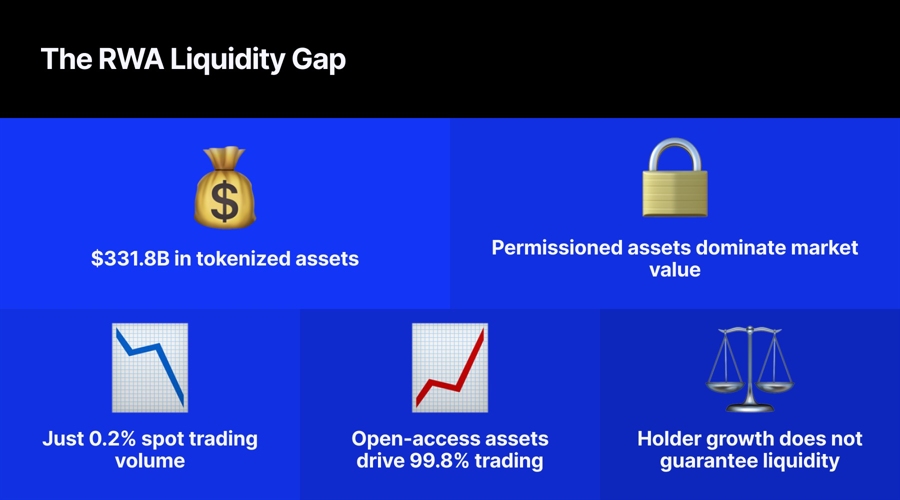
Let me ask you something straight. Does real-world asset trading on crypto exchanges feel like a genuine revolution, or does it fe...