Smart money concepts in crypto trading: How to track and profit
Key takeawaysSmart money consists of institutional investors with advanced tools and knowledge that can influence crypto market trends.Key concepts like order blocks, liquidity zones and fair value gaps can help traders...
Archive context
Older archive item. Useful for background and entity history, but not a fresh market-moving signal.

Smart money consists of institutional investors with advanced tools and knowledge that can influence crypto market trends.
Key concepts like order blocks, liquidity zones and fair value gaps can help traders align with smart money strategies.
Real-time tracking tools such as Glassnode, Nansen and CoinGecko allow traders to follow smart money’s moves and capitalize on them.
Following the movements of smart money is akin to navigating the open sea, using its wake to position yourself for success in the crypto market.
Smart money refers to the money being invested by individuals or organizations that know the markets inside and out. We’re talking about institutional investors, hedge funds and well-seasoned traders. These are the big players who have access to more information and tools than most of us, and they use that knowledge to make strategic decisions.
In the crypto world, “smart money” is especially powerful because the market is still growing and changing quickly. These investors have a massive impact on the market. Their moves can shake things up, push prices up or down and even shift the way people feel about a particular coin or token.
For example, when major players like BlackRock launch a Bitcoin exchange-traded fund (ETF), it can send waves through the market, influencing Bitcoin’s (BTC) price and the broader market.
How do institutional investors influence crypto market trends?Institutional investors have substantial financial muscle, and when they enter the crypto market, they can make a big impact in several ways:
Liquidity and stability: These investors bring in large amounts of capital, which makes it easier to buy and sell without dramatically affecting prices. This helps stabilize the market and makes it more attractive for other investors to get involved. When more money is flowing in and out smoothly, it creates a healthier, more balanced market.
Price movements and volatility: When these big players make large investments (or sell off their holdings), it can cause prices to move quickly, either up or down. While this can create volatility, it also opens the door for traders to take advantage of those price swings.
Regulation and legitimacy: As institutional investors get involved, they push for clearer regulations, which helps bring more legitimacy to the crypto space. For instance, the approval of Bitcoin ETFs has given institutional investors a regulated way to invest in Bitcoin, and that’s made the market more credible overall.
In short, smart money is invested by experienced, informed players who make strategic moves, while ordinary money is often invested by individuals without deep market knowledge or insight.
Smart money concepts (SMC) in crypto tradingSMC is a trading strategy focused on analyzing and capitalizing on the movements of smart money. The key elements of SMC include order blocks, liquidity zones and fair value gaps. Let’s break these down simply.
Order blocks (OB)Order blocks are areas on the chart where big investors (the smart money) are making large buy or sell orders. These areas usually act like walls of support or resistance, meaning they are strong levels where prices tend to bounce back. You can spot order blocks by looking for clusters of high-volume candlesticks at certain price levels. These are often periods of sideways price movement followed by a sharp move up or down.
When the price comes back to these areas, expect it to react in some way, as that’s where the smart money has been.
Liquidity zonesLiquidity zones are collections of buy and sell orders at certain price points. These are like gathering spots where a lot of market participants are placing their orders, creating areas where price reversals or breakouts are likely to happen.
Smart money investors love these zones because they can place large trades without drastically moving the market in one direction or the other. By understanding where liquidity zones are, you can predict where the market might go next.
Fair value gaps (FVG)A fair value gap occurs when there’s a big imbalance between the buy and sell orders for an asset, creating a gap on the chart. This usually happens when the price moves quickly without much trading in between, and you can spot these gaps as spaces between candlesticks.
These gaps act like magnets for the price. Markets often return to fill these gaps before continuing their trend. When you spot a gap, it could be a great opportunity to enter the market, knowing the price might come back to fill it before resuming its movement.
How to track smart money moves in real timeThere are several tools that help decode blockchain data and spot smart money maneuvers instantly.
1. GlassnodeCategory: On-chain analytics
Website: glassnode.com
Glassnode gives you visibility into blockchain data unavailable through price charts alone. It shows how crypto flows between wallets, exchanges, and large holders, which is perfect for tracking institutional activity.
Exchange inflows/outflows: Watch for sudden spikes in BTC or Ether (ETH) moving in/out of exchanges, often a sign that big players are preparing to buy or sell.
Whale metrics: Metrics like “Number of addresses holding 10K+ BTC” help identify when whales are accumulating or distributing.
Realized cap and dormancy: This tells you whether older coins are moving, often a clue that long-term holders (smart money) are repositioning.
Top tip! If you notice a sharp drop in exchange reserves for ETH on Glassnode, that could signal whales are withdrawing ETH to cold storage (a bullish sign). Combine this with price action, and you may have a high-confidence entry point.
Category: Wallet and whale tracking
Website: nansen.ai
Smart money dashboard: A curated list of wallets considered “smart” based on their historical returns and behavior.
Token god mode: See what tokens smart money is buying or selling and how holdings have changed over time.
Real-time alerts: Set alerts for transactions by specific wallets or token movements.
Top tip! Suppose that you see that multiple smart money wallets started buying a low-cap altcoin over the past 24 hours. That might be a sign they know something before the broader market does. You can monitor for a breakout and act accordingly.
Category: Market data and volume analysis
Website: coingecko.com
Volume spikes: Watch for sudden increases in 24-hour volume that are not yet reflected in price — often a prelude to a move.
Liquidity data: Find coins with deep liquidity where institutions might be operating.
Exchange data: Monitor volume by exchange. If one exchange suddenly has massive buy pressure, smart money might be active there.
Top tip! Perhaps a small-cap token sees a 5x spike in volume on Binance but hasn’t moved much in price yet. That divergence can indicate accumulation. You could do a deeper dive with onchain tools Nansen or Glassnode to confirm.
Category: Market sentiment and onchain analytics
Website: santiment.net
Social volume and sentiment: Gauge hype levels around tokens. Smart money often moves counter to the crowd.
Whale transaction count: See how many large transactions (e.g., $100,000+) are happening for a given coin.
Development activity: Some smart money tracks developer activity as a proxy for long-term value.
Top tip! A token sees decreasing positive sentiment but a spike in whale transactions. That disconnect can signal smart money is accumulating while retail exits, a classic contrarian play.
Category: Blockchain forensics and risk detection
Website: chainalysis.com
Chainalysis focuses more on risk detection and compliance, but it can still be useful to track large, high-risk wallet movements and avoid traps or manipulated markets.
Key features for smart money tracking:Address labeling: Know whether a wallet belongs to an exchange, scam, hacker group or institutional custodian.
Transaction monitoring: Track big inflows/outflows and the origin of funds. Are they from DeFi protocols, over-the-counter (OTC) desks or mixers?
Risk scoring: Avoid getting caught in tokens or wallets associated with pump-and-dump schemes or hacks.
Top tip! If you see a large amount of ETH being sent from a wallet flagged as a known DeFi VC to an exchange, that could be a sign of upcoming selling pressure. Conversely, tracking inflows to cold wallets from institutions can be a bullish signal.
Think of crypto trading as the open sea, with smart money as powerful Man o’ War ships, navigating with advanced tools and knowledge. As a retail trader, you may not be in control of these ships, but you can follow their course.
Using platforms such as Glassnode, Nansen, CoinGecko, Santiment and Chainalysis, you can track the movements of smart money in real-time. While you might not steer the ship, by observing its wake, you can adjust your course and position yourself for profitable opportunities.
You don’t need to command the ship; just follow its lead to find your way to safe, profitable shores.
Why this matters
This cryptocurrency story adds another data point to the current market tape and is useful when read alongside nearby source coverage.
Original source
Read on CointelegraphRelated market context
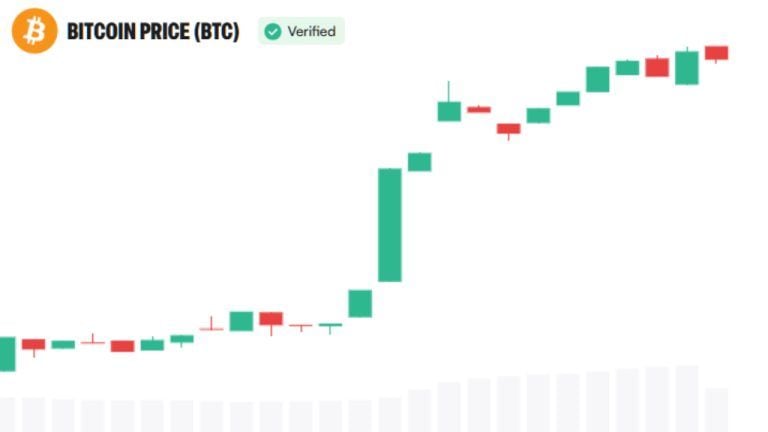
Bitcoin Rally Has ‘Serious Institutional Money’ Behind It, Devere Says
Bitcoin’s renewed advance reflects stronger institutional demand, according to Devere Group CEO Nigel Green, who predicts that bul...

Crypto Got Its Rulebook Without Congress, Chris Perkins Says
The CLARITY Act stalled in the Senate on Sept. 15, when a motion to take it up drew 49 votes to 50, 11 short of the 60 it needed a...

REX Launches 2X Leveraged ETF Tracking Bitcoin Treasury Firm Strive
TL;DR REX Shares has launched the T-REX 2X Long Strive Daily Target ETF under ticker ASSX. The fund seeks 200% of the daily perfor...

L2 growth and $120 billion in staking hide Ethereum’s supply reality
Ethereum's institutional data hub showed about $120 billion in staked ETH and $40.4 billion in daily average total value locked on...

Contrarian Crypto Analyst Who Predicted 2026 Perfectly Calls for Caution and Q4 Crash
Bitcoin pushing back toward $86,000 has many retail traders convinced the bear market is dead and the bulls are back in full contr...

Stand With Crypto’s 4 million registered advocates couldn’t get the CLARITY Act through the Senate
The Senate fell short of advancing the CLARITY Act on Sept. 15, when a 49-50 cloture vote failed to reach the 60-vote threshold. S...