Sony Crypto Exchange Push Moves Japan’s Digital Asset Market Into A New Phase
Sony is putting its name closer to crypto trading in Japan, with Amber Japan being rebranded as S.BLOX as the group prepares a refreshed domestic exchange push. For more details, visit the official S.BLOX platform. TL;DR...
Archive context
Older archive item. Useful for background and entity history, but not a fresh market-moving signal.

Sony is putting its name closer to crypto trading in Japan, with Amber Japan being rebranded as S.BLOX as the group prepares a refreshed domestic exchange push.
For more details, visit the official S.BLOX platform.
TL;DR- Amber Japan has been rebranded as S.BLOX under Sony Group’s wider crypto strategy.
- The plan points to a redesigned app and a more consumer-facing exchange product.
- The move brings one of Japan’s best-known technology brands deeper into digital assets.
Japan’s crypto market has never lacked regulation, but it has sometimes lacked consumer brands with the scale to bring digital assets into everyday financial products. Sony changes that equation. A rebranded exchange backed by a household technology name carries a different kind of signal than another small platform launch.
A Familiar Brand Enters A Regulated MarketThe rebrand does not mean Sony is suddenly turning into a crypto-native company. It does show that the group sees enough long-term value in digital asset trading, custody, and app-based financial services to put resources behind a domestic exchange identity.
That matters in Japan because local crypto firms operate inside a tighter licensing framework than many offshore venues. For users, brand trust and compliance standards are part of the product. For Sony, the challenge is turning that trust into a platform people actually use rather than just a corporate experiment.
More Than A Name ChangeS.BLOX is expected to focus on app redesign and service improvements, which is where the story becomes practical. Crypto exchanges do not win users just because a large parent company is involved. They win when onboarding, liquidity, fees, asset selection, and custody feel reliable.
Still, Sony’s move gives the Japanese market a notable new player at a time when regulated crypto access is becoming more important globally. If S.BLOX can combine consumer-grade design with Japan’s compliance framework, it could become a useful test case for how major technology firms enter crypto without looking like tourists.
This article is based on information from S.BLOX.
This article was written by the News Desk and edited by Samuel Rae.
Why this matters
This maps to the Regulation hub, so it can help confirm whether that theme is gaining breadth across the crypto news cycle.
Original source
Read on NewsBTCRelated market context

French Authorities Push EU to Make Crypto Exchanges Screen DeFi Protocols for Users
Regulated crypto platforms that actively give customers access to decentralized finance should be liable for certain incidents tha...

Kalshi Pushes Deeper Into Crypto Derivatives With Bitcoin-Backed Margin Loans
Bitcoin Magazine Kalshi Pushes Deeper Into Crypto Derivatives With Bitcoin-Backed Margin Loans Kalshi is doubling down on its bid...

XRP Rallies on Ripple SEC Push as ETF Outflows Cloud Evernorth Debut
Ripple’s latest news on US crypto regulation is putting XRP back in the spotlight, with the company backing a proposed SEC framewo...
Cardano Foundation joins five other blockchain groups urging SEC to lock in digital commodity definition
The push for a formal digital commodity definition could stabilize regulatory environments, fostering innovation and clarity in th...
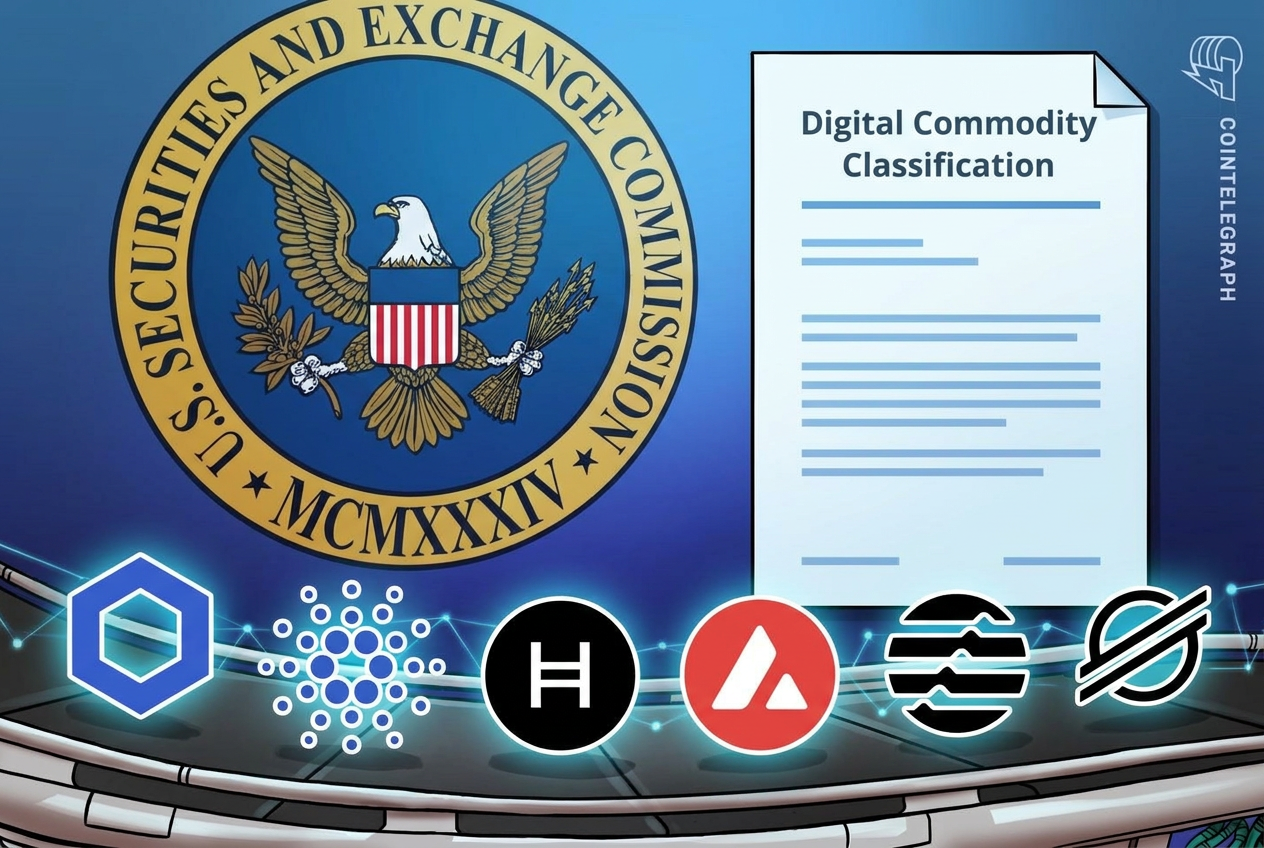
Chainlink, Cardano, other blockchain groups push SEC for clearer crypto rules
Six major blockchain organizations urged the SEC to formally recognize digital commodities as non-securities in its proposed regul...

Ripple urges SEC to finalize crypto assets framework for XRP clarity
Ripple's push for SEC clarity could reshape crypto regulation, influencing market dynamics and potentially boosting XRP's future v...