South Korea Defies Trend: Rejects Crypto ETFs despite SEC's Approval
Despite the recent approval of spot Bitcoin exchange-traded funds (ETFs) by the US Securities and Exchange Commission (SEC), the South Korean Financial Services Commission (FSC) has stated that it would not permit the tr...
Archive context
Older archive item. Useful for background and entity history, but not a fresh market-moving signal.

Despite the recent approval of spot Bitcoin exchange-traded funds (ETFs) by the US Securities and Exchange Commission (SEC), the South Korean Financial Services Commission (FSC) has stated that it would not permit the trading of cryptocurrencies on its domestic financial market.
This decision, detailed in a press release yesterday (Thursday), sends a clear message that South Korea is cautious about the crypto market. The FSC's stance centers around the potential contradiction between domestic securities firms brokering overseas-listed spot Bitcoin ETFs and the South Korean government's position on virtual assets.
FSC's Stance on Listing and Trading Crypto
The FSC emphasized that such brokerage activities may violate the Capital Market Act, raising concerns about aligning these activities with the nation's regulatory framework.
With no legal basis recognizing virtual assets, the FSC deems it challenging to allow the listing and indirect trading of crypto ETFs through securities firms. However, the FSC has hinted at possible future developments despite its current stance. Additional reviews will be conducted as South Korea prepares to enforce a new law on virtual assets in July.
Recently, the FSC proposed a ban on crypto purchases using credit cards. This move addressed the watchdog's concerns regarding the illegal outflow of domestic funds on overseas virtual asset exchanges facilitated through card payments. The FSC's notice highlighted the risks associated with card transactions on virtual asset platforms, including money laundering and speculative activities.
The proposed ban is part of a broader strategy by South Korea to establish a cooperative foundation with international brands, preventing foreign currency outflow and strengthening measures against money laundering, Finance Magnates reported.
South Korea's Crypto Landscape
As the proposal awaits public feedback until February 13, it marks a crucial step in the regulatory landscape of South Korea's crypto market. The ban, if approved, is anticipated to come into effect by the end of the first half of 2024, subject to a thorough review and resolution process.
South Korea, renowned for its high crypto adoption rate, is grappling with the challenges posed by the increasing popularity of digital assets. This regulatory move follows the country's previous mandate for the verification of identification of users on local cryptocurrency exchanges.
Recently, the SEC approved 11 Bitcoin ETFs. This historic decision paved the way for spot Bitcoin ETFs to be listed on major US stock exchanges. Following the approval, the SEC's Chairman, Gary Gensler, clarified the scope of this authorization, emphasizing that it pertains specifically to exchange-traded products holding one non-security commodity, Bitcoin.
This article was written by Jared Kirui at www.financemagnates.com.Why this matters
This cryptocurrency story adds another data point to the current market tape and is useful when read alongside nearby source coverage.
Original source
Read on Finance MagnatesRelated market context
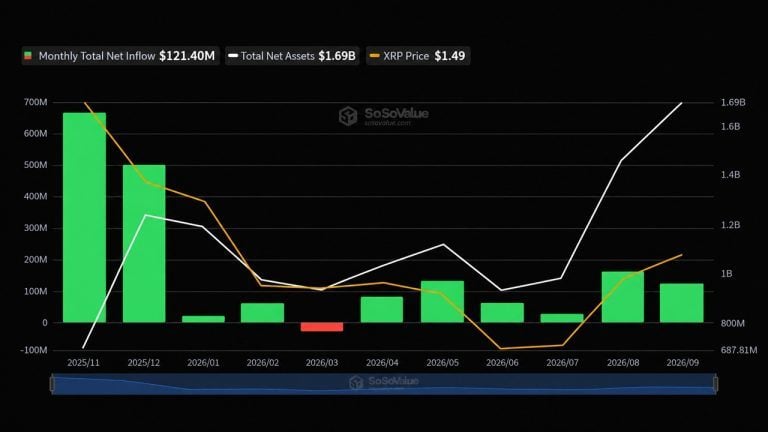
XRP ETFs Pull in $121M This Month but Their Assets Keep Shrinking
U.S. spot XRP exchange-traded funds (ETFs) have taken in $121.4 million in September on a five-session inflow streak, even as thei...
XRP Price Battling Resistances as BlackRock Rumors Pop
XRP price is trading near $1.51 after falling about 5% in a week, while BlackRock rumors of a spot XRP ETF resurface. The immediat...

Spot Bitcoin ETFs see $3B in purchases over 9 days as institutional appetite returns
Institutional interest in Bitcoin ETFs signals renewed confidence, potentially stabilizing the crypto market and encouraging furth...

Binance’s CZ discusses industry growth and lists HYPE token for spot trading
Binance's listing of HYPE token highlights the growing integration of decentralized exchanges, signaling a maturing crypto industr...

Robinhood adds perpetual futures trading to platform, expanding beyond crypto into traditional assets
Robinhood's expansion into perpetual futures for traditional assets may enhance market accessibility and diversification, impactin...

Brazilian Depository With $4.2 Trillion in Assets Taps XRP Ledger to Mirror Fund Shares
CSD BR, a Brazilian central securities depository with more than 22 trillion reais (about $4.2 trillion) in registered assets, wil...