South Korea FSC Chief Nominee Under Fire for Calling Crypto Worthless
South Korea’s Financial Services Commission (FSC) chief nominee Lee Eok-won is facing criticism from the crypto community following his assertion that cryptocurrencies are worthless.In written responses submitted ahead o...
Archive context
Older archive item. Useful for background and entity history, but not a fresh market-moving signal.
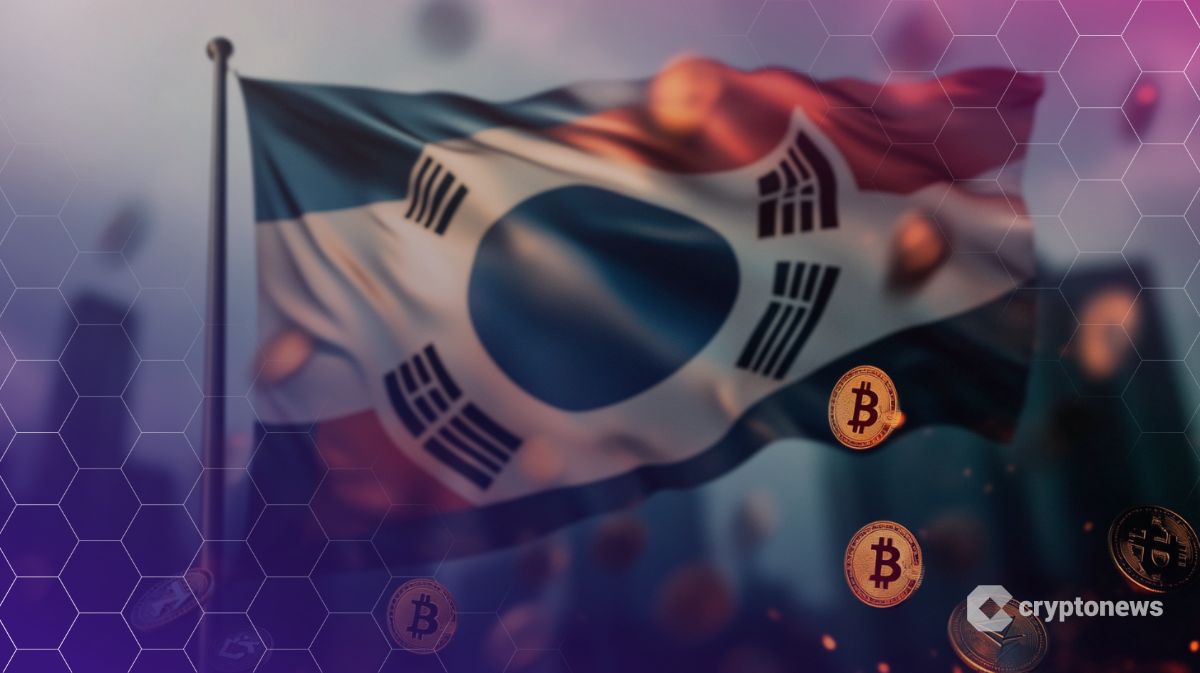
South Korea’s Financial Services Commission (FSC) chief nominee Lee Eok-won is facing criticism from the crypto community following his assertion that cryptocurrencies are worthless.
In written responses submitted ahead of his confirmation hearing, Lee stated that cryptocurrencies lack intrinsic value, unlike traditional financial products such as deposits and equities.
Lee argued that cryptocurrency volatility prevents them from fulfilling essential functions of a currency, including serving as a store of value or a medium of exchange.
금융위 후보자가 원화맥시 이름값 하시네..
"가상자산은 내재적 가치가 없어 예금이나 증권 같은 전통적 금융상품과는 다르다"
"가격 변동성이 큰 만큼 가치 저장이나 교환 수단 등 화폐 본연의 기능을 수행하기 어렵다"
"노후 안정적 소득 보장을 목표로 하는 퇴직·개인연금 투자에는 적절치 않다" pic.twitter.com/w4wSYMVDy5
This position aligns with the South Korean government’s stance that virtual assets lack intrinsic value and cannot be classified as a currency or a financial product.
Lee also expressed reservations about pension and retirement funds investing in crypto assets, citing concerns about market volatility and speculation.
Regarding the approval of a spot Bitcoin ETF, Lee acknowledged the varying expectations and concerns about its impact, stating that Korean authorities will consider global regulatory trends before determining implementation methods and schedules in consultation with the National Assembly.
However, Lee indicated support for stablecoin regulation, promising “sufficient supplementary measures while creating opportunities for innovation.”
Under President Lee Jae-myung’s endorsement, South Korea is developing regulations for local-currency-pegged stablecoins.
The virtual asset industry, however, has criticized Lee’s stance as outdated.
Similar “no intrinsic value” arguments were common among figures like Bank of England Governor Andrew Bailey and JPMorgan CEO Jamie Dimon from 2017 to 2021, but are now considered inappropriate given the increased adoption of cryptocurrencies.
An executive at Xangle, a blockchain data service provider, specifically criticized Lee Eok-won’s statement as one born out of “ignorance and a lack of understanding”.
The executive noted that crypto critics often hold traditional stocks, such as Apple, while questioning the intrinsic value of crypto.
He compared the traditional payment infrastructure of PayPal to the blockchain platform Hyperliquid, pointing out that Hyperliquid conducted $1.5 billion in token buybacks this year from revenue generated, similar to stock buybacks by PayPal and Apple.
“Crypto has no intrinsic value.”
That’s what Korea’s nominee for Financial Services Commission, Lee Eok-won, said in parliament yesterday—showing the government’s ignorance and lack of understanding.@HyperliquidX bought back $1.5B worth of tokens this year from its revenues.… pic.twitter.com/RuaeiJ9XjK
He added that in just the past month, major projects like Tron generated $430 million, Ethena $68 million, and Pump.fun $42 million, and Ethereum $15 million, which are a testament to the value they create.
South Korean Government Tightens Grip on Crypto AdoptionHowever, it appears that South Korea as a whole remains cautious about crypto and virtual assets.
In July, the Financial Supervisory Service (FSS) issued guidance directing domestic firms to limit their exposure to crypto stocks, including those of Coinbase and Strategy, in ETF portfolios.
The directive reinforces the South Korean 2017 administrative guidance on virtual currencies, which restricts financial institutions from holding, purchasing, or investing in virtual assets.
Similarly, in August, the South Korean FSC issued fresh administrative guidance to exchanges, instructing them to halt operations that allow users to borrow against cryptocurrencies or fiat deposits.
Despite regulatory caution, South Korean retail investors are showing growing interest in crypto.
Korean investors sold a net $657 million of Tesla stock during August, the largest outflow since early 2023, while pivoting toward crypto investments amid disillusionment with the electric vehicle maker.
According to Bloomberg, South Korean investors now favor volatile crypto proxies, such as Bitmine Immersion Technologies, which attracted $253 million in net inflows in August.
Data from the Korean Center for International Finance show that retail investors reduced their purchases of U.S. big tech companies from a monthly average of $1.68 billion (January-April) to $260 million in July.
It is still unclear whether President Lee Jae-myung’s administration will grant the wishes of those who are willing to accept the risks associated with crypto assets by opening doors through crypto reforms that could facilitate South Korea’s participation in the digital asset sector.
The post South Korea FSC Chief Nominee Under Fire for Calling Crypto Worthless appeared first on Cryptonews.
Why this matters
This cryptocurrency story adds another data point to the current market tape and is useful when read alongside nearby source coverage.
Original source
Read on CryptonewsRelated market context
South Korean Regulator Demands Tighter Cold-Wallet Controls for Crypto Firms
South Korean financial regulators have called for increased cold wallet storage and tighter internal access controls just days aft...

Binance’s $6.3 Billion Hack Has South Korea Asking Exchanges to Hold More Crypto Offline
At an emergency meeting on Nov. 2, South Korea’s Financial Services Commission asked major crypto exchanges to move more customer...
Binance hack highlights risks of tokenized assets amid North Korean thefts
The Binance hack underscores the urgent need for enhanced security measures and regulatory frameworks to protect tokenized assets...
South Korea may delay crypto tax for Digital Asset Basic Act passage
Delaying the crypto tax for regulatory clarity may boost market confidence, fostering innovation and potentially influencing globa...
South Korea ruling party proposes crypto tax delay to 2029 for market readiness
The proposed crypto tax delay in South Korea could boost market confidence, fostering investment and growth in the digital asset s...
THORChain's RUNE jumps 10% as North Korean hackers resume laundering Binance loot
North Korea’s TraderTraitor is routing Binance hack proceeds through THORChain, swapping ether for bitcoin after an earlier wave o...