South Korea tightens crypto rules ahead of institutional market entry
South Korea is tightening rules around digital asset transactions as it prepares to allow institutional players into its crypto market, introducing new guidelines for nonprofit crypto sales and stricter listing standards...
Archive context
Older archive item. Useful for background and entity history, but not a fresh market-moving signal.

South Korea is tightening rules around digital asset transactions as it prepares to allow institutional players into its crypto market, introducing new guidelines for nonprofit crypto sales and stricter listing standards for exchanges.
On May 20, the Financial Services Commission (FSC) of South Korea said during its fourth Virtual Asset Committee meeting that it had finalized sweeping new measures.
Set to take effect in June, the updated rules allow both nonprofit organizations and virtual asset exchanges to sell cryptocurrencies, but under new compliance standards.
Nonprofit entities must have at least five years of audited financial history to be permitted to receive and sell virtual asset donations. They will also need to establish internal Donation Review Committees to assess the appropriateness of each donation and the liquidation strategy.
To reduce risks of money laundering, all donations must be routed through verified Korean won exchange accounts, with verification responsibilities placed on banks, exchanges and the nonprofits themselves.
Furthermore, only cryptocurrencies listed on at least three major domestic exchanges will be eligible, and liquidation is expected to occur immediately upon receipt.
Guidelines regarding nonprofits selling crypto donations. Source: FSCRelated: Top South Korean presidential hopefuls support legalizing Bitcoin ETFs
Exchange sales to be restrictedCrypto exchanges will be allowed to liquidate user fees paid in crypto, but only to cover operational costs. Sales will be capped at daily limits, typically no more than 10% of the total planned amount.
Furthermore, sales will only be permitted for the top 20 tokens by market cap across five won-based exchanges. Importantly, exchanges are barred from selling tokens on their own platforms to prevent conflicts of interest.
South Korea is also tightening standards for listing digital assets. The revised rules aim to curb instability from sudden price spikes by requiring a minimum circulating supply before a token is allowed to trade and temporarily restricting market orders post-listing.
So-called zombie tokens (with low volume and thin market caps) and memecoins without clear utility will face more scrutiny. For instance, exchanges must delist tokens if they fail to meet liquidity benchmarks or community engagement thresholds.
Starting in June, exchanges and nonprofits can apply for real-name accounts to facilitate these sales. Later this year, the FSC plans to extend real-name accounts to listed firms and professional investors.
Cointelegraph contacted South Korea’s Digital Asset eXchange Association for comment, but had not received a response by publication.
Related: RedotPay enters South Korea with crypto-powered payment cards
South Korean candidates push pro-crypto agendaSouth Korea’s Democratic Party leader Lee Jae-myung has proposed launching a stablecoin pegged to the Korean won, aiming to curb capital flight and bolster the country’s financial autonomy.
Speaking at a recent policy forum, Lee said a won-based stablecoin could help retain domestic wealth and reduce dependence on foreign-backed digital currencies such as USDt (USDT) and USDC (USDC).
The initiative is part of Lee’s broader push for digital asset reforms, which also includes legalizing spot crypto exchange-traded funds (ETFs).
His rival, Kim Moon-soo of the ruling People Power Party, has also expressed support for introducing spot crypto ETFs, signaling bipartisan momentum on the issue.
Magazine: NBA star Tristan Thompson misses $32B in Bitcoin by taking $82M contract in cash
Why this matters
This cryptocurrency story adds another data point to the current market tape and is useful when read alongside nearby source coverage.
Original source
Read on CointelegraphRelated market context

CFTC Crypto Asset Rules Enter White House Review
TL;DR A new CFTC crypto rulemaking has entered White House regulatory review. The filing covers “Crypto Asset Transactions” and “C...
SBI Holdings and Kyobo Life pilot stablecoin transfers between Japan and South Korea
The pilot could revolutionize cross-border finance by reducing costs and time, paving the way for efficient digital-asset transact...

Coinbase And Stablecore Open Digital Asset Rails To 3,000+ Banks And Credit Unions
TL;DR Coinbase is partnering with Stablecore to bring crypto services into existing bank technology. Stablecore’s infrastructure r...

Korean Police Traced Polymarket Users Through the Blockchain
South Korean police spent five months identifying individual Polymarket traders through public blockchain records and booking them...

CLARITY Act Stalls, But SEC Gives Crypto a Boost With New Tokenized Securities Rules
The Securities and Exchange Commission announced its five-year “Innovation Exemption” on September 17, allowing qualifying Tokeniz...
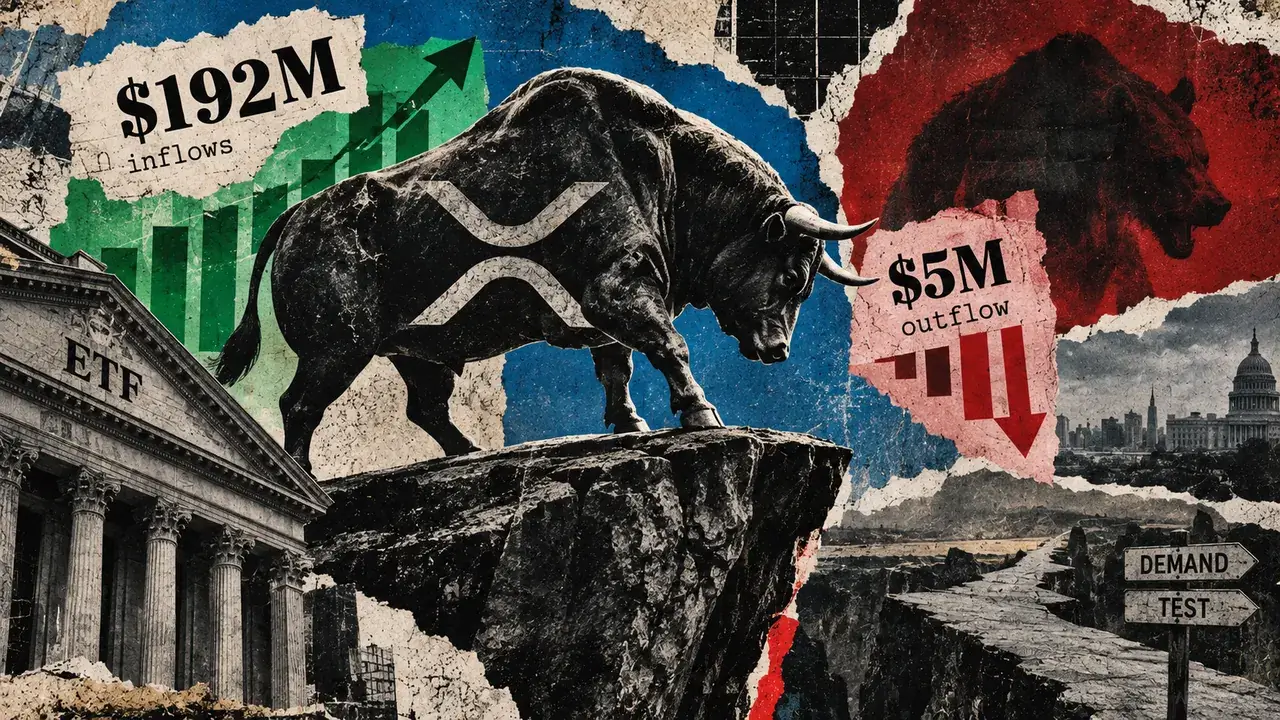
XRP ETFs hit a speed bump, but big investors aren’t dumping their tokens yet
A roughly $5.15 million outflow from US spot XRP exchange-traded products on Sept. 17 interrupted a $192 million inflow month. The...