South Korean Presidential Candidates Clash in Bitter Stablecoin Row
South Korean presidential candidates and their supporters have clashed on the topic of stablecoins as crypto-related policies continue to dominate the political agenda. On May 8, frontrunner Lee Jae-myung, of the Democra...
Archive context
Older archive item. Useful for background and entity history, but not a fresh market-moving signal.
South Korean presidential candidates and their supporters have clashed on the topic of stablecoins as crypto-related policies continue to dominate the political agenda.
On May 8, frontrunner Lee Jae-myung, of the Democratic Party, said that South Korea “needs to create a won-based stablecoin market.”
Lee Jae-myung insisted that Seoul should “enter the stablecoin market quickly” or risk an “outflow of national wealth.”
Korea's major conservative party went through one of the most tumultuous weekends in its history after the party tried to overthrow its own presidential candidate and failed — all within 24 hours. https://t.co/05W70jtJKm
— The Korea JoongAng Daily (@JoongAngDaily) May 11, 2025However, his remarks drew criticism from Lee Jun-seok, the candidate for the Reform Party. South Korea’s Digital Daily quoted Lee Jun-seok as saying:
“Lee Jae-myung’s take on economics is always dangerous and experimental. He is irresponsibly throwing unverified ideas around. And he repeats plausible-sounding words without understanding anything about the market.”
South Korean Presidential Candidates: Stablecoin War-of-WordsLee Jun-seok added that South Korean investors have already had their fingers burned with Terra’s KRW-pegged KST stablecoin. On his social media pages, the candidate wrote:
“South Korea already has experience with a won-pegged stablecoin called KRT. That same coin was at the core of the Terra-Luna incident.”
Lee Jun-seok, the candidate for the South Korean Reform Party. (Source: @junseoktube/YouTube/Screenshot)The Terra ecosystem collapse of May 2022 saw the firm’s stablecoins lose their pegs. The crash wiped millions of dollars from global crypto markets.
Thousands of South Koreans were affected. Lee Jun-seok continued:
“Terra’s KRT started out as a stablecoin pegged 1:1 to the Korean Won. But it had no real assets to back it up. Instead, operators tried to maintain its price by utilizing the highly volatile sister coin, LUNA (now LUNC). But the results were disastrous.”
The Reform Party candidate explained that when market confidence collapsed, LUNC’s value plummeted. He said:
“All of Terra’s coins, including KRT, collapsed. That rendered the ‘stable’ in stablecoin meaningless.”
PPP loses public trust after failed gambit to replace presidential candidatehttps://t.co/Ms0GOwKHeC
— The Korea Times (@koreatimescokr) May 11, 2025 Collateral QuestionLee Jun-seok hit out at Lee Jae-myung, saying that the latter was calling for the creation of a KRW stablecoin “without explaining what asset collateral will be included in.”
He said that the Democratic Party candidate has not spoken about how this coin would manage market risks to overcome the “causes of past failures.”
Lee Jun-seok, a former leader of the ruling People Power Party (PPP), founded the Reform Party in January 2024 following his split from the party.
He has resisted calls from the PPP leadership, who last month asked him to rejoin the party as they head into next month’s election.
But Lee Jae-myung’s defenders took to social media to rebut the Reform Party candidate’s claims.
The former Democratic Party lawmaker Kim Byeong-wook claimed that Lee Jun-seok’s comments were “out of touch” with international regulatory trends.
Ex-Democratic Party lawmaker Kim Byeong-wook (left) with presidential candidate Lee Jae-myung in 2016. (Source: @777byung1/X)Kim noted that “almost every international regulator” has already ruled that “algorithm-based tokens are too volatile to even be classified as stablecoins.”
South Korean polls favor the opposition, and Lee Jae-myung won an overwhelming primary victory in late April. However, he faces several legal charges that could preclude his candidacy, @Doug_Bandow writes. https://t.co/UnyFZQ8ALP
— Foreign Policy (@ForeignPolicy) May 6, 2025He claimed that regulators everywhere from Washington to Brussels and Tokyo shared this view. Kim added:
“Structures like those used by Terra are out of the question. The focus of policy discussions is now on collateralized stablecoins backed 1:1 with cash and government bond deposits. These coins would have real-time reserve disclosure protocols and immediate redemption obligations.”
A War of WordsKim accused Lee Jun-seok of “lumping” algorithm-based and collateralized stablecoins together. The ex-DP MP said that Lee Jun-seok’s logic was that “Terra failed, so stablecoins are dangerous,” adding:
“If he had only familiarized himself with the basic concepts of global financial regulation, Lee Jun-seok would have avoided making such a radical generalization.”
Kim argued that won-pegged tokens could help cut overseas remittance fees and revitalize the domestic digital economy.
The media outlet quoted an unnamed official from a domestic crypto exchange as welcoming public discourse on stablecoins and other crypto-related matters. The official said:
“We are seeing politicians engage in a range of technical debates regarding virtual assets. These have not been made public until now. We are positive about seeing an institutional reorganization in the crypto sector after the election.”
South Korea goes to the polls on June 3. The PPP’s candidate, Kim Moon-soo, earlier this month pledged to allow the national pension and soverign wealth funds to buy tokens like Bitcoin (BTC).
The post South Korean Presidential Candidates Clash in Bitter Stablecoin Row appeared first on Cryptonews.
Why this matters
This cryptocurrency story adds another data point to the current market tape and is useful when read alongside nearby source coverage.
Original source
Read on CryptonewsRelated market context
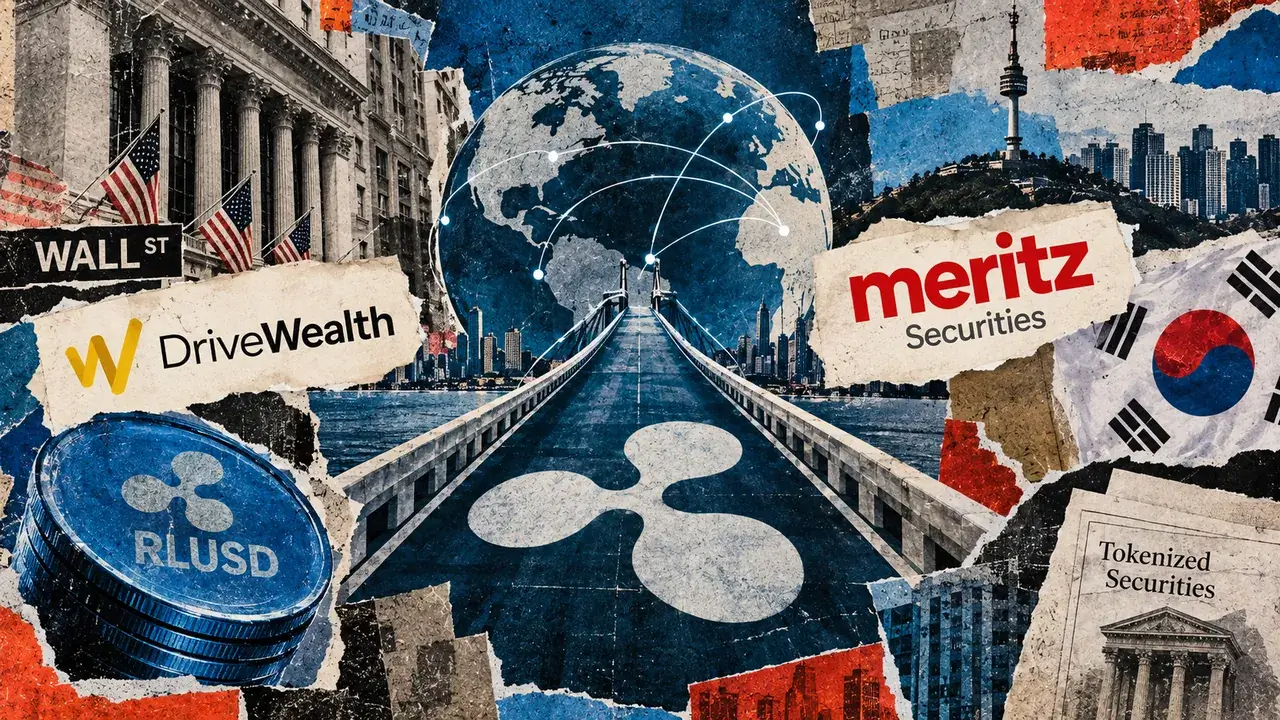
Ripple targets trillion-dollar securities markets with new US brokerage and South Korean deals
Ripple calls Meritz its fourth Korean institutional partner this year, with custody and tokenization cooperation to widen as regul...

Bitcoin defies $800 million crypto wipeout as South Korea’s AI stock market crashes
Bitcoin rebounded above $83,000 on Tuesday despite a sharp Asian stock selloff, as cryptocurrency liquidations exceeded $800 milli...

South Korea clears way for courts to seize and sell Bitcoin for unpaid debts under new November rules
South Korea has established procedures for courts to seize and sell debtors' cryptocurrency to satisfy civil claims. On Oct. 12, t...
South Korea Blocks 27 Crypto Exchange Websites, Including KuCoin, BitMart
South Korea’s Financial Intelligence Unit has ordered access restrictions on 27 websites operated by unregistered overseas cryptoc...
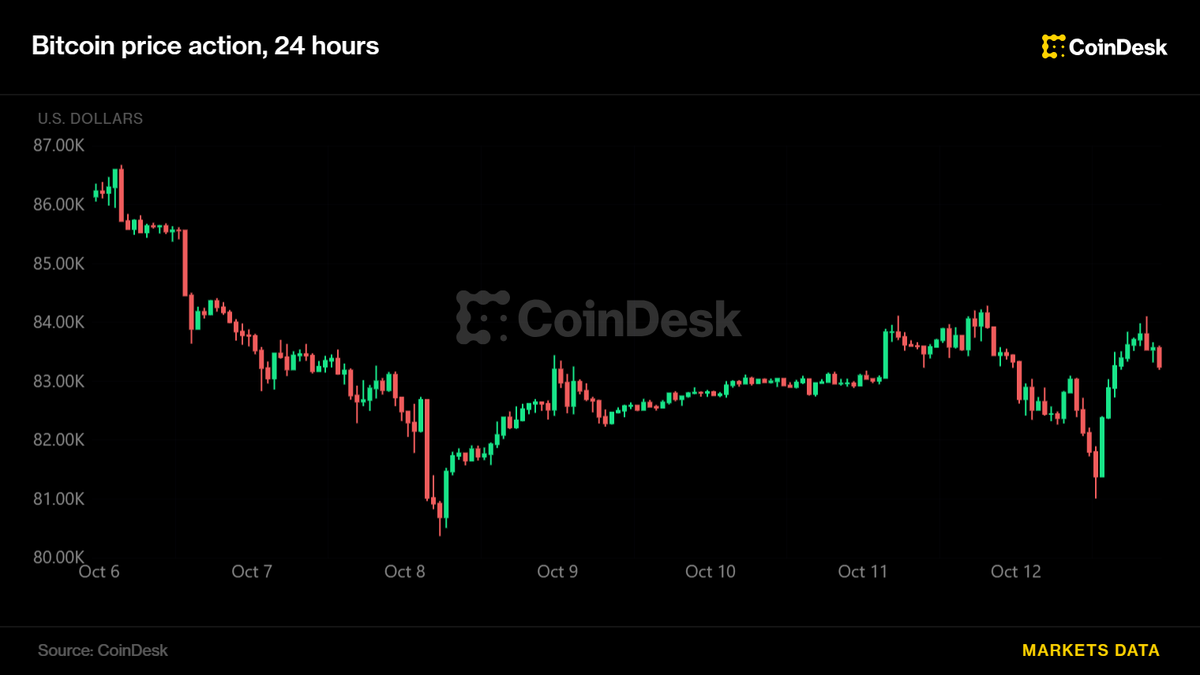
Bitcoin, ether slip and rebound as South Korean stocks slide on AI-related concerns
Investors are positioning ahead of today's bank earnings reports and Wednesday’s U.S. inflation data.

Bitcoin hits $84K resistance as Korean tech rout deepens KOSPI losses
Bitcoin’s liquidity kept BTC price below $84,000 amid a mounting South Korean tech and semiconductor stock sell-off.