Stablecoin payments are going mainstream. What happens when the recipient needs local currency?
The following is a guest post and opinion from Danyel Arenas, Co-Founder and CEO at KiiChain. Visa’s launch of its Stablecoin Platform is a sign that stablecoins are moving into mainstream financial infrastructure. The p...
Archive context
Older archive item. Useful for background and entity history, but not a fresh market-moving signal.

The following is a guest post and opinion from Danyel Arenas, Co-Founder and CEO at KiiChain.
Visa’s launch of its Stablecoin Platform is a sign that stablecoins are moving into mainstream financial infrastructure. The platform gives banks, fintechs and payment providers a way to access, hold, move and redeem stablecoins within a Visa-managed environment.
As that access improves, however, foreign exchange becomes a bigger part of the equation. Stablecoins can simplify the movement of value across borders, but each payment still needs to connect with the currency required at its destination.
For that reason, local-currency liquidity and FX settlement are becoming increasingly important to the next phase of stablecoin payments.
Stablecoin payments create more demand for FX infrastructureConsider a fintech serving businesses across Brazil, Mexico and Colombia. Stablecoins can provide a common asset for moving value between these markets, while its customers continue to operate in different currencies.
That means each corridor still requires FX pricing, sufficient liquidity, conversion and settlement. Depending on the market, those functions may involve different providers and integrations, adding complexity as the fintech expands.
This connection between stablecoin payments and foreign exchange is also starting to show up in regulation. Brazil’s central bank, for example, now treats activities including international payments using virtual assets and the purchase, sale or exchange of fiat-referenced virtual assets as foreign-exchange operations.
Although wider use of dollar stablecoins could reduce some demand for local currencies in certain situations, especially for treasury holdings or international trade, that does not remove the need for local settlement.
Businesses still pay employees, taxes and domestic suppliers in national currencies, while merchants price goods in the currencies their customers use. So even when USDC or USDT carries value across borders, an FX conversion is often still required before the funds can be used locally.
Local stablecoins need access to global dollar liquidityLocal-currency stablecoins can bring currencies such as the peso or real on-chain, making them easier to use alongside stablecoin-based payment infrastructure. At the same time, dollar stablecoins such as USDC and USDT remain important sources of global liquidity, particularly for cross-border payments and international trade.
For the two to work together, there needs to be an efficient market between them. A peso stablecoin may need to be exchanged for USDC, reais or another currency somewhere in the payment flow. Without sufficient liquidity, reliable pricing and efficient settlement between those assets, bringing more local currencies on-chain does little to solve the underlying conversion problem.
Functioning FX markets provide that connection. They allow liquidity to move between global dollar stablecoins and local currencies, while giving market makers a way to rebalance positions as demand changes across different corridors.
However, access to liquidity is only part of the challenge. The way FX transactions are executed and settled also needs to keep pace with a payment system that increasingly operates around the clock.
On-chain FX can bring the currency layer closer to 24/7 paymentsTraditional FX still depends heavily on banking hours, while cross-border payments and currency settlement can take hours or even days when several intermediaries and correspondent banks are involved. That creates a mismatch when stablecoins themselves can move at any time.
On-chain FX offers a different operating model by allowing pricing, liquidity access and settlement to operate beyond banking hours. Pay-ins, payouts and FX swaps can also be coordinated in parallel and settled with verifiable on-chain finality.
For payment companies, this can bring several fragmented functions into a more unified infrastructure layer. The provider can focus on the currency the customer sends and the currency the recipient receives, while liquidity sourcing, conversion and settlement happen underneath.
It could also make expansion across markets easier. Instead of rebuilding liquidity relationships and settlement processes for every new corridor, payment providers could connect additional currencies through shared FX infrastructure.
The next competition will be over the layer users barely noticeAs stablecoins become easier for financial institutions to integrate into payment flows, attention will increasingly move to what happens underneath the transaction.
The strongest cross-border payment solutions will likely hide most of that complexity. A business should not need to understand which stablecoin, network, bridge or liquidity source sits between the currency it sends and the currency its counterparty receives.
For the user, the questions are simpler: What currency am I sending? What currency will arrive? At what rate, and how reliably?
The infrastructure that answers those questions well will determine how far stablecoin payments can move beyond digital dollars and into everyday economic activity.
Disclaimer – this was a promoted post as part of our Thought Leadership program for Web3 contributors.
The post Stablecoin payments are going mainstream. What happens when the recipient needs local currency? appeared first on CryptoSlate.
Why this matters
USD Coin is showing up inside the Stablecoins theme, so this story is worth tracking for follow-through rather than treating it as a one-off headline.
Original source
Read on CryptoSlateRelated market context

Federal Reserve’s Waller embraces AI, stablecoins, and tokenization as future of payments
Waller's embrace of AI and stablecoins signals a shift towards modernizing payment systems, potentially reshaping regulatory and f...

HSBC prepares RedCoin stablecoin launch with payments in focus
HSBC's RedCoin launch could accelerate stablecoin adoption, influencing global banking practices and enhancing digital transaction...
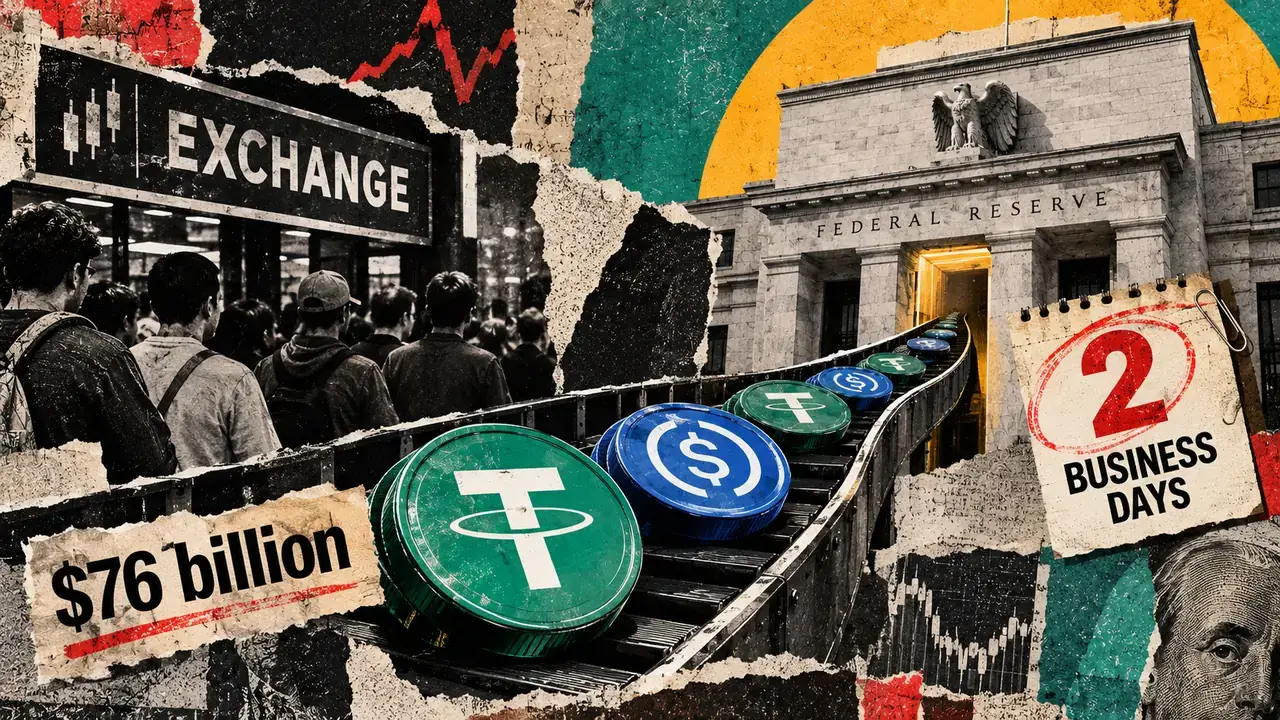
Fed guarantees 2-day stablecoin payouts, but $76B remains blocked
The Federal Reserve's stablecoin proposal would put a general two-business-day limit on redemption by issuers it supervises. For a...

Aztec Revives Its Private Payments Wallet, Capping Every Transfer Below $2,500
Aztec Labs relaunched zk.money on Tuesday, bringing back its self-custodial wallet for private stablecoin payments on Aztec Networ...

Morgan Stanley Sets Up Lab to Test Stablecoins and DeFi
Morgan Stanley has established an internal Digital Asset Lab to test stablecoins, tokenization and decentralized finance applicati...

Aptos lands native Tether USDT support on Taiwan’s MAX exchange for TWD conversions
The integration of native USDT on Aptos by MAX could enhance Taiwan's crypto market liquidity and regulatory compliance, fostering...