Stablecoin Regulation Still Faces Key Unresolved Questions, Says IMF
Key Takeaways: IMF’s Bo Li said regulatory uncertainty around stablecoins persists, especially regarding classification and enforcement. Global financial bodies are working to align frameworks but remain in early stages....
Archive context
Older archive item. Useful for background and entity history, but not a fresh market-moving signal.
Key Takeaways:
- IMF’s Bo Li said regulatory uncertainty around stablecoins persists, especially regarding classification and enforcement.
- Global financial bodies are working to align frameworks but remain in early stages.
- Policy inconsistencies may drive firms toward jurisdictions with less oversight.
The International Monetary Fund (IMF) continues to flag regulatory uncertainty around stablecoin, according to remarks by Deputy Managing Director Bo Li during the Summer Davos 2025 on June 25.
Li stated that while stablecoins are gaining traction in global finance, two classification issues remain unsettled: whether stablecoins should be treated as currencies or financial assets, and, if considered currency, what tier of money they fall under, such as M0 or M2.
Enforcement and Classification Remain Key Stablecoin Challenges“But this is merely the starting point. Many issues remain unresolved, and a stronger global consensus must still be forged,” he said.
Li added that several jurisdictions, including the U.S., Europe, and multiple countries in Asia, are conducting policy experiments. However, he described the current stage as early and called for broader alignment across international regulatory bodies.
The IMF is working with entities such as the Financial Stability Board and the Basel Committee to provide guidance. Li indicated that many member countries are proceeding cautiously, especially those using stablecoins to expand financial inclusion.
Beyond classification, Li raised concerns about enforcement. Without unified standards, national rules may conflict, complicating compliance for global operators and increasing the risk of regulatory gaps.
No timeline was given for when these frameworks might converge, but Li acknowledged ongoing dialogue between regulators, central banks, and financial institutions.
The IMF’s unique structure for generating and deploying resources is like a credit union for countries—with a lending capacity of nearly $1 trillion. See our new blog for more. https://t.co/fCqU2dl95C pic.twitter.com/q4gju42EG0
— IMF (@IMFNews) June 25, 2025 Regulatory Gaps May Drive Firms to Looser JurisdictionsWith the heightened global interest in central bank digital currencies and private-sector stablecoin projects, regulatory clarity may shape how these technologies are used in cross-border payments and domestic financial services.
Li reiterated that technology will influence the structure of the global monetary system over time, though he cautioned against expecting rapid transitions.
How stablecoins are ultimately classified could influence how central banks manage liquidity and design monetary policy. Treating them as part of the money supply would require new tools for tracking and controlling their effects on the broader economy.
Private firms developing stablecoin infrastructure are also awaiting clearer rules. Without regulatory alignment, some may shift operations to jurisdictions with looser oversight, while others delay integration with traditional financial systems until legal boundaries are defined.
Frequently Asked Questions (FAQs)Are decentralized stablecoins treated differently in regulatory discussions?Stablecoins issued by DAOs or without clear corporate backing often fall outside current legal frameworks, raising questions about accountability, reserves, and enforcement.
Could inconsistent regulation lead to digital asset “regulatory arbitrage”?Companies may base operations in regions with lenient rules, creating uneven competition and potentially undermining more robust regulatory environments.
Do tax authorities have a stablecoin policy?In many jurisdictions, tax treatment of stablecoin transactions, especially those used for daily payments, is still unsettled, complicating both individual compliance and institutional accounting.
The post Stablecoin Regulation Still Faces Key Unresolved Questions, Says IMF appeared first on Cryptonews.
Why this matters
This cryptocurrency story adds another data point to the current market tape and is useful when read alongside nearby source coverage.
Original source
Read on CryptonewsRelated market context

EU targets MiCA loophole that lets crypto exchanges serve 27 countries with one license
EU finance ministers agreed to shift oversight of major crypto companies to a central watchdog, reshaping supervision under MiCA....

Financial Stability Board warns of untested stablecoin risks in crises
The FSB's warning highlights the urgent need for robust global regulatory frameworks to manage stablecoin risks and ensure financi...

America’s Credit Unions takes on crypto policy as stablecoin rules take shape
Credit unions' involvement in crypto policy could reshape their competitive landscape, impacting deposit retention and regulatory...

State of TRON Q3 2026 Report Highlights $2.21 Trillion in Stablecoin Settlement Amid Network Activity Growth
Geneva, Switzerland, October 12, 2026 — TRON DAO, the community-governed DAO dedicated to accelerating the decentralization of the...

Ark Invest’s Lorenzo Valente: Bitcoin’s 5-Year Forecast – Stablecoin & Gold Impacts
Bitcoin Magazine Ark Invest’s Lorenzo Valente: Bitcoin’s 5-Year Forecast – Stablecoin & Gold Impacts Bitcoin has been flat to down...
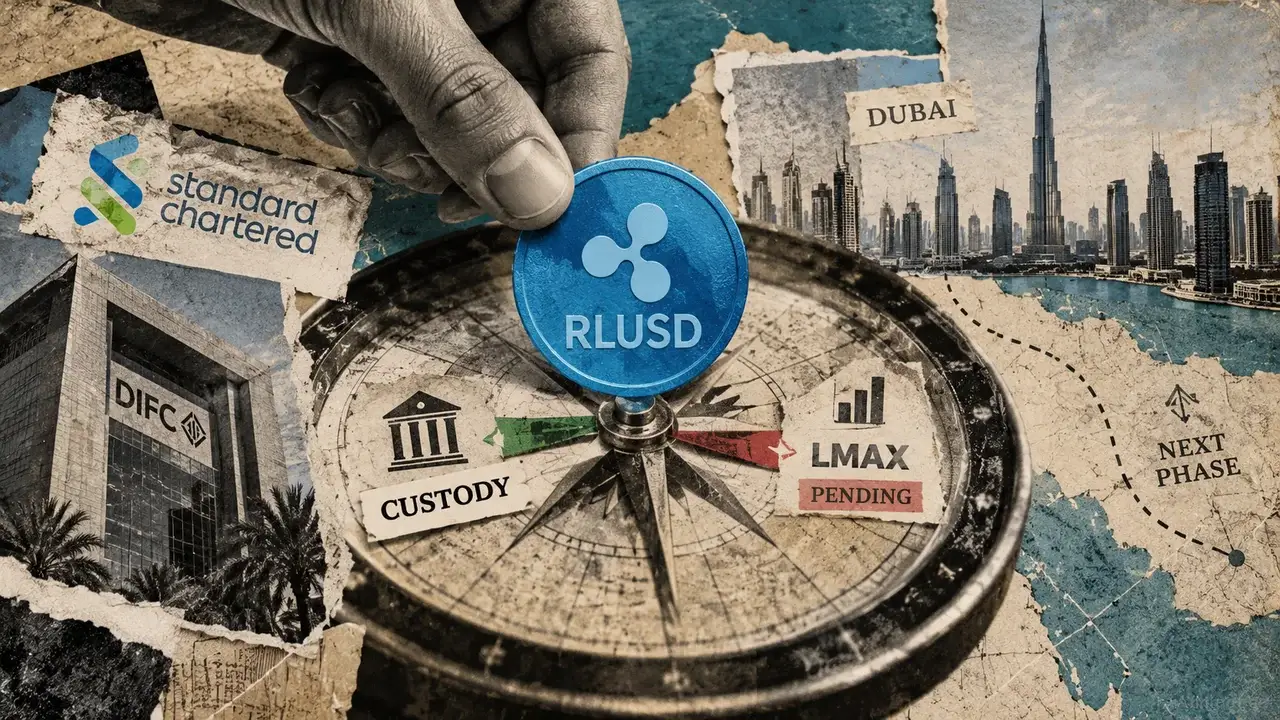
Standard Chartered brings Ripple’s RLUSD into banking custody after $765 million quarterly surge
Standard Chartered has launched custody for Ripple's RLUSD stablecoin as it prepares to expand its use as collateral for instituti...