Stablecoins for Remittances: A Potential Game Changer?
The growth of cryptocurrencies in recent years has offered a new method of performing financial transactions. The usage of stablecoins for remittances is one of the most potential applications of this technology. Remitta...
Archive context
Older archive item. Useful for background and entity history, but not a fresh market-moving signal.

The growth of cryptocurrencies in recent years has offered a new method of performing financial transactions. The usage of stablecoins for remittances is one of the most potential applications of this technology.
Remittances are funds sent by migrant workers to their relatives back home, and they are an important source of income for many households in developing nations. In this essay, we will look at the possibilities of stablecoins for remittances and how they can change the game.
What Are Stablecoins?
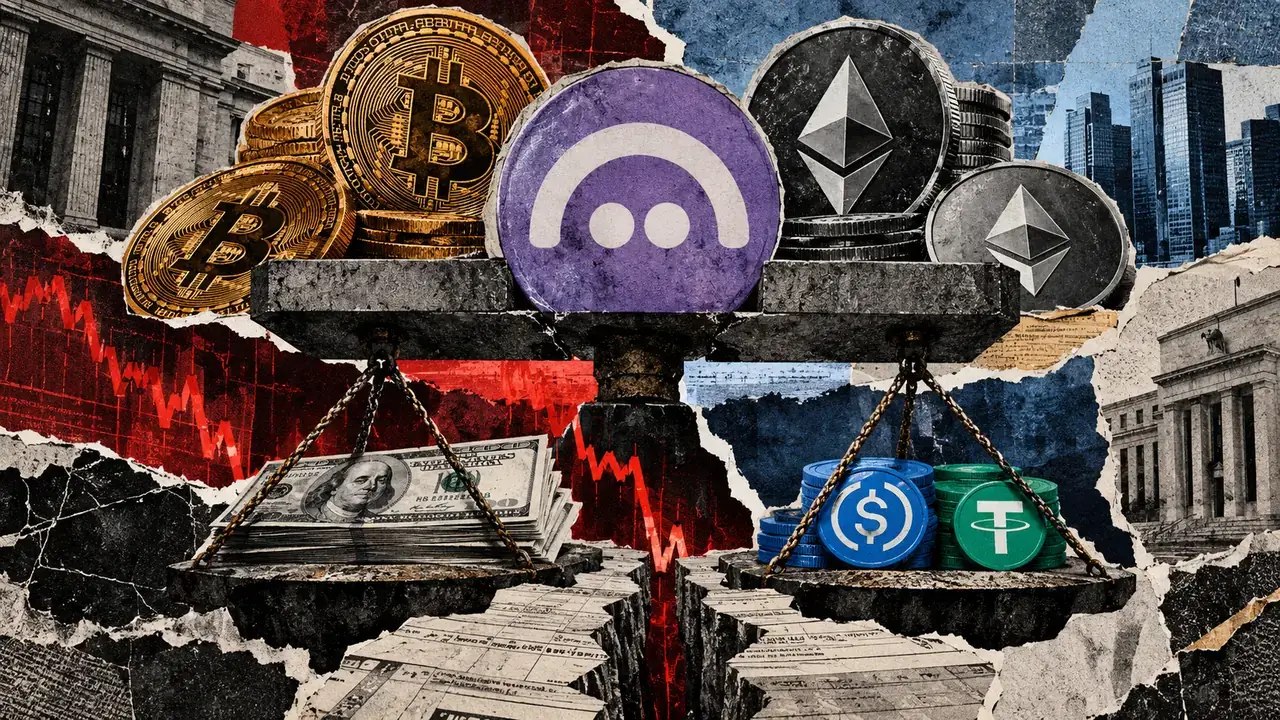
Stablecoins are cryptocurrencies that are intended to have a consistent value. Stablecoins, unlike other cryptocurrencies such as Bitcoin or Ethereum, have their value tied to an underlying asset such as a fiat currency like the US dollar or a commodity like gold. Stablecoins are less volatile and more predictable than other cryptocurrencies, making them an excellent tool for financial transactions.
Stablecoins' Potential for Remittances
Remittances are an important component of the global economy. Despite the disruptions caused by the COVID-19 outbreak, remittance flows to low- and middle-income nations reached $540 billion in 2020, according to the World Bank.
On the other hand, traditional remittance options, such as banks or money transfer operators (MTOs), are frequently delayed and costly, with large transaction fees and unfavorable exchange rates. This is especially difficult for people in developing nations, where access to financial institutions is limited and transmitting money can be prohibitively expensive.
Stablecoins may be able to address these issues by providing a faster, cheaper, and more accessible method of transmitting money across borders. Stablecoins, unlike traditional remittance techniques, can permit peer-to-peer transactions without the need for intermediaries, such as banks or MTOs.
This means that transaction fees are lower and exchange rates are better. Furthermore, stablecoins may be sent and received rapidly, making them a useful tool for people who need quick access to their assets.
Stablecoins may also reach more people than regular transfer methods. According to the World Bank, around 1.7 billion adults worldwide lack access to a bank account, limiting their capacity to transfer and receive money.
However, stablecoins may be accessible via a smartphone, which is becoming increasingly popular in developing countries. As a result, stablecoins may offer a new option for people to gain access to financial services and participate in the global economy.
Challenges and Dangers
While stablecoins provide many potential benefits for remittances, there are also issues and hazards to consider. One of the major problems in the stablecoin market is the absence of regulation and monitoring.
Stablecoin issuers, unlike traditional financial institutions, are not subject to the same amount of examination, raising concerns about their stability and security. Furthermore, because stablecoins are not backed by government assurances, consumers are vulnerable to counterparty risks if the issuer goes bankrupt.
Another issue is the possibility of stablecoins being used for illegal purposes, such as money laundering or terrorism financing. Because of the anonymity and decentralized nature of cryptocurrencies, it is impossible to track the flow of funds, which criminals may abuse.
This may result in heightened regulatory scrutiny and even restrictions on the usage of stablecoins for remittances.
An Opportunity for Banks?
The rise of stablecoins, digital currencies pegged to a stable asset such as the US dollar, has presented an opportunity for banks to modernize their remittance services. Unlike traditional remittance methods, which can be slow and expensive, stablecoins offer faster, cheaper, and more efficient cross-border payments. As such, banks should consider taking part in the stablecoin ecosystem to improve their remittance services as a way of providing customers with a better experience.
For banks, stablecoins represent an opportunity to streamline their remittance services and reduce costs. By integrating stablecoins into their systems, banks can provide faster and more affordable remittance services. This is particularly important for customers who regularly send money to friends and family members in other countries, as traditional remittance services can be prohibitively expensive.
Moreover, stablecoins can help banks to reduce the risks associated with cross-border payments. By using stablecoins, banks can minimize the risk of currency fluctuations and ensure that the value of the payment remains stable throughout the transaction. This can help to reduce the costs associated with remittances and increase customer satisfaction.
In addition to offering stablecoin-based remittance services, banks can participate in the stablecoin ecosystem by developing their own stablecoins. This would allow banks to create their own digital currencies that are pegged to a stable asset, providing customers with a new way to store and transfer funds. Banks can use their existing customer base and brand recognition to promote their stablecoins, making it easier for customers to adopt the technology.
By developing their own stablecoins, banks can gain greater control over the remittance process. Banks can use their stablecoins to facilitate cross-border payments between their customers, without the need for third-party intermediaries. This can help to reduce transaction costs and increase the speed of payments, improving the overall customer experience.
Conclusion
Stablecoins have the potential to revolutionize remittances by providing a faster, cheaper, and more accessible method of moving money across borders. However, there are obstacles and concerns that must be addressed, particularly in the areas of legislation and security.
As the stablecoin market evolves, it is critical to ensure that these risks are avoided so that stablecoins can fulfil their full potential as a financial inclusion tool.
This article was written by Finance Magnates Staff at www.financemagnates.com.Why this matters
This cryptocurrency story adds another data point to the current market tape and is useful when read alongside nearby source coverage.
Original source
Read on Finance MagnatesRelated market context

Is "Reverse Solicitation" Under Scrutiny? EU Probes Binance’s Services after Wind-Down Order
EU officials are questioning crypto exchange Binance over its use of reverse solicitation, a legal exemption, to keep serving cust...
Aave’s $50 million lending plan could lose money without a single default
Aave’s proposed institutional lending business would put crypto collateral on both sides of the financing chain. Institutions woul...

Coinbase builds financial accounts for super intelligence
Coinbase's AI-focused financial infrastructure could revolutionize autonomous transactions, potentially reshaping financial market...

Tokenized assets don’t always mirror traditional markets, Dune finds
Dune found that tokenized markets show different trading patterns from traditional markets, with RWA value reaching $34.5 billion.

Travala’s Crypto Loyalty Program Passes 170,000 Members, Sets Long-Term Goal of 30% of AVA Supply Locked
Singapore, Singapore, October 1st, 2026, Chainwire With around 16% of AVA’s circulating supply already locked, the AVA Smart Progr...

Ripple quietly made Brazil the center of its XRPL tokenization push
Ripple's Brazilian foothold spans cross-border payments and securities records in a country Chainalysis ranked first for grassroot...