Study Reveals South Korea’s ‘Kimchi Premium’ Strongly Linked to International Remittances to China
A newly-released study published in December 2022 reveals that South Korea’s “kimchi premium,” the divergence in cryptocurrency valuations on Korean exchanges compared to Western trading platforms, is strongly associated...
Archive context
Older archive item. Useful for background and entity history, but not a fresh market-moving signal.
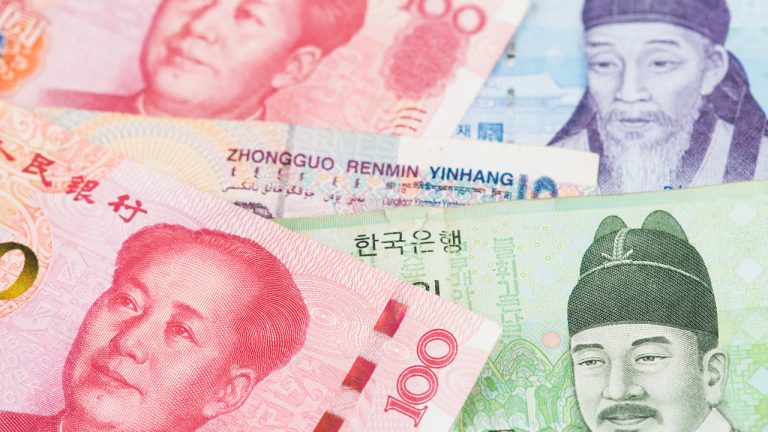
A newly-released study published in December 2022 reveals that South Korea’s “kimchi premium,” the divergence in cryptocurrency valuations on Korean exchanges compared to Western trading platforms, is strongly associated with a surge in international remittances to China.
Examination of Overseas Remittances to China Uncovers Strong Correlation with South Korea’s ‘Kimchi Premium’
According to a study conducted by Jangyoun Lee, an assistant professor at Incheon National University, and Taehee Oh of the Bank of Korea, South Korea’s kimchi premium appears to be significantly correlated with an influx of overseas remittances to China. The researchers note that the first instance of the kimchi premium in South Korea occurred in 2016, when there was high demand for bitcoin among Korean investors but a limited supply of BTC. Essentially, the kimchi premium refers to the price of bitcoin and other cryptocurrency assets being significantly higher in South Korea than on Western exchanges.
The researchers detailed that the team analyzed financial data concerning overseas remittances to China from approximately 1,211 foreign exchange businesses between Jan. 2016 and May 2021. Prior to Jan. 2018, during the bitcoin bull run of 2017, the researchers stated that the premium peaked at close to 55% before subsiding. However, the kimchi premium reemerged during the first quarter of 2021, and the study’s authors noted that on May 19, 2021, the premium jumped by more than 20% higher than the price on Western cryptocurrency trading platforms. The research paper’s authors add:
Our findings imply that Chinese arbitrageurs use Korean financial institutions as bitcoin-cashing outlets, converting virtual currencies into fiat ones when the kimchi premium was persistently high.
The authors of the study suggest that a significant portion of the premiums and increase in foreign arbitrageurs were related to events in China. For example, the paper details that while China banned cryptocurrencies, South Korea and countries like the U.S. decided to regulate the industry. “Therefore, Chinese arbitrageurs could only cash out their cryptocurrencies outside of the country,” according to the producers of the “kimchi premium” research paper.
“This paper shows that the kimchi premium was positively related to the upsurge of remittances to China after controlling for the important drivers that directly impact it, such as equities, bonds, foreign exchanges, and the real economy,” the writers of the paper contend. The authors further posit that the findings illustrate the complexities of the global cryptocurrency market and that international standards and common regulations are necessary to protect investors. South Korea has been a “target of cryptocurrency arbitrage traders exploiting excess demand,” the paper insists.
The kimchi premium persists to this day, and at 9:00 p.m. Eastern Time on Jan. 9, 2023, the price of Bitcoin (BTC) on Upbit and Bithumb, two of South Korea’s top cryptocurrency exchanges, was around $17,427 to $17,437 per unit. However, at the same exact time, using the global average on coinmarketcap.com, the price of BTC on Western exchanges was $17,205 per coin. This means that arbitrage traders swapping BTC can fetch a premium of around 1.35% on South Korean exchanges, and there is also a difference in the prices of ethereum (ETH) on Western exchanges compared to its value on South Korean exchanges.
High premiums for BTC have also occurred periodically on the Japanese cryptocurrency exchange market. Premiums on bitcoin have further been observed in countries such as Thailand, Hong Kong, Brazil, Malaysia, the Philippines, and Chile. Furthermore, before in-person trades were banned on the trading platform Localbitcoins, arbitrage opportunities were readily available. While the trend has decreased depending on the country and the liquidity of bitcoin in the region, foreign arbitrageurs can still profit from exchanging funds between two locations.
What do you think about the study concerning the South Korean kimchi premiums and the findings that suggest they are related to Chinese remittances? Let us know what you think about this subject in the comments section below.
Why this matters
This cryptocurrency story adds another data point to the current market tape and is useful when read alongside nearby source coverage.
Original source
Read on Bitcoin NewsRelated market context

Injective partners with BDACS to bring Korean won stablecoin to RWA ecosystem
The move comes amid South Korea's regulatory developments to establish a framework for Korean won-denominated stablecoins.

South Korea Faces Fresh Push To Delay Crypto Gains Tax Until 2029
South Korea is approaching another decision point on its long-delayed cryptocurrency gains tax, with exchanges and policymakers pr...
South Korea’s crypto bill nears completion amid tax debate intensification
The nearing completion of South Korea's crypto bill could enhance regulatory clarity, potentially boosting digital asset adoption...

Shinhan Card and SBI test yen stablecoin payments for Japanese tourists in South Korea
The yen stablecoin pilot could revolutionize cross-border payments, enhancing financial integration and digital asset adoption in...
Injective, BDACS plan Korean won stablecoin settlement for tokenized assets
Injective and BDACS plan to bring won-backed stablecoin KRW1 to tokenized asset markets as South Korea develops a regulatory frame...

China Opens Its Own Case to Confiscate 61,896 Bitcoin Held by UK Authorities
A court in the northern Chinese city of Tianjin has opened a domestic proceeding to confiscate 61,896 bitcoin that British authori...